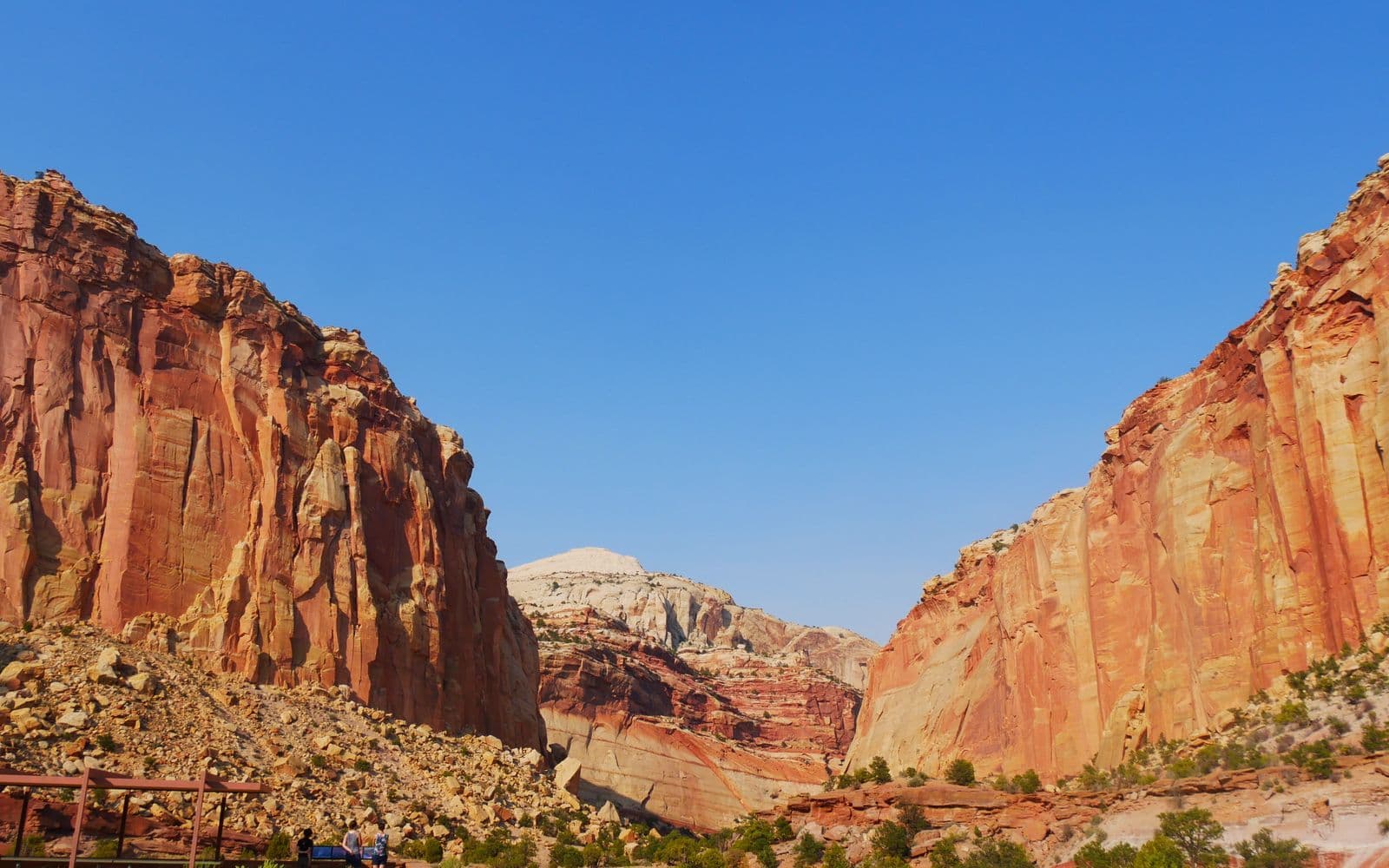
Utah’s five national parks form one of America’s great road trips, but they are not a five-day checklist. Zion and Bryce sit in the southwest; Arches and Canyonlands share Moab in the east; Capitol Reef and Scenic Byway 12 connect the two halves.
This ten-day plan starts and finishes in Salt Lake City. It covers roughly 900 miles before local park driving and gives every park meaningful time without hiding the two long gateway transfers.
- 1
Salt Lake City
- 2
Zion
Drive from previous stop: 4 hr 45
- 3
Bryce Canyon
Drive from previous stop: 2 hr
- 4
Capitol Reef
Drive from previous stop: 2 hr 30 via UT-12
- 5
Moab / Arches
Drive from previous stop: 2 hr 30
- 6
Canyonlands
Drive from previous stop: Park day
- 7
Salt Lake City
Drive from previous stop: 4 hr
Schematic route by Roam Wired. Drive times are planning estimates; traffic, weather and vehicle restrictions can change them.
Route at a glance
| Day | Overnight base | Main plan | Approximate drive |
|---|---|---|---|
| 1 | Zion gateway | Collect, shop and travel south | 300 miles / 4.5–5 hours |
| 2 | Zion gateway | Zion Canyon shuttle and trails | Park the van |
| 3 | Zion gateway | East Zion or second hiking day | Local driving |
| 4 | Bryce Canyon | Zion to Bryce, rim at sunset | 85 miles / 2 hours |
| 5 | Capitol Reef | Bryce sunrise and Scenic Byway 12 | 115 miles / 3–5 hours with stops |
| 6 | Capitol Reef | Fruita and Waterpocket Fold | Local driving |
| 7 | Moab | Capitol Reef to Moab | 150 miles / 2.5–3 hours |
| 8 | Moab | Arches National Park | Local driving |
| 9 | Moab | Canyonlands and Dead Horse Point | 70–100 local miles |
| 10 | Salt Lake City | Return, refuel and handback | 235 miles / 4–4.5 hours |
Book in this order
- Zion and Bryce camping.
- Two or three Moab nights.
- Capitol Reef or Torrey camping.
- A rental with at least 1,000 included miles.
- Flights that leave a realistic Salt Lake City return buffer.
Compare Salt Lake City camper van rentals. A cheaper nightly rate can lose its advantage through mileage overages, preparation fees, protection, generator charges and airport delivery.
The ten-day itinerary
Day 1: Salt Lake City to Zion
Collect early and budget two hours for orientation, damage photographs and grocery shopping. Test the refrigerator, water pump, propane, house battery, shore-power cable and waste system before leaving the metro area. Record the vehicle height and length where the driver can see them.
The drive to Springdale is long enough without a major hike. Set up before dark and use the first night to find the shuttle stop, fill drinking water and prepare trail equipment.
Days 2–3: Zion National Park
During shuttle operations, private vehicles generally cannot use Zion Canyon Scenic Drive. Park at camp or in an authorized lot and use the free shuttle. Start early; a campsite near a shuttle connection is worth more than a roadside overnight gamble.
Vehicle dimensions matter on the east side. From June 7, 2026, Zion’s new large-vehicle limits prohibit vehicles over the published length, width, height or weight thresholds from the Zion–Mount Carmel Highway. Confirm the exact rental dimensions before fixing the route.
Use the second full day for the Narrows only when water, weather and flash-flood conditions are suitable. Angels Landing requires its own permit. Keep a non-permit alternative and never make the park day depend on a single trail.
Day 4: Zion to Bryce Canyon
Bryce sits around 8,000 feet and may be dramatically colder than Zion. Vehicles 23 feet or longer face parking restrictions around the amphitheater during shuttle season; the official Bryce guidance recommends using the shuttle and appropriate oversized-vehicle parking.
Walk part of the rim in the afternoon, then set layers and lights out for sunrise. Do not idle the engine for heat in a quiet campground.
Day 5: Scenic Byway 12 to Capitol Reef
This is not merely a transfer. Utah 12 passes high forest, slickrock and exposed sections before reaching Boulder and Torrey. Drive in daylight, use lower gears and stop only where the van fits fully off the road.
If wind, snow or driver confidence makes the route unsuitable, use the safer paved alternative recommended by current state road information. A rental agreement may also exclude unpaved spurs even when a guidebook recommends them.
Day 6: Capitol Reef
Keep the van near Fruita and use the day for the scenic drive, orchards when open and a hike suited to weather. Capitol Reef rewards a slower day because it is the only park on this loop without a major gateway town immediately outside.
Fuel in Torrey or Hanksville before the gauge is low. Download maps and confirmations because mobile coverage is inconsistent.
Day 7: Capitol Reef to Moab
Arrive in Moab before dark and keep the same campsite for three nights. Moving camp between Arches and Canyonlands wastes time and creates unnecessary packing. Shop, refill water and inspect tires before the busiest park days.
Day 8: Arches National Park
Arches does not require general timed entry in 2026, but parking and entrance congestion remain. Start early or plan a late-day visit, keep alternatives ready and never wait in a traffic lane for a full parking area.
Devils Garden Campground and Fiery Furnace activities still use separate bookings. Avoid exposed hikes during peak heat and carry water away from the van.
Day 9: Canyonlands and Dead Horse Point
Use the Island in the Sky district for the most accessible paved-vehicle day from Moab. Pair a few overlooks with one appropriate walk instead of attempting remote four-wheel-drive roads. Peer-to-peer and commercial rental contracts commonly exclude off-road recovery.
Dead Horse Point can provide a sunset alternative, subject to its own entry and camping arrangements.
Day 10: Moab to Salt Lake City
Leave early. Add at least 90 minutes to the navigation estimate for fuel, food, traffic, waste disposal and inspection. Do not combine a morning Moab hike with an inflexible afternoon flight.
If the return appointment is before midday, spend night nine north of Moab and shorten the final leg.
Seven-day version: what to remove
For seven days, do Zion → Bryce → Capitol Reef → Moab, but allow only one Zion day and one combined Moab park day. A better seven-day vacation is often the Las Vegas–Zion–Bryce–Grand Canyon loop, which reduces mileage and preserves hiking time.
Campsite strategy
| Area | Preferred approach | Fallback principle |
|---|---|---|
| Zion | In-park or Springdale shuttle-connected site | Hurricane or Virgin only with a planned transfer |
| Bryce | In-park or Bryce Canyon City | Do not rely on viewpoint parking overnight |
| Capitol Reef | Fruita or a confirmed Torrey site | Keep fuel and water reserves |
| Moab | One three-night base | Match site length and power to the vehicle |
Reserve the scarce nights first, then the van. Park campgrounds rarely include hookups by default, and an RV symbol does not guarantee electricity, water or a dump connection.
Which vehicle should you rent?
| Vehicle | Best use | Trade-off |
|---|---|---|
| Minivan camper | Two people in mild weather | Limited heat, water and indoor space |
| Compact Class B | Best all-round Mighty Five choice | Higher daily rate |
| Small Class C | Families needing fixed beds | More fuel and parking restrictions |
| Large RV | Long serviced-campground stays | Poor fit for this mobile park loop |
Air conditioning generally requires shore power or a generator and cannot run all night from a modest house battery. In hot months, reserve powered sites where the vehicle connection is compatible.
Seasonal trade-offs
- March–April: excellent lower-desert weather; snow remains possible at Bryce.
- May–June: broad access with rising heat and demand.
- July–August: extreme heat and monsoon flash-flood risk.
- September–October: often the best balance; nights become cold at elevation.
- November–February: quiet but winter roads and frozen systems require a different plan.
Ten-day budget for two
| Item | Planning range |
|---|---|
| Van, required protection and fees | $2,000–$3,600 |
| Fuel for 900–1,050 miles | $280–$480 |
| Nine campground nights | $270–$720 |
| Park and reservation fees | $80–$200 |
| Food and contingency | $400–$800 |
| Indicative total | $3,030–$5,800 |
Use the US camper van rental cost guide to replace the planning allowance with live checkout totals.
Common planning failures
- Attempting all five parks in five days.
- Choosing a large vehicle before checking Zion and Bryce restrictions.
- Assuming Arches’ lack of timed entry means empty parking.
- Treating Scenic Byway 12 as an ordinary high-speed transfer.
- Booking a campground on the wrong side of a park.
- Using unpaved roads prohibited by the rental contract.
- Driving Moab to Salt Lake City immediately before a flight.
Start with Salt Lake City rentals, compare Moab camper vans, and use Las Vegas rentals when a southern, shorter route fits better.
Plan the booking
Compare camper van pickup locations for this trip
Choose the handover point that fits the route, then compare the complete checkout price, mileage allowance and first-night logistics.
Frequently Asked Questions
Keep the build moving
Make the next build decision easier.
Get practical diagrams, calculator updates and honest product comparisons in your inbox.
Jack Kennedy is a self-builder who has built two vans. He created Roam Wired to simplify conversion planning and share free tools, supported by affiliate links.
About Jack