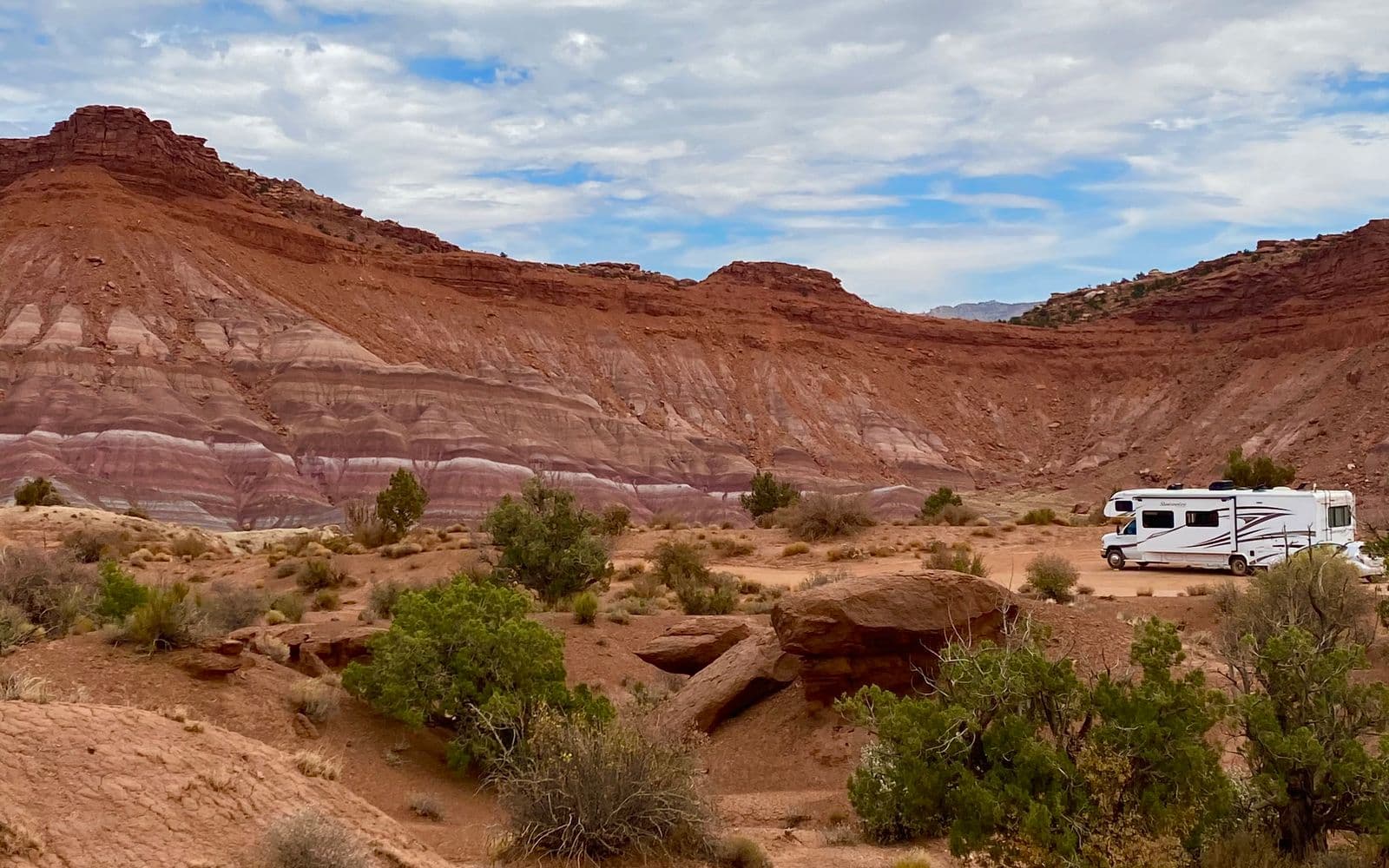
This loop links three radically different landscapes in about 700 miles: Zion’s deep canyon, Bryce’s high hoodoos and the Grand Canyon’s South Rim. A camper van earns its keep because sunrise, shuttle queues and campground location matter more than luxury hotel facilities.
- 1
Las Vegas
- 2
Zion National Park
Drive from previous stop: 2 hr 30
- 3
Bryce Canyon
Drive from previous stop: 1 hr 45
- 4
Page / Lake Powell
Drive from previous stop: 2 hr 40
- 5
Grand Canyon South Rim
Drive from previous stop: 2 hr 30
- 6
Las Vegas
Drive from previous stop: 4 hr 20
Schematic route by Roam Wired. Drive times are planning estimates; traffic, weather and vehicle restrictions can change them.
Book in this order
- Secure Zion and Grand Canyon nights, ideally cancellable.
- Choose the van class and confirm its dimensions.
- Reserve Bryce and Page-area nights.
- Book flights and non-refundable extras.
- Recheck park alerts, road conditions, heat and fire restrictions before departure.
Compare Las Vegas camper van rentals. Salt Lake City can work for a Utah-focused one-way or Mighty Five route, while Phoenix is logical when Sedona matters more than Bryce.
The 7-day itinerary
Day 1: Las Vegas to Zion — about 165 miles
Collect early and complete the handover before leaving cell coverage: utilities, dump valves, propane, awning, tire procedure and roadside contact. Buy groceries and more drinking water than seems necessary. Interstate 15 crosses into Utah and changes time zone, so verify arrival time.
Stay in or near Springdale. Do not plan a major hike on collection day; rental delays and grocery stops are normal.
Day 2: Zion Canyon
Park the van for the day and use the shuttle. The National Park Service’s 2026 schedule says service began March 7, requires no ticket or reservation, and restricts personal vehicles on Zion Canyon Scenic Drive while operating. Parking fills early, so camp or stay on a shuttle connection and board early.
Choose the Narrows only when flow, weather, flash-flood forecast and equipment are appropriate. Angels Landing needs a separate permit; have a non-permit alternative such as Scout Lookout or Pa’rus Trail.
Day 3: East Zion or a second trail
Use a second Zion day instead of treating the park as a photo stop. Smaller vans can follow the Zion–Mount Carmel Highway when current rules permit. From June 7, 2026, new large-vehicle limits prohibit vehicles over 35 ft 9 in long, 7 ft 10 in wide, 11 ft 4 in high or 50,000 lb. Alternate approaches can add 10–45 minutes.
Day 4: Zion to Bryce Canyon — about 85 miles
Bryce sits around 8,000 feet and can be much colder than Las Vegas or Zion. Walk the rim and, when conditions suit, combine Navajo Loop and Queen’s Garden. Set layers and water out before bed for sunrise rather than running the engine in a quiet campground.
Day 5: Bryce to Page — about 150 miles
Drive toward Page for Lake Powell viewpoints or a booked slot-canyon tour. Tours and weather restrictions vary; never enter a slot canyon with a flash-flood risk. This night breaks the journey to the South Rim and creates grocery/fuel access.
Day 6: Page to Grand Canyon South Rim — about 135 miles
Follow the open, approved route to the South Rim and arrive for afternoon viewpoints and sunset. Grand Canyon camping guidance says NPS campgrounds do not provide utility hookups, while Trailer Village does. Mather and Trailer Village at the South Rim operate year-round, subject to current conditions.
Day 7: Sunrise and return to Las Vegas — about 280 miles
Start with a nearby sunrise viewpoint, not a last-minute rim-to-river hike. The return takes roughly 4.5 hours before stops and traffic. Add a drop-off buffer for fuel, waste, cleaning and inspection. If the rental returns early, spend the prior night closer to Las Vegas instead.
Campground booking timeline
| When | Action |
|---|---|
| As soon as dates are considered | Check official reservation release dates for all three parks |
| Around six months ahead | Prioritize Grand Canyon and other reservable high-demand nights |
| 8–12 weeks ahead | Lock gateway alternatives and any Page tour |
| 1–2 weeks ahead | Recheck alerts, shuttle hours, fire rules and route closures |
| 24–48 hours ahead | Check heat, thunderstorms, flash floods and air quality |
Never assume a full campground allows a parking-lot sleep. The South Rim has campgrounds, but NPS warns they frequently fill. Reserve through the official linked system and keep a lawful fallback.
Which rental class?
| Class | Best use | Trade-off |
|---|---|---|
| Minivan camper | Lowest fuel/parking burden for two | Limited heat, water and indoor living |
| Class B high-roof | Best all-round couple choice | Premium daily price |
| Class C | Family beds and bathroom | More fuel, length constraints, harder parking |
| Class A | Resort-style space | Poor fit for this itinerary and Zion restrictions |
Air conditioning usually needs shore power or a generator; it does not run indefinitely from a small house battery. In summer, select legal powered sites or avoid low-desert nights, and never leave people or pets in a parked vehicle.
Seasonal trade-offs
- March–April: pleasant lower elevations, possible snow/ice at Bryce and the rim.
- May–June: strong access, rising heat and demand.
- July–August: extreme desert heat and monsoon flash-flood risk; early starts essential.
- September–October: often the best balance, with cold nights at elevation.
- November–February: quiet but winter roads, frozen systems and reduced services require a winter-ready rental.
Seven-day budget for two
| Item | Planning range |
|---|---|
| Van, required protection and fees | $1,400–$2,400 |
| Fuel | $220–$380 |
| Six campground nights | $150–$420 |
| Park/booking fees | $80–$160 |
| Food and contingency | $250–$500 |
| Indicative total | $2,100–$3,860 |
Use the US camper van cost guide to replace these ranges with a live quote.
Ready to build the loop? Start with Las Vegas rentals, then compare vans near Zion and the Grand Canyon if a local pickup better suits a shorter trip.
Heat, water and fuel plan
Fill fuel in the gateway towns rather than arriving near empty at a park. Carry drinking water separately from the van’s tank and follow current park guidance for the amount per person. A tank gauge can be inaccurate, and tank water quality depends on the rental’s sanitation history.
In hot months, hike at dawn, rest during the hottest hours and choose powered camping only when the vehicle’s air conditioner and site connection are compatible. Running the engine for cabin cooling at a campsite may be prohibited and is not a safe sleep plan. In thunderstorms, abandon exposed trails and slot canyons early.
Common loop failures
- Collecting late, then driving to Zion after dark without food or a confirmed pitch.
- Treating Bryce’s elevation like Las Vegas and arriving without warm layers.
- Missing the time-zone change between Nevada and Utah.
- Booking a Zion east-entrance route before checking exact vehicle dimensions.
- Assuming a park pass includes campground, timed-entry or trail reservations.
- Scheduling a long Grand Canyon hike on the same day as the Las Vegas return.
Keep all confirmations offline, record the van height beside the steering wheel and build a legal gateway-campground backup for each park. The route is resilient when a trail closes; it is fragile when it depends on an unreserved night.
Plan the booking
Compare camper van pickup locations for this trip
Choose the handover point that fits the route, then compare the complete checkout price, mileage allowance and first-night logistics.
Frequently Asked Questions
Keep the build moving
Make the next build decision easier.
Get practical diagrams, calculator updates and honest product comparisons in your inbox.
Jack Kennedy is a self-builder who has built two vans. He created Roam Wired to simplify conversion planning and share free tools, supported by affiliate links.
About Jack