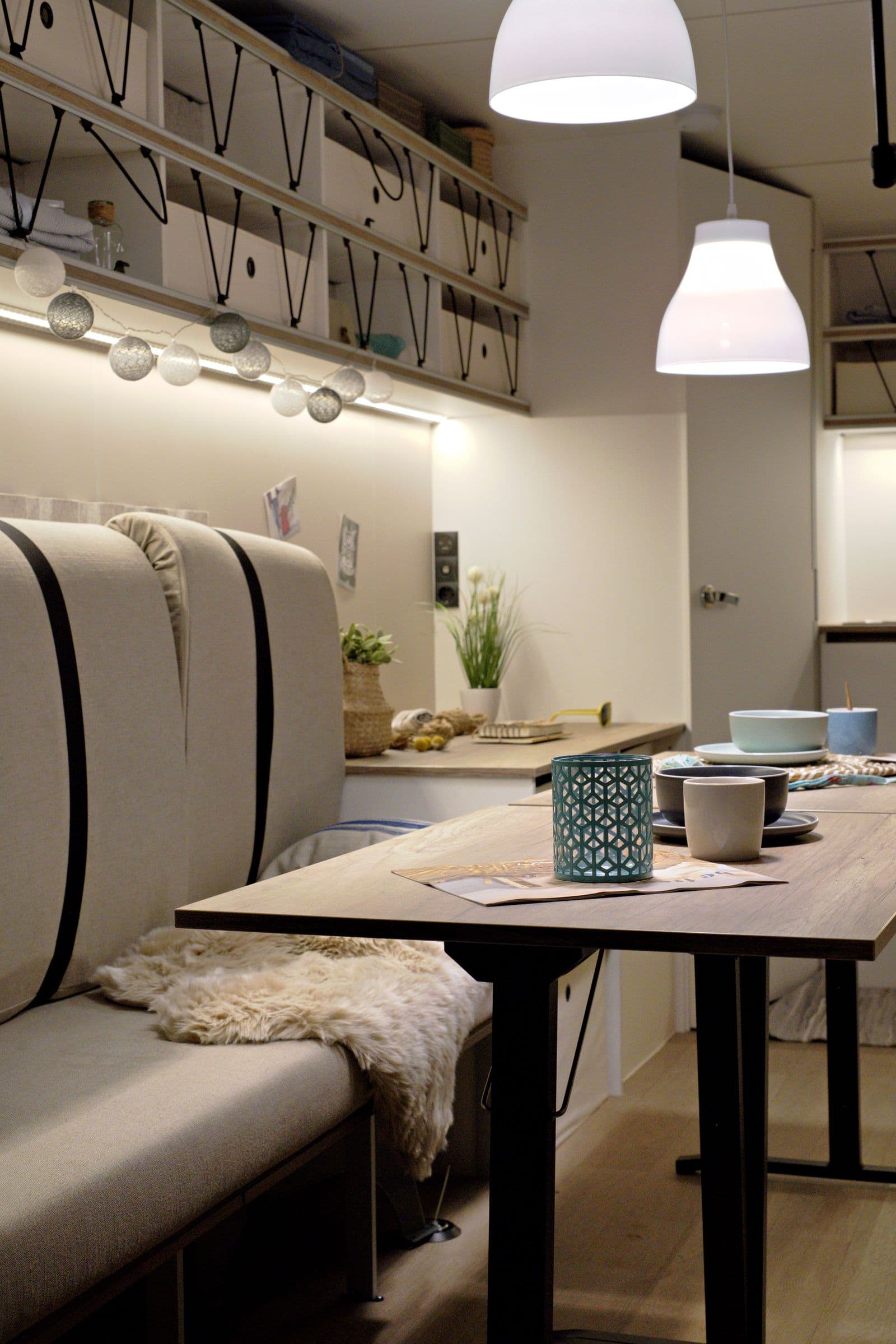
A workable van kitchen gives cooking, ventilation, water and storage enough space while keeping access and exits clear.
A galley should be designed around a meal, not an appliance list. Walk through food retrieval, preparation, cooking, serving, washing and waste. The exercise identifies blocked doors and missing landing space before the cabinetry makes them permanent.
Select the energy strategy
| Method | Benefit | Cost to the design |
|---|---|---|
| Outdoor portable stove | Minimal fixed interior | Weather dependence and setup |
| Fixed propane appliance | Familiar control and dense fuel storage | Combustion, fuel and installation requirements |
| Induction | No flame and easy cleaning | High inverter, battery and charging load |
| Targeted electric appliances | Efficient at one task | Storage and simultaneous-load planning |
Model electrical cooking in the US van power calculator using actual wattage, minutes and inverter losses. For any fuel-burning product, use only equipment intended for the installation and follow its manual and applicable codes.
The CPSC warns never to use portable fuel-burning camping equipment inside a vehicle unless it is specifically designed and instructed for enclosed use; doors and windows may not prevent lethal carbon-monoxide buildup. Read the CPSC carbon-monoxide fact sheet. Never use charcoal indoors or use a cooking appliance for heat. Install and test listed smoke and CO alarms according to their instructions.
Create heat, prep and wash zones
The heat zone needs appliance clearances, stable pans and a safe response route. The prep zone needs clean, lit counter. The wash zone needs water, drainage and drying space. Covers can let areas overlap only when the underlying fixture is cool and not in use.
Keep combustibles, curtains and bedding away from heat. Locate a suitable extinguisher or fire blanket where it can be reached from the exit side without reaching across a fire. Do not leave cooking unattended.
Keep plumbing short and inspectable
Position the sink near the fresh and gray routes where practical. Follow the camper van water-system guide for pump, sanitation and legal disposal. Keep every joint accessible and keep water away from batteries, inverters and distribution panels.
Choose sink depth with a mockup. A shallow bowl splashes; a deep bowl can raise the counter beyond comfortable working height. Confirm the trap, drain slope and gray-tank vent without sacrificing a whole cabinet to poorly planned fittings.
Store for travel
Inventory real cookware, dry food, liquids, cleaning products and waste. Put pans and containers low, use positive latches and contain bottles that can leak. Refrigerator air clearances and exterior/internal vents must follow its manual.
The lightweight storage guide covers restraints and weight distribution. A full pantry can add more rear-axle load than expected, especially behind the back wheels.
Ventilate the cooking load
Cooking creates heat and water vapor even when electric. An exhaust fan needs replacement air, and its path should not be blocked by an open cabinet, pop-top bed or curtain. The ventilation guide connects extraction to continuous background airflow.
Commission the complete galley
- Load every drawer and test latches.
- Pressure-test plumbing and inspect below the sink.
- Have regulated fuel work completed and tested by a qualified professional.
- Verify electrical protection and appliance clearances.
- Test smoke and CO alarms.
- Cook the most complex normal meal with another person moving through.
- Drive a rough route, then inspect fasteners, leaks and chafe.
- Document shutdown, cleaning, water refill and waste routines.
Leave out any appliance whose rare benefit compromises daily counter space, payload or safety. A small kitchen with a clean workflow beats a larger one full of obstacles.
Complete the cooking system
Compare energy, equipment and safe road routines before buying appliances.
Worked planning check
Mock up a 50cm worktop section beside the sink and place your actual chopping board, kettle and largest pan on it. Open every drawer with a second person passing behind. Keep the appliance manufacturer's clearances separate from the dimensions of the furniture carcass.
The figures or dimensions in this example are explicit planning assumptions, not a product test or an installation specification. Replace them with your equipment data and actual measurements.
Planning questions
Should I choose the van or the layout first?
Develop a minimum usable layout before buying, then confirm it against the actual vehicle’s dimensions, condition and weight allowance. Adapt the plan using measurements rather than brochure assumptions.
How can I test a layout before building furniture?
Use tape and cardboard at full size. Simulate sleeping, cooking, dressing and accessing storage with the bed made, doors closed and a second person present.
Does more floor space mean more payload?
No. Interior size and legal weight allowance are different. Use the specific vehicle’s ratings and measured weight, including axle loads and planned passengers and luggage.
Continue planning
Frequently Asked Questions
Keep the build moving
Make the next build decision easier.
Get practical diagrams, calculator updates and honest product comparisons in your inbox.
Jack Kennedy is a self-builder who has built two vans. He created Roam Wired to simplify conversion planning and share free tools, supported by affiliate links.
About Jack