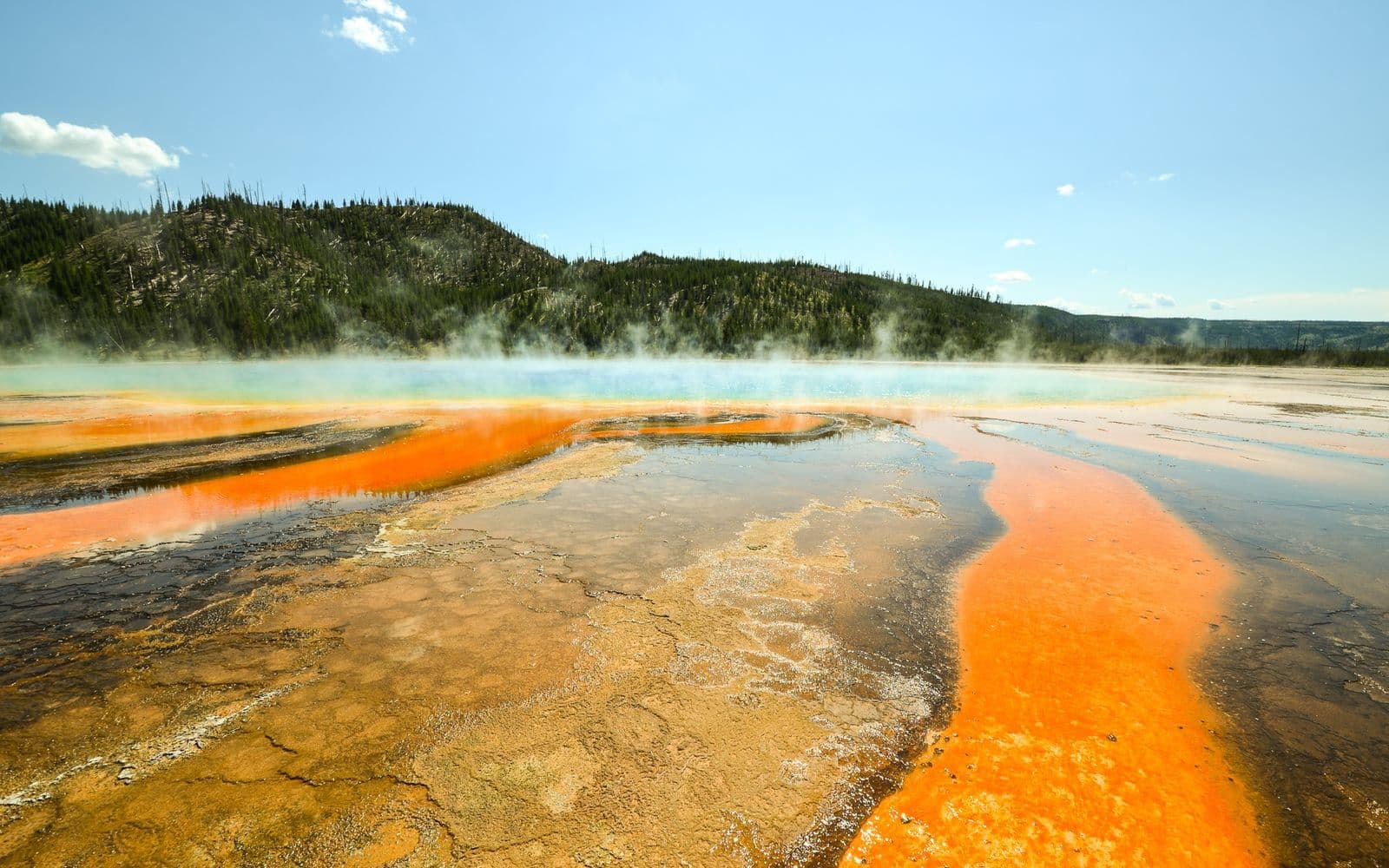
Yellowstone and Grand Teton touch on a map, but they are not a single compact attraction. Yellowstone’s figure-eight road can take hours to cross, especially around wildlife traffic. The itinerary works by moving camp between park sectors, not returning to one distant gateway every night.
- 1
Bozeman
- 2
Mammoth Hot Springs
Drive from previous stop: 1 hr 30
- 3
Lamar Valley
Drive from previous stop: 1 hr 15
- 4
Canyon Village
Drive from previous stop: 1 hr 30
- 5
Old Faithful
Drive from previous stop: 1 hr
- 6
West Thumb
Drive from previous stop: 45 min
- 7
Grand Teton
Drive from previous stop: 1 hr 20
- 8
Jackson
Drive from previous stop: 30 min
Schematic route by Roam Wired. Drive times are planning estimates; traffic, weather and vehicle restrictions can change them.
Reverse the route when collecting in Jackson.
Bozeman versus Jackson
| Gateway | Best for | Trade-off |
|---|---|---|
| Bozeman | North/west Yellowstone, Lamar Valley, flight/rental choice | Grand Teton comes at the far end |
| Jackson | Immediate Grand Teton access and a south-to-north route | Premium pricing and fewer budget options |
| Salt Lake City | Larger inventory and a broader Rockies trip | Roughly 4.5–5.5 hours before park touring |
| Denver | Multi-week Colorado/Wyoming expedition | Too much transfer for a one-week park trip |
A one-way Bozeman–Jackson rental is elegant but may be unavailable or expensive. Compare it with a loop and the cost of the return drive.
The 7-day itinerary
Day 1: Bozeman to Mammoth
Collect early, stock food outside the park and enter via Gardiner when open. Mammoth’s terraces make a manageable first afternoon. Confirm food-storage instructions and never leave a cooler or scented item accessible.
Day 2: Lamar Valley at dawn
Leave before sunrise with layers, optics and a full fuel plan. Pull over only where the vehicle is completely outside the travel lane. Maintain official wildlife distances and obey rangers; a camper van is not protection or permission to stop in the road.
Continue toward Tower-Roosevelt or Canyon according to the booked campground and current road status.
Day 3: Grand Canyon of the Yellowstone
Use a Canyon-area base for the north and south rim viewpoints, then add one moderate trail. Waterfalls and thermal ground create hazards; stay on constructed trails and boardwalks.
Day 4: Geyser basins and Old Faithful
Move south/west through Norris or the lower geyser basins according to traffic. Grand Prismatic’s overlook and boardwalk are different experiences; do not create a dangerous roadside stop if parking is full. End near Old Faithful or Madison.
Day 5: West Thumb to Grand Teton
Follow the open south-entrance route past Yellowstone Lake and West Thumb. Stop before Jackson Lake for views, then camp in Grand Teton. This is a scenic transfer, not an empty driving day.
Day 6: Grand Teton
Use sunrise at an accessible viewpoint, then Jenny Lake or a valley trail. Park the van once where possible. Afternoon thunderstorms and smoke can obscure the peaks, so keep the schedule flexible.
Day 7: Jackson and return logistics
For a Jackson drop-off, keep the final drive short. For a Bozeman loop, the return is substantial; consider moving north on day six or adding an eighth night. Fuel and empty waste outside the final rush.
Seasonal road access
The official Yellowstone operating dates explain that most roads, lodges and campgrounds open and close on separate schedules. The park is open all year, but that does not mean a rented camper can complete the loop all year. From roughly early November to late April, most roads close to ordinary vehicles and specialized winter travel replaces normal driving.
- Late May–June: roads progressively available, cold nights, snow at elevation and active wildlife.
- July–August: broadest services, strongest crowds and campground competition.
- September: excellent if nights, road weather and earlier closures are handled.
- October: beautiful but increasingly risky for service and weather assumptions.
- Winter: a different trip requiring approved winter logistics, not a normal rental itinerary.
Check live road status every morning; construction, fire, snow and wildlife events override a planned route.
Campground strategy
Reserve by geography, not just availability:
- Mammoth/Tower area for Lamar and the north.
- Canyon area for waterfalls and the central road.
- Madison/Old Faithful/Grant area for geysers and the south.
- Colter Bay or another suitable Grand Teton campground for the final sector.
One campsite for four Yellowstone nights can add six or more hours of repeated driving. Verify length limits using the van plus any rack, and note generator hours, hookups, water and dump availability.
Vehicle and safety
A compact Class B is ideal for two. A small Class C works for a family when every campsite accommodates the length. Nights can freeze outside midsummer, so confirm heating, battery and water-system instructions. Do not drive on an unapproved unpaved road to chase dispersed camping.
Carry bear spray where appropriate and know how to use it, but follow current park rules for storage and transport. Keep food, trash, toiletries and cooking equipment secured exactly as the campground requires.
Seven-day cost
| Item | Planning range for two |
|---|---|
| Rental, protection and fees | $1,500–$2,600 |
| Fuel | $220–$380 |
| Six campground nights | $180–$480 |
| Entrance/reservation fees | $80–$160 |
| Food and contingency | $280–$550 |
| Indicative total | $2,260–$4,170 |
Use the US cost guide, compare Bozeman and Jackson, then use the Yellowstone rental page for local alternatives.
Fuel, groceries and communications
Enter the park with fuel and several days of food, then top up where services are open rather than driving a large detour to save a few cents per gallon. Opening dates vary by village. Download maps, reservations and roadside-assistance details; cell coverage is not dependable enough to hold the trip together.
Keep drinking water separate from emergency vehicle water and confirm where potable fills and dump stations operate. Do not assume every campground provides both. Store all scented items—including toothpaste, trash and cookware—under the current campground instructions.
A weather and wildlife fallback
Smoke, snow, thunderstorms or a wildlife closure can erase a planned sector. Maintain one substitute in the same geographic area instead of crossing the park: boardwalks and visitor facilities for a poor mountain forecast, a later wildlife drive when visibility is bad, or another geyser basin when parking is closed.
Never approach a bear, wolf, bison, elk or moose for a photograph. Use the current NPS distance rules, stay in the vehicle only where stopping is legal and move on when rangers direct traffic. Bison can damage a van and easily outrun a person.
Common mistakes
- Booking every night outside one entrance and repeatedly crossing Yellowstone.
- Treating a campground name as proof that a long RV fits the selected site.
- Assuming “park open” means every road is open to wheeled vehicles.
- Planning Lamar at dawn from a distant southern campsite.
- Arriving with no cold-weather instructions for water, batteries or heat.
- Using a pullout as an overnight stop.
- Trying to complete Yellowstone and Grand Teton in three or four days.
If five days is the absolute limit, choose two Yellowstone sectors and one full Grand Teton day. Remove territory; do not preserve every pin and increase speed.
Before every departure, disconnect utilities, close roof vents, latch cabinets and walk around the vehicle. Confirm the next campground’s check-in instructions while signal exists. A five-minute routine prevents damaged hookups, open hatches and an avoidable late-night search.
Plan the booking
Compare camper van pickup locations for this trip
Choose the handover point that fits the route, then compare the complete checkout price, mileage allowance and first-night logistics.
Frequently Asked Questions
Keep the build moving
Make the next build decision easier.
Get practical diagrams, calculator updates and honest product comparisons in your inbox.
Jack Kennedy is a self-builder who has built two vans. He created Roam Wired to simplify conversion planning and share free tools, supported by affiliate links.
About Jack