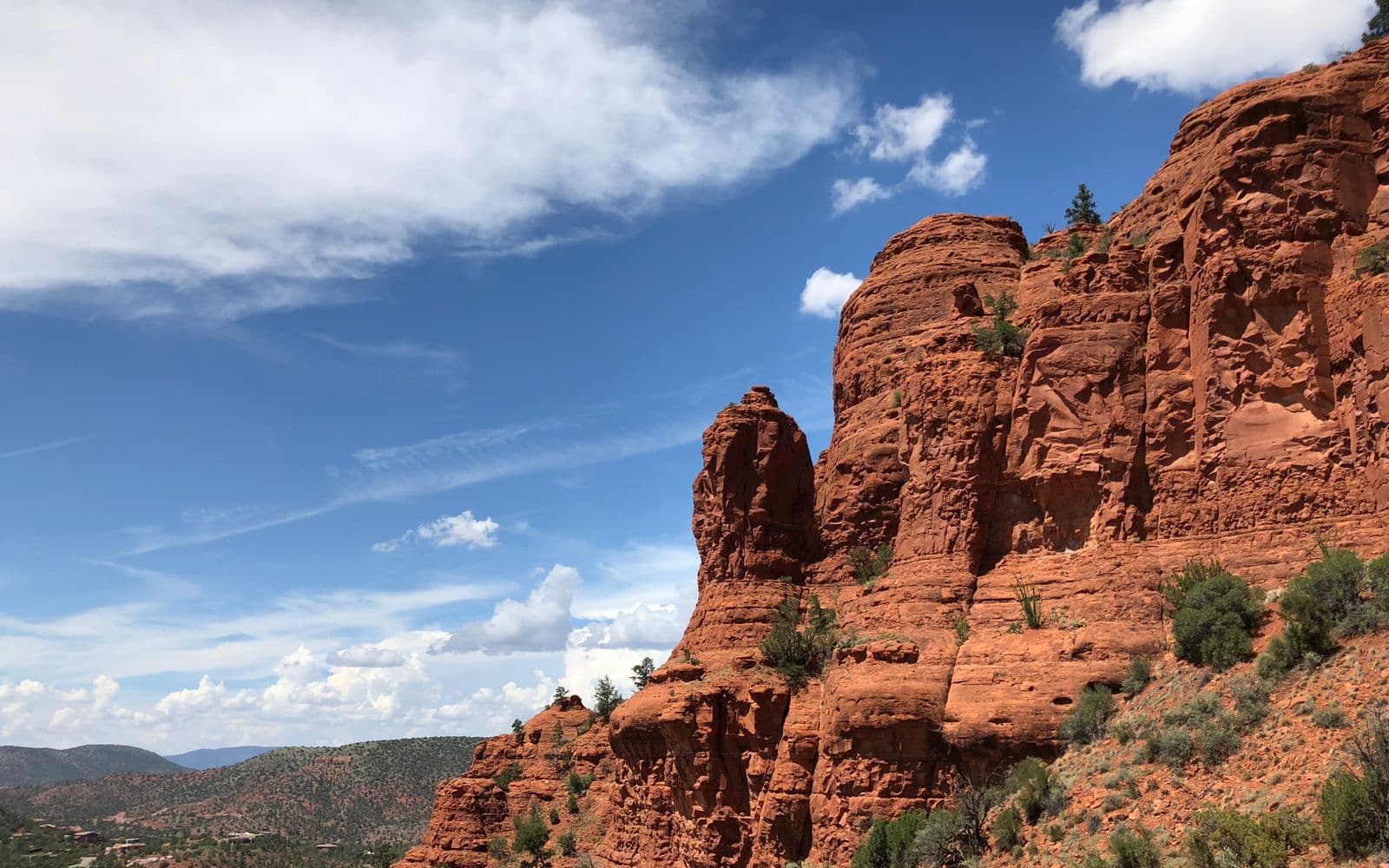
Arizona changes faster than most first-time visitors expect. The road from Phoenix to Sedona climbs from low Sonoran Desert into red-rock country; Flagstaff and the Grand Canyon South Rim sit high enough for snow and freezing nights while Phoenix is still warm.
That elevation range is why a camper van works well—and why the wrong one can fail. Air conditioning normally needs shore power or a generator, not a small house battery. Heating, insulated water systems and suitable tires matter in the high country outside summer.
- 1
Phoenix
- 2
Sedona
Drive from previous stop: 2 hr 15
- 3
Flagstaff
Drive from previous stop: 50 min
- 4
Grand Canyon South Rim
Drive from previous stop: 1 hr 30
- 5
Page
Drive from previous stop: 2 hr 30
- 6
Phoenix
Drive from previous stop: 4 hr 30
Schematic route by Roam Wired. Drive times are planning estimates; traffic, weather and vehicle restrictions can change them.
Route at a glance
| Day | Overnight base | Main plan | Approximate drive |
|---|---|---|---|
| 1 | Phoenix or Cave Creek | Collect, shop and test the van | Local / 30–60 miles |
| 2 | Sedona | Drive north and use an afternoon shuttle | 120 miles / 2–2.5 hours |
| 3 | Sedona | Red-rock trail day | Park the van and use transit |
| 4 | Flagstaff | Oak Creek Canyon and high-country reset | 30–50 miles / 1–1.5 hours |
| 5 | Grand Canyon South Rim | Viewpoints and sunset | 80 miles / 1.5 hours |
| 6 | Page | Sunrise, Desert View Drive and east exit | 135 miles / 2.5–3 hours |
| 7 | Phoenix | Long return, fuel and handback | 275–285 miles / 4.5–5 hours |
The loop is roughly 650 miles before local driving. If the rental has a low daily mileage allowance, calculate the overage before booking.
Book in this order
- Grand Canyon camping for the correct rim.
- Two legal Sedona-area nights.
- Page accommodation or campground and any authorized slot-canyon tour.
- A van whose heat, generator and mileage rules match the season.
- Flights that leave a safe return buffer after the Page–Phoenix drive.
Start by comparing Phoenix camper van rentals. Verify the actual collection address: many peer-to-peer vans are in the wider metro area, not at Sky Harbor airport, and delivery may be a paid extra.
The seven-day itinerary
Day 1: Phoenix collection and shakedown
Do not collect after a flight and immediately drive to Sedona after dark. Use a legal campground north of the city or around Cave Creek for the first night. That gives time to learn the water pump, refrigerator, propane, shore power, dump procedure and emergency contacts.
Buy groceries and drinking water before leaving the metro area. Photograph the van, note its height and test the cab and house air conditioners separately. Ask what can run while parked without hookups; “the van has AC” can refer only to the engine-driven cab system.
Day 2: Phoenix to Sedona
Interstate 17 climbs steadily toward the Verde Valley. Expect a noticeable temperature change and allow more time than the navigation estimate for grades and traffic. Set up camp before tackling a major hike.
Sedona’s most popular trailheads have constrained parking. The city-operated Sedona Shuttle serves several trailheads from park-and-ride lots, generally without reservations; operating days and holiday schedules vary, so check the live calendar. Parking a compact van once and using the shuttle is easier than circling residential streets.
Day 3: Sedona without moving camp
Use a full day for one area: West Sedona, Soldiers Pass, Dry Creek or Oak Creek. Match the trail to temperature, exposure and current fire closures. Carry water on your person rather than assuming you can return quickly to the van.
Do not build the night around finding an informal roadside pullout. Sedona and the surrounding public lands use changing closures and camping rules. Reserve a commercial, state, federal or otherwise explicitly authorized site and confirm the exact boundary.
Day 4: Sedona to Flagstaff
Oak Creek Canyon is scenic but winding and congested. Larger rentals need more braking distance and may struggle with small roadside parking areas. Flagstaff provides groceries, laundry, fuel and a cooler night before the South Rim.
Use the afternoon for a short local walk, Walnut Canyon or a simple rest day. The purpose of this stop is to avoid turning Sedona-to-Grand-Canyon day into a rushed sightseeing transfer.
Day 5: Flagstaff to Grand Canyon South Rim
Arrive at the South Rim with fuel and food. Park at the campground or visitor-center complex and use the free park shuttle for served areas. Sunset is worthwhile, but carry lights and warm layers—the temperature can fall quickly after dark.
The NPS 2026 operations guidance says a general entrance reservation is not required. Camping is different: Mather Campground is open year-round without hookups, Trailer Village provides hookups, and high-demand dates should be reserved well ahead.
Day 6: Desert View Drive to Page
Begin with sunrise near camp, then travel east along the 23-mile Desert View Drive when open. This route exits through the park’s East Entrance and avoids backtracking to Flagstaff. Stop only where the van fits fully inside a marked space.
Page is the base for Horseshoe Bend, Lake Powell and guided slot-canyon visits. Slot canyons can close for weather and flash-flood risk; use an authorized operator and never enter a restricted canyon independently. This is also the point to decide whether everyone is rested enough for the long Phoenix return.
Day 7: Page to Phoenix
Allow at least five hours plus stops. The route loses substantial elevation and can move from cold high country into extreme desert heat. Keep water accessible, refuel before the metro area and preserve time for waste disposal and inspection.
If the van has an early return, skip Page and spend night six in Flagstaff. A profitable itinerary is one that reaches the handback safely, not one that checks every destination.
The better five-day version
For five days, use:
Phoenix → Sedona → Flagstaff → Grand Canyon South Rim → Phoenix
Remove Page, keep two Sedona nights and one or two South Rim nights. The direct South Rim–Phoenix return is roughly 230 miles and still requires a generous buffer. Flagstaff can also be a useful pickup comparison if inventory exists for your dates.
Camping strategy
| Stop | Best approach | Common mistake |
|---|---|---|
| Phoenix first night | Reserved metro-edge or Cave Creek-area site | Driving north immediately after a delayed flight |
| Sedona | Two-night legal base with shuttle access | Assuming a trailhead or neighborhood permits sleeping |
| Flagstaff | Full-service reset night | Arriving without cold-weather layers |
| Grand Canyon | Mather, Trailer Village or confirmed gateway site | Confusing park entry with campground availability |
| Page | Reserved campground or RV park | Depending on a tour parking lot for overnight use |
Grand Canyon says campground reservations may be made up to six months ahead for key 2026 dates. Recheck the current park conditions before departure because roads, water availability and fire restrictions can change.
Which vehicle class works best?
| Vehicle | Best for | Trade-off |
|---|---|---|
| Minivan camper | Mild-weather couples and easy Sedona parking | Weak heat/cold protection and limited water |
| Compact Class B | Best all-round choice | Higher rate but easiest full-route fit |
| Small Class C | Family beds, bathroom and more storage | More fuel and harder trailhead parking |
| Large RV | Stationary full-hookup stays | Poor match for Sedona parking and short transfers |
For spring and fall, prioritize reliable heating and insulated plumbing. For hot weather, reserve powered sites and confirm the van’s shore-power connection can run the roof air conditioner. Never leave a person or animal in a parked vehicle based on a battery-powered cooling promise.
Seasonal trade-offs
- January–February: pleasant low desert; snow and freezing systems possible at Flagstaff and the rim.
- March–May: one of the best windows, with strong demand and variable high-country weather.
- June: very hot in Phoenix and exposed lower elevations; start before sunrise.
- July–August: extreme heat plus monsoon thunderstorm and flash-flood risk.
- September–November: another strong window; increasingly cold nights at elevation.
- December: low-desert escape, but winter driving can alter the northern loop.
Seven-day budget for two
| Item | Planning range |
|---|---|
| Van, required protection and service fees | $1,350–$2,450 |
| Fuel for 650–750 miles | $190–$340 |
| Six legal campground nights | $210–$540 |
| Park fees and booked activities | $80–$300 |
| Food and contingency | $300–$600 |
| Indicative trip total | $2,130–$4,230 |
Slot-canyon tours, premium hookups and high-season vans can push the total higher. Use the US camper van cost guide and compare the final checkout price rather than the advertised nightly rate.
Common route failures
- Treating Phoenix, Sedona and the South Rim as the same climate.
- Assuming the house battery can run air conditioning all night.
- Arriving in Sedona without a legal two-night base.
- Booking the North Rim when the itinerary and roads point to the South Rim.
- Scheduling Page on a five-day rental.
- Attempting a major canyon hike before the long Phoenix return.
- Returning the van immediately before a flight.
Compare Phoenix rentals, the Grand Canyon rental gateway and the broader best national parks for a camper-van trip before fixing the final route.
Plan the booking
Compare camper van pickup locations for this trip
Choose the handover point that fits the route, then compare the complete checkout price, mileage allowance and first-night logistics.
Frequently Asked Questions
Keep the build moving
Make the next build decision easier.
Get practical diagrams, calculator updates and honest product comparisons in your inbox.
Jack Kennedy is a self-builder who has built two vans. He created Roam Wired to simplify conversion planning and share free tools, supported by affiliate links.
About Jack