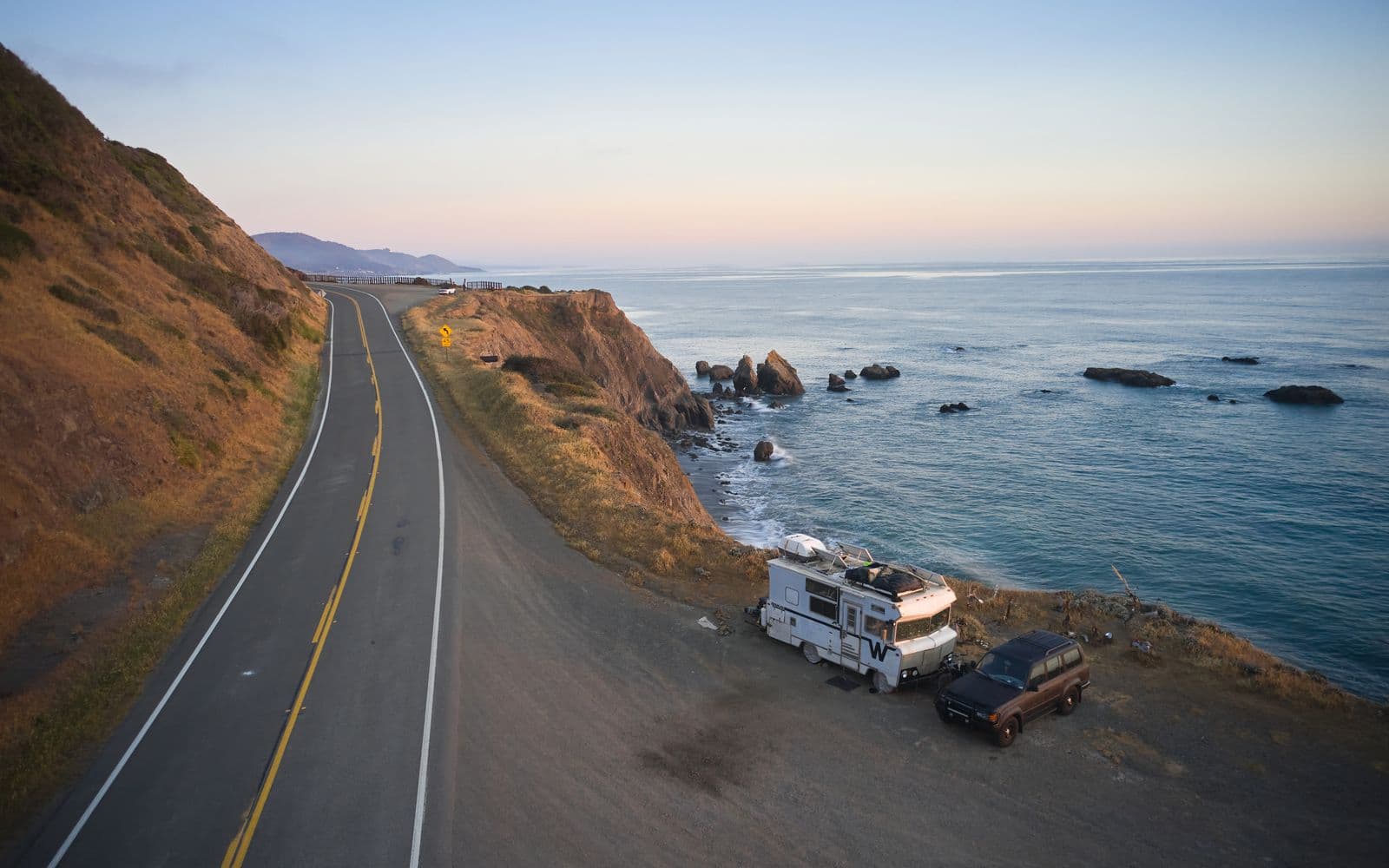
California’s coast road is slow, exposed and occasionally closed by landslides. The plan must survive that reality. This version covers roughly 470 coastal miles from Los Angeles to San Francisco in seven days, with San Diego as an optional two-day extension.
- 1
Los Angeles
- 2
Malibu & Ventura
Drive from previous stop: 1 hr 30
- 3
Santa Barbara
Drive from previous stop: 45 min
- 4
Morro Bay
Drive from previous stop: 2 hr 15
- 5
Big Sur
Drive from previous stop: 2 hr 30 without stops
- 6
Monterey & Carmel
Drive from previous stop: 45 min
- 7
Santa Cruz
Drive from previous stop: 50 min
- 8
San Francisco
Drive from previous stop: 1 hr 30
Schematic route by Roam Wired. Drive times are planning estimates; traffic, weather and vehicle restrictions can change them.
Before booking anything
Open the official Caltrans Highway 1 conditions search. Conditions can change after storms, so check again before departure and before the Big Sur day. A historic reopening does not guarantee your dates.
Compare a one-way LA-to-SF quote with a round trip from either hub. One-way saves backtracking but may add a relocation fee or sharply reduce inventory. Confirm who may drive, mileage, coastal-road permissions and the exact vehicle height.
Day-by-day itinerary
Day 1: Los Angeles to Ventura
Complete the handover away from rush hour if possible. Learn the propane, electrical and water systems, then stock groceries before following the coast through Malibu. Do not make a beach parking lot the overnight plan. Reserve around Ventura or Point Mugu and arrive before dark.
Day 2: Ventura to Santa Barbara
Keep the drive short for a beach walk, Santa Barbara waterfront and the option of wine country with a sober designated driver or tour. Large RVs are awkward downtown; pitch first and use local transport.
Day 3: Santa Barbara to Morro Bay
Continue through the Central Coast. Choose either the coast around Pismo or an inland food/wine stop, then base near Morro Bay. This night positions the van for Big Sur without a marathon start.
Day 4: Morro Bay to Big Sur
Recheck Caltrans. If through travel is open, start with fuel and arrive at viewpoints early. Pull completely into legal turnouts and never cross traffic for a photo. Big Sur’s short map distance takes hours once narrow road, construction control and stops are included.
If the road is closed, use the signed US-101 detour. Do not try forest roads or a crowd-sourced shortcut in a rental van.
Day 5: Big Sur to Monterey or Carmel
Take a morning walk from the campground, then continue to Carmel and Monterey. A two-night Big Sur stay is even better if the reservation exists; in that case move Monterey to day six and omit Santa Cruz.
Day 6: Monterey to Santa Cruz
Use the aquarium or a coastal walk in Monterey before a short transfer. Keep valuables out of view and follow campground food-storage rules. Overnight at a reserved coastal or redwood-area campground—not an urban beachfront lot.
Day 7: Santa Cruz to San Francisco
Follow the coast when time and road conditions allow, then cross into the Bay Area with a generous traffic buffer. Refuel and empty tanks at an authorised facility before returning. Avoid planning city sightseeing with luggage visible in the van.
Legal overnight stays
California does not provide a general right to sleep in a vehicle along the coast. City ordinances, highway rules, land-agency rules and posted restrictions vary. “No camping” can apply even if ordinary parking is allowed.
Use the official California State Parks camping system. Many state-park campsites release on a rolling basis up to six months ahead and coastal inventory disappears quickly. State Parks distinguishes specific en-route overnight facilities for self-contained vehicles; that limited program is not permission to use every beach lot.
A scenic pullout is not a campsite
Use pullouts for a short, lawful stop only. Do not set up, cook, sleep or remain when signage or local rules prohibit it. Reserve every coast night in peak periods.
Best camper van class
A compact Class B or high-roof conversion is the strongest fit for two: normal-width driving, easier pullouts and sufficient indoor shelter. Families can use a small Class C, but must match every site’s length and avoid tight urban parking. A Class A adds cost and removes flexibility on this route.
For summer, ventilation matters; for winter, heating and water-system freeze guidance matter. Shore-power air conditioning is not a substitute for a safe heat plan.
Season and trip cost
Late spring and early fall often balance weather and demand. Summer brings fog as well as crowds; winter storms can close sections. Wildfire, smoke and heavy rain require flexible plans in any relevant season.
| Item | Seven-day range for two |
|---|---|
| Rental, protection and fees | $1,400–$2,500 |
| Fuel | $160–$300 |
| Six campground nights | $240–$600 |
| Parking and activities | $100–$350 |
| Food and contingency | $300–$600 |
| Indicative total | $2,200–$4,350 |
Build an exact total with the US rental cost guide. Compare Los Angeles and San Francisco rentals before locking the direction.
Closure-proof the itinerary
Create two saved routes before travel. Route A follows Highway 1 only where Caltrans shows it open. Route B uses US-101 between the Central Coast and Monterey. Put campground phone numbers and cancellation terms beside both.
If a closure splits Big Sur, do not assume the open sections connect. A northern out-and-back from Monterey and a southern out-and-back from Morro Bay can be separate excursions with a long inland transfer between them. Decide whether the scenery is worth that drive or spend the recovered time around Santa Barbara, Paso Robles, Pinnacles or Monterey.
Never use an unpaved mountain road as a workaround. Rental agreements often prohibit it, emergency access is limited and online maps may not understand washouts or turning space.
Food, fuel and waste stops
Buy core groceries in Los Angeles or Ventura and top up in established towns. Big Sur prices and opening hours reflect remoteness. Enter the coast section with adequate fuel, but do not carry unnecessary water weight if confirmed campground fills are available.
Identify authorised dump stations before the final day. A campground booking does not guarantee a dump point or potable-water fill. Never release tanks at roadside drains or beaches.
Security and city handoffs
Treat the camper as a visible rental vehicle. Keep passports, electronics and luggage out of sight; better, take high-value items with you or use secure storage. Do not leave the fully packed van unattended at an urban attraction immediately after airport pickup or before return.
Plan San Francisco sightseeing after the vehicle has been returned when possible. If not, reserve suitable parking explicitly and check height limits. A rooftop fan, solar panel or box makes the van taller than the body specification.
Common PCH mistakes
- Trusting a months-old article instead of current Caltrans status.
- Booking six coastal nights before confirming the rental’s one-way terms.
- Driving after dark to find an unreserved “free” beach stop.
- Moving every morning when a two-night Big Sur or Monterey base would be better.
- Underestimating fog, crosswinds and temperature change.
- Pulling partly into the road for a photograph.
- Scheduling a city return with no traffic or tank-service buffer.
The road trip succeeds when each leg ends at a confirmed night before sunset. The views are the flexible part; safe parking and an open road are not.
Plan the booking
Compare camper van pickup locations for this trip
Choose the handover point that fits the route, then compare the complete checkout price, mileage allowance and first-night logistics.
Frequently Asked Questions
Keep the build moving
Make the next build decision easier.
Get practical diagrams, calculator updates and honest product comparisons in your inbox.
Jack Kennedy is a self-builder who has built two vans. He created Roam Wired to simplify conversion planning and share free tools, supported by affiliate links.
About Jack