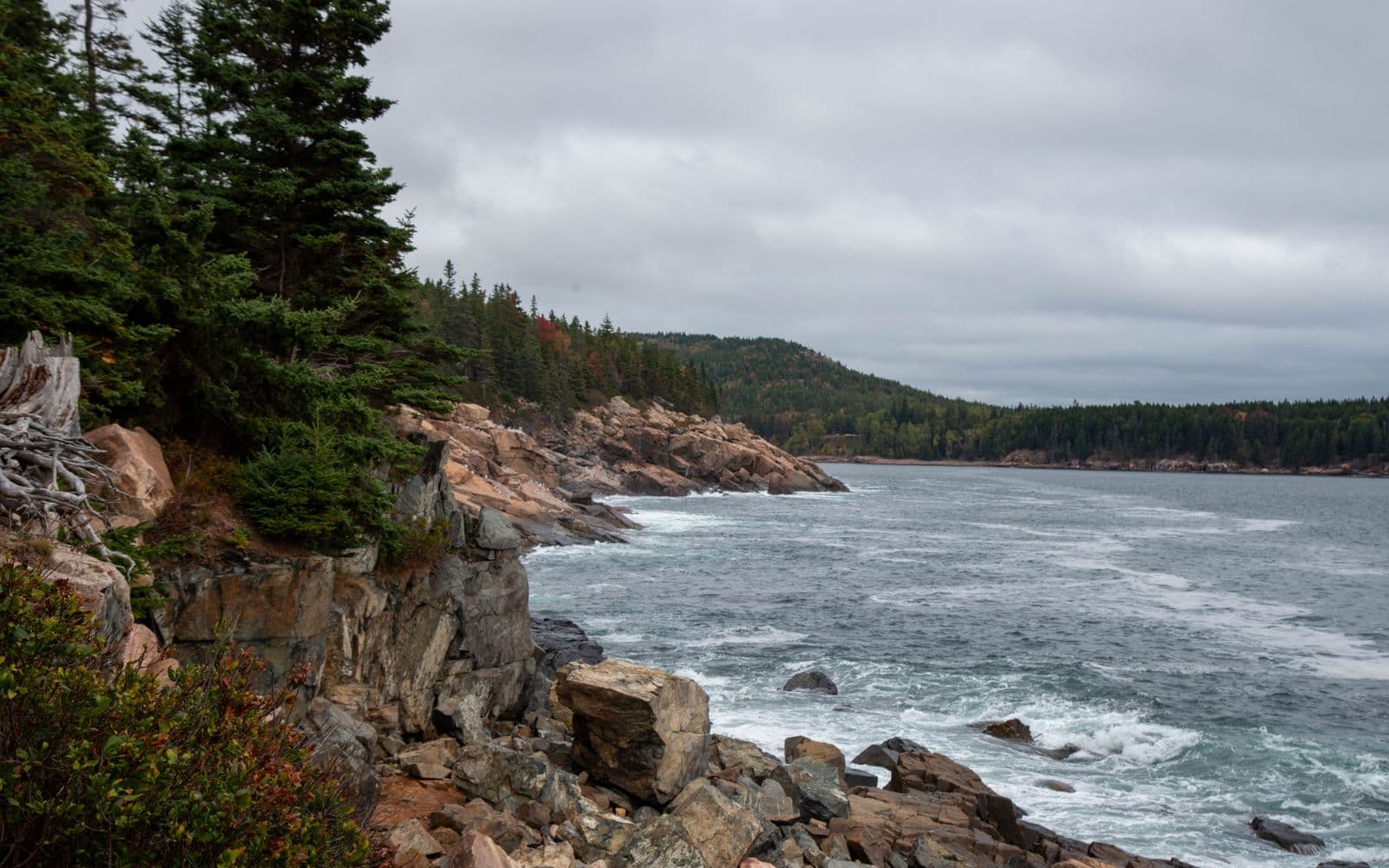
New England foliage develops north-to-south and high-to-low, but weather can accelerate, delay or strip leaves. Build a reversible loop and check official state foliage reports during the week before travel. The van provides flexibility between reserved bases; it does not remove the need for lawful overnight sites.
- 1
Boston
- 2
Berkshires
Drive from previous stop: 2 hr 30
- 3
Stowe & Route 100
Drive from previous stop: 3 hr
- 4
White Mountains
Drive from previous stop: 2 hr
- 5
Portland, Maine
Drive from previous stop: 2 hr
- 6
Acadia National Park
Drive from previous stop: 3 hr
- 7
Boston
Drive from previous stop: 4 hr 30
Schematic route by Roam Wired. Drive times are planning estimates; traffic, weather and vehicle restrictions can change them.
If northern color is already past peak, reverse the route and spend more time in Massachusetts, southern Vermont or coastal areas.
Boston versus Portland, Maine
| Pick-up | Best for | Trade-off |
|---|---|---|
| Boston | Largest flight market and complete six-state loop | Urban pickup, traffic and longer Acadia transfer |
| Portland, Maine | Acadia, Maine coast and White Mountains | Smaller rental pool; less logical for western Massachusetts |
| Burlington | Vermont-first trip and Route 100 | Limited inventory and flight choice |
Book early: foliage weekends create peak demand even though the wider US summer season has ended. Confirm heating because mountain nights can freeze.
Week-by-week planning—not a promise
| Approximate period | First places to investigate | Caveat |
|---|---|---|
| Late September | Northern Maine, far northern Vermont/New Hampshire, high elevations | Color may still be patchy or weather-affected |
| Early October | Green Mountains, White Mountains, inland Maine | Often busiest in classic mountain towns |
| Mid-October | Southern Vermont/New Hampshire, Berkshires, central Massachusetts | Northern areas may be past peak |
| Late October | Southern New England and some coastal zones | Storms can remove leaves quickly |
Do not build the route around a decade-old “peak map.” Use current reports, webcams and campground availability.
The 7-day route
Day 1: Boston to the Berkshires
Collect outside rush hour, learn the heating and stock groceries. Use the Massachusetts Turnpike west and camp at an open seasonal campground. A short walk or scenic local road is enough after collection.
Day 2: Berkshires to Vermont Route 100
Travel north through small towns toward the Green Mountains. Keep to signed roads suitable for the van; covered bridges and village lanes can have height or weight limits. Base around the central/northern Route 100 corridor rather than attempting every village.
Day 3: Stowe and the Green Mountains
Leave the vehicle at the campsite where transit or safe cycling works, or arrive at trail parking early. Stowe is popular for good reason, but congestion is part of foliage season. A rainy day can still produce saturated color and excellent photography.
Day 4: Vermont to the White Mountains
Cross into New Hampshire and position near North Conway. The Kancamagus Highway is about 34 miles, yet overlooks and traffic turn it into a half-day. Use only designated pullouts and never stop in the travel lane.
The White Mountain National Forest camping page is the starting point for current federal campground information. Confirm closing dates: many facilities are seasonal.
Day 5: White Mountains to Portland
Take a morning walk, then drive to Portland, Maine. Use a legal campground outside the city and visit by transit or a separate planned parking strategy. This is a reset night for food, water and laundry.
Day 6: Portland to Acadia
The direct drive is roughly three hours, but the Midcoast easily fills the day. Choose one harbor stop. Arrive at an Acadia-area campground before dark and confirm food-storage rules.
Day 7: Acadia, then return strategy
For a Boston return, Acadia needs another night or a very early departure; the drive can exceed 4.5 hours before traffic. The better seven-night version spends day seven in Acadia and returns on day eight. If limited to seven calendar days, collect in Portland or omit the Berkshires.
Acadia reservations and overnight rules
Acadia’s official camping guidance requires advance campground reservations through Recreation.gov and prohibits backcountry/out-of-bounds camping and overnight parking as a substitute. Check campground dimensions and seasonal dates.
For 2026, Cadillac Summit Road reservations are required May 20–October 25. NPS says 30% release 90 days ahead and 70% two days ahead. Sunrise is not guaranteed by a reservation; weather may obscure the view.
Foliage flexibility still needs legal nights
Reserve cancellable bases, not roadside sleeping. If color shifts, change day drives or move between lawful campgrounds that actually have space.
Vehicle and campground constraints
A heated Class B works best for two. Confirm minimum-temperature instructions, battery capacity and whether the water system must be winterized in freezing conditions. Large Class C vehicles need length-compatible sites and extra care on village roads. Pack rain gear and warm bedding; do not use a stove or unapproved heater for cabin heat.
Many New England campgrounds close during or soon after foliage season. Check the actual operating date, water availability and dump station—not merely whether the listing exists online.
Seven-night budget for two
| Item | Planning range |
|---|---|
| Rental, protection and fees | $1,500–$2,600 |
| Fuel and tolls | $230–$420 |
| Seven campground nights | $245–$560 |
| Parking/reservations | $50–$180 |
| Food and contingency | $300–$600 |
| Indicative total | $2,325–$4,360 |
Use the US camper van cost guide. Compare Boston with Portland, Maine, then choose route direction from the current foliage report—not habit.
Build a reversible reservation plan
Reserve two-night bases with fair cancellation terms in Vermont/New Hampshire and Maine, then leave the connecting day flexible. If color is stronger east, drive to Maine first; if a storm is stripping coastal leaves, begin inland. Do not cancel a legal night until a replacement is confirmed.
Save an alternate route that avoids low covered bridges and unsuitable town centers. Record the van’s height, width and length at handover. Peak-weekend traffic makes shortcuts tempting, but minor roads can be slower and less suitable than the signed highway.
Cold nights and short daylight
Test the heater with the owner and ask how long it can operate on the available fuel and battery. Confirm whether the water system needs freeze protection. Never use the cooking stove, a candle or an unapproved portable heater for cabin warmth, and keep required ventilation open.
Sunset arrives earlier than summer travelers expect. Finish scenic drives before dark, because wildlife and leaf-covered shoulders reduce visibility. Set up the bed and cook while there is light instead of arriving at a seasonal campground after its office and water system have closed.
Foliage-trip mistakes
- Treating a generic “peak week” as a guarantee for the current year.
- Attempting all six New England states in seven days.
- Booking Boston and Acadia in one week without allowing the return drive.
- Assuming every summer campground remains open through late October.
- Selecting an unheated van because daytime temperatures look mild.
- Stopping in the road when an overlook is full.
- Believing flexibility means sleeping in any lot.
The highest-quality version uses Portland for a Maine–White Mountains–Vermont loop or Boston for a longer eight- to ten-day circuit. Seven nights from Boston should omit either Acadia or the Berkshires so the best color can be enjoyed outside the windshield.
Plan the booking
Compare camper van pickup locations for this trip
Choose the handover point that fits the route, then compare the complete checkout price, mileage allowance and first-night logistics.
Frequently Asked Questions
Keep the build moving
Make the next build decision easier.
Get practical diagrams, calculator updates and honest product comparisons in your inbox.
Jack Kennedy is a self-builder who has built two vans. He created Roam Wired to simplify conversion planning and share free tools, supported by affiliate links.
About Jack