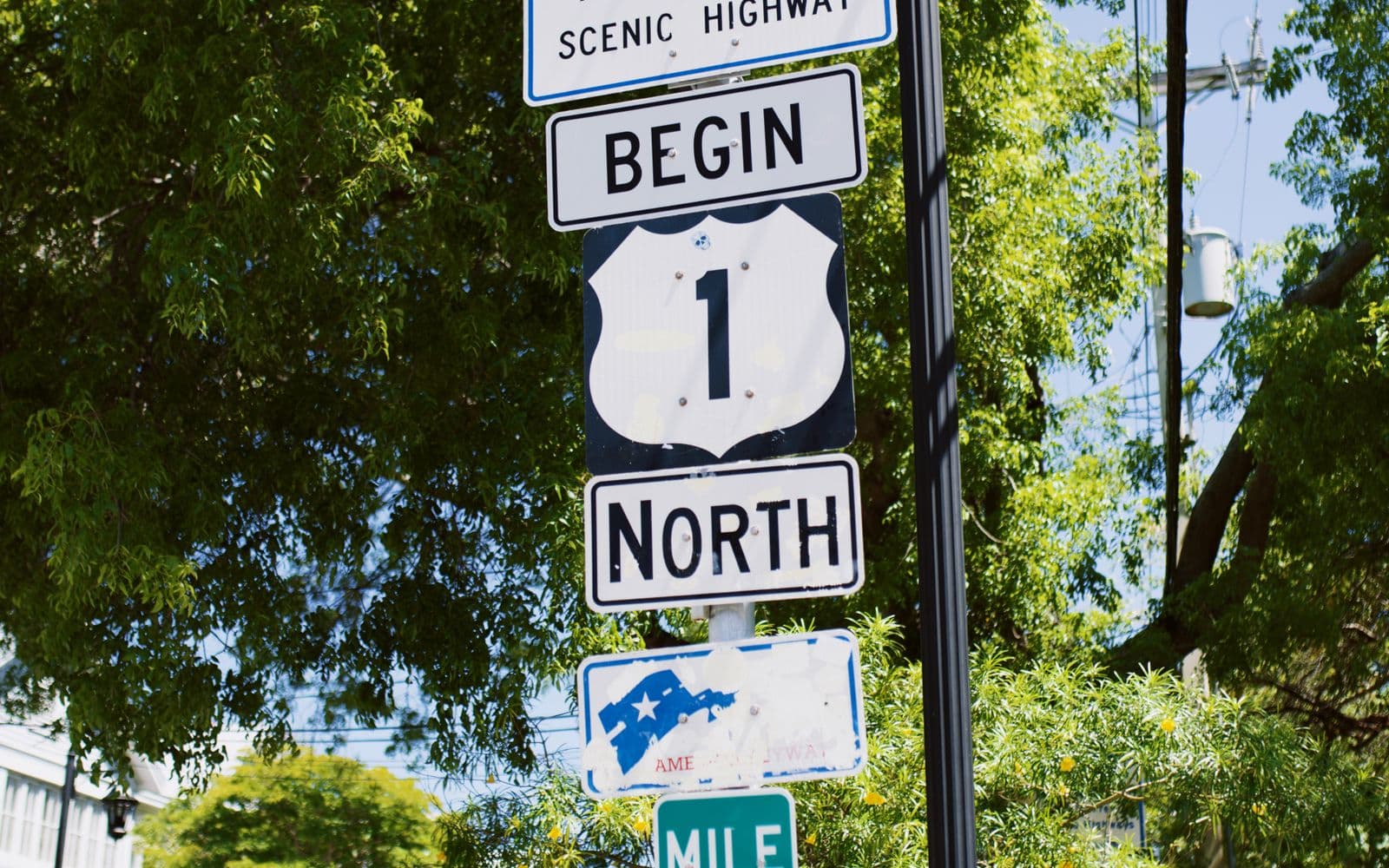
The drive from Miami to Key West is only about 165 miles, but the Overseas Highway, Everglades side trips and limited camping make it a slow-travel route. A camper van is valuable only after legal overnight stops are secured.
This seven-day loop uses the Homestead entrance to Everglades National Park, continues through the Upper and Middle Keys, spends two nights near Key West and returns to Miami without adding Tampa or Orlando.
- 1
Miami
- 2
Long Pine Key
Drive from previous stop: 1 hr 15
- 3
Flamingo
Drive from previous stop: 50 min
- 4
Key Largo
Drive from previous stop: 2 hr 15
- 5
Marathon
Drive from previous stop: 1 hr 15
- 6
Key West
Drive from previous stop: 1 hr 15
- 7
Miami
Drive from previous stop: 3 hr 30
Schematic route by Roam Wired. Drive times are planning estimates; traffic, weather and vehicle restrictions can change them.
Route at a glance
| Day | Overnight base | Main plan | Approximate drive |
|---|---|---|---|
| 1 | Homestead or Long Pine Key | Collect, shop and enter the Everglades | 45–65 miles / 1.5–2.5 hours |
| 2 | Flamingo | Everglades main park road | 40–50 miles / 1.5–3 hours with stops |
| 3 | Key Largo | Flamingo to Upper Keys | 90–110 miles / 2.5–3.5 hours |
| 4 | Marathon area | Upper Keys and bridges | 50–70 miles / 1.5–3 hours |
| 5 | Key West area | Lower Keys and Key West | 50 miles / 1.5–2.5 hours |
| 6 | Key West area | Park the van and explore | Local transit or cycling |
| 7 | Miami | Overseas Highway return | 165 miles / 3.5–5 hours |
Book in this order
- Three or four Keys campground nights.
- Flamingo and/or Long Pine Key according to season.
- A compact van with a realistic cooling system.
- Any Key West activity with limited capacity.
- Flights that leave a large US-1 return buffer.
Start by comparing Miami camper van rentals. Ask where the vehicle is actually collected, how tolls are processed and whether travel to the Keys is explicitly allowed.
The seven-day itinerary
Day 1: Miami to Homestead or Long Pine Key
Collect early, photograph the van and test the cab air conditioner, roof air conditioner, refrigerator, water, propane and shore-power cable separately. “Air conditioned” may mean only the engine-driven cab system.
Shop in Homestead and fill drinking water. Enter Everglades National Park only with a confirmed overnight plan. Long Pine Key is the easiest first base when open; a Homestead campground is safer after a late flight.
Day 2: Main park road to Flamingo
Drive slowly from pine rockland through sawgrass and mangrove habitats, using designated trails and overlooks. Wildlife near roads and standing water requires attention. Never feed or approach alligators or crocodiles.
The NPS camping page identifies Long Pine Key and Flamingo as the two frontcountry drive-in campgrounds reached from the Homestead entrance. Long Pine Key is seasonal, while Flamingo provides a larger base and some electrical hookup sites.
Set up at Flamingo before dusk. Mosquito and no-see-um pressure varies dramatically; screens, repellent and a van that closes securely matter.
Day 3: Flamingo to Key Largo
Retrace the park road, then travel toward Key Largo. Do not attempt an airboat tour at Flamingo: the official visitor-center guidance explains that authorized airboat operations are elsewhere in the region.
Use a reserved Upper Keys campground. Key Largo is a logical base for snorkeling or paddling, but water activities depend on wind and operator conditions. Keep a land-based alternative.
Day 4: Key Largo to Marathon
Travel the Overseas Highway slowly. Traffic incidents can block the only main road, so avoid stacking timed bookings. Stop only where the van fits and never use a bridge shoulder as a scenic pullout.
Marathon creates a useful middle base and reduces the final Key West transfer. Confirm whether the site includes 30-amp or 50-amp power and whether the van’s connector is compatible.
Day 5: Marathon to Key West
Cross the Seven Mile Bridge and continue through the Lower Keys. Arrive at the campground before entering central Key West with the van. Parking is constrained, and a compact shuttle, bicycle or local transit is more practical.
Do not count on Long Key State Park as a 2026 camping fallback: Florida State Parks reports primitive camping closed for construction. Check every state-park status page directly before booking the route.
Day 6: Key West without moving camp
Leave the van at the authorized overnight base. Explore Old Town, the waterfront or a prebooked boat trip without spending the day searching for oversized parking.
Dry Tortugas is a full-day boat or seaplane commitment, not a quick camper-van stop. Add another night if it is a priority, and keep a weather cancellation plan.
Day 7: Key West to Miami
Leave early. The map estimate can expand through weekend traffic, roadworks or an incident on US-1. Refuel near the handback, empty waste only at an authorized facility and allow time for toll reconciliation and inspection.
Do not schedule an early-afternoon flight after a same-day Key West departure. Spend night six farther north if the return appointment is before midday.
Legal overnight strategy
Keys camping is scarce and expensive because land is limited. That is a route fact, not a problem solved by stealth parking.
| Region | Best approach | Avoid |
|---|---|---|
| Everglades | Long Pine Key or Flamingo when operating | Visitor-center and trailhead lots overnight |
| Upper Keys | Reserved state, county or commercial campground | Marina and shopping parking without permission |
| Middle Keys | Marathon-area powered base | Depending on a same-day cancellation |
| Lower Keys | Reserved campground outside central Key West | City streets, beaches and bridge approaches |
Reserve the hardest Keys nights first. If none are available, change the dates or use lodging; do not rent first and hope the parking problem resolves itself.
Which camper van should you rent?
| Vehicle | Best for | Trade-off |
|---|---|---|
| Minivan camper | Cool-season couple on full-facility sites | No dependable overnight air conditioning |
| Compact Class B | Best overall choice | Premium rate, but easiest parking |
| Small Class C | Family needing bathroom and beds | Higher fuel and harder Key West access |
| Large RV | Long stays at reserved resorts | Wrong fit for a mobile Keys itinerary |
In hot weather, prioritize a vehicle with shore-power roof air conditioning and reserve compatible powered sites. A house battery alone normally cannot cool a van through a tropical night.
Seasonal trade-offs
- November–February: best general weather and highest campground demand.
- March–April: warm, busy and still strong for the route.
- May: rising heat, humidity and storms.
- June–October: tropical-weather season, extreme heat and frequent thunderstorms; cancellation flexibility matters.
Monitor official storm information and follow evacuation orders immediately. A camper van is not hurricane shelter.
Seven-day budget for two
| Item | Planning range |
|---|---|
| Van, protection and fees | $1,500–$2,700 |
| Fuel and toll handling | $120–$260 |
| Six legal campground nights | $300–$900 |
| Park fees and activities | $80–$500 |
| Food and contingency | $350–$700 |
| Indicative total | $2,350–$5,060 |
Keys campsites can cost more than inland RV sites. Use the US camper van cost guide and compare the whole checkout rather than nightly price.
Common planning failures
- Renting before securing Keys campsites.
- Believing cab air conditioning will cool the parked van overnight.
- Adding Tampa or Orlando to a seven-day Miami loop.
- Treating US-1 drive times as guaranteed.
- Depending on a campground currently closed for construction.
- Leaving pets or people in a parked vehicle.
- Driving Key West to Miami immediately before a flight.
Start with Miami rentals, compare the Everglades gateway and Key West camper vans, or use Orlando for a separate central-Florida itinerary.
Plan the booking
Compare camper van pickup locations for this trip
Choose the handover point that fits the route, then compare the complete checkout price, mileage allowance and first-night logistics.
Frequently Asked Questions
Keep the build moving
Make the next build decision easier.
Get practical diagrams, calculator updates and honest product comparisons in your inbox.
Jack Kennedy is a self-builder who has built two vans. He created Roam Wired to simplify conversion planning and share free tools, supported by affiliate links.
About Jack