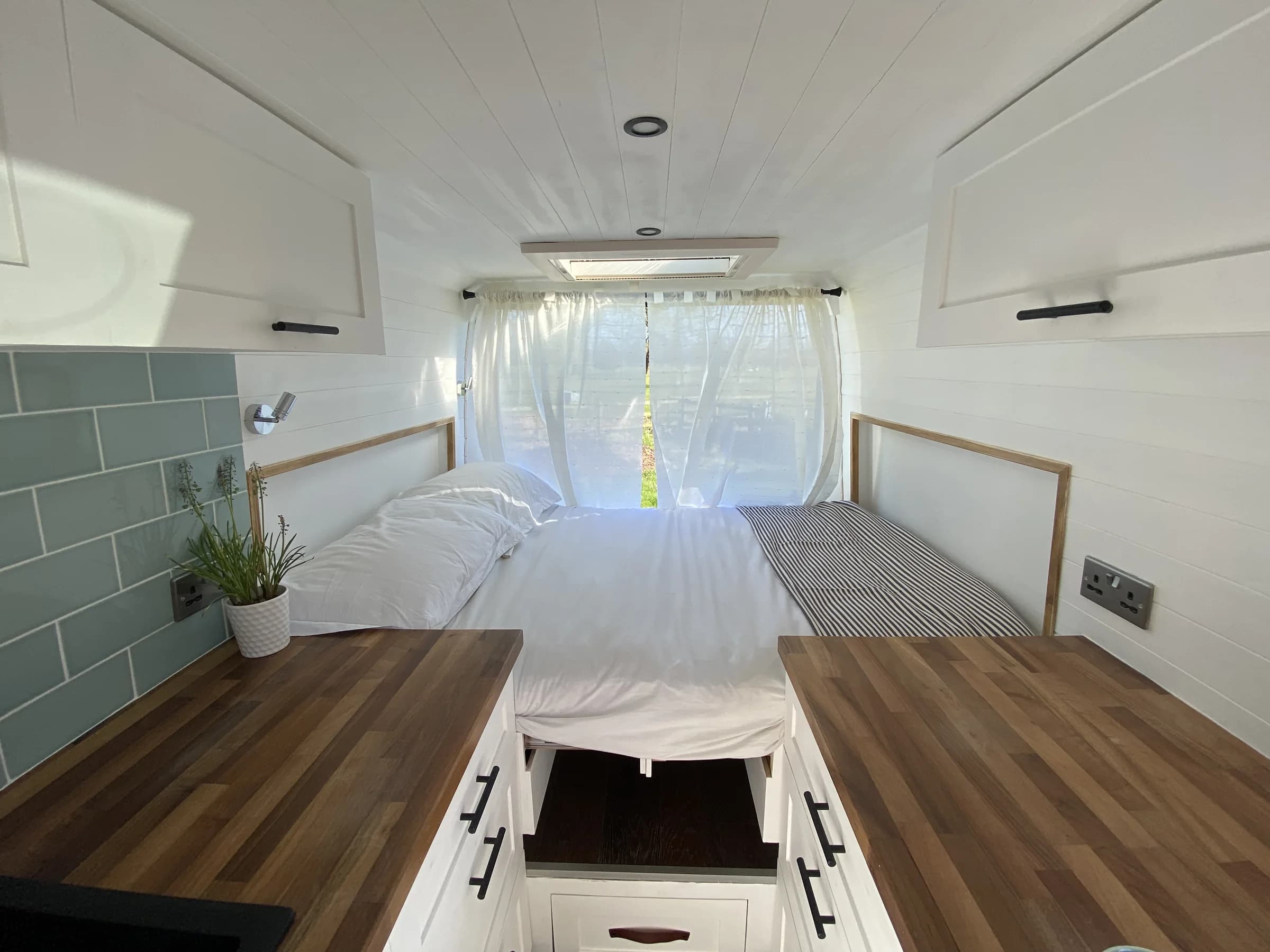
Bed choice controls more of a campervan than almost any appliance. It sets the garage height, aisle, windows, overhead cupboards, night-time toilet access and how much furniture must move twice a day.
Set the sleeping envelope
Measure each sleeper lying naturally, not standing against a wall. Add space for pillows, feet and bedding. Check shoulder width for two people and the amount of headroom needed to sit up. Then measure the van at finished mattress height: insulation and lining can remove critical width.
The layout-planning guide explains how to mock this up at full size. Spend at least 20 minutes on the proposed platform with the intended mattress thickness; five seconds is not a comfort test.
Compare the options
| Bed type | Best for | Watch for |
|---|---|---|
| Fixed transverse | Medium vans, garage storage, fast setup | Finished width and difficult inner-person exit |
| Fixed lengthways | Tall sleepers, easy access, twin option | Consumes vehicle length |
| Rear lounge conversion | Daylight, social space, rear views | Daily assembly and bedding storage |
| Dinette conversion | Short vans and occasional use | Narrow sections, cushion gaps, table storage |
| Sliding platform | Flexible aisle and simple conversion | Robust runners, finger traps and restraint |
| Elevating-roof bed | Families and extra berths | Roof loading, cold/wind exposure and ladder access |
Fixed transverse bed
This is popular because the void below becomes a garage. It works only when the finished internal width suits the sleepers. Do not use the bare-metal brochure width: wall build-up, curvature and door furniture change the result. Flares can create length but add structural, sealing and registration questions.
Fixed lengthways bed
Two singles can make night access easier and create a centre aisle; an infill can join them. A full double running lengthways is comfortable but often dictates a long-wheelbase van. Raised beds increase storage but reduce sitting headroom and can place mass high.
Convertible lounge or dinette
Convertible beds earn their keep when daytime seating is genuinely used. Count the complete setup: move table, extend supports, rearrange cushions, retrieve bedding and find somewhere for unused pieces. If that takes ten minutes at home, it will feel longer in rain.
Do not assume the lounge is safe for passengers. The DVSA rear-seat conversion guidance recommends properly secured forward- or rear-facing seats and professionally installed belts. Travel seating is an engineering system, not a furniture feature.
Design the support and mattress together
A mattress needs even support and a route for moisture. Closely spaced slats or a tested ventilating layer can improve airflow; a solid board may need ventilation holes and clearance. Avoid improvised structures that concentrate weight into weak furniture edges.
Choose mattress thickness after checking headroom. High-density foam can save depth but firmness is personal. Hinged sections should not fold across an uncomfortable ridge. Removable covers, washable protectors and access to dry the underside matter more after a wet winter than showroom styling.
The condensation and ventilation guide explains why sleeping moisture needs continuous controlled ventilation. A wet mattress underside is a system warning, not merely a cleaning issue.
Protect night-time routes
Deploy the bed and turn off the lights. Can both occupants reach the side door, toilet, water and emergency exit? Are heater outlets or return-air paths blocked? Can a dog settle without becoming a trip hazard? Are phones and glasses reachable without overhead shelves becoming head hazards?
If a bed slides or folds, positively latch it in travel and deployed positions. Keep fingers away from pinch zones, round exposed edges and prevent loose panels becoming projectiles.
Test before committing
Use a cardboard platform in the empty van or rent the closest layout. Record:
- time to convert in both directions;
- whether bedding remains attached;
- pressure points after two nights;
- access for the inner sleeper;
- ventilation and morning moisture;
- what becomes inaccessible with the bed made;
- garage usability when bedding is stored.
The best bed is the one you will use without resentment. Give sleep priority if the van is for long trips; preserve flexible floor area if it is primarily a day vehicle. Make that trade deliberately, then coordinate cabinets through the lightweight storage guide.
Compare the whole interior
Place the bed alongside the kitchen, storage and service zones before building.
Frequently Asked Questions
Keep the build moving
Make the next build decision easier.
Get practical diagrams, calculator updates and honest product comparisons in your inbox.
Jack Kennedy is a self-builder who has built two vans. He created Roam Wired to simplify conversion planning and share free tools, supported by affiliate links.
About Jack