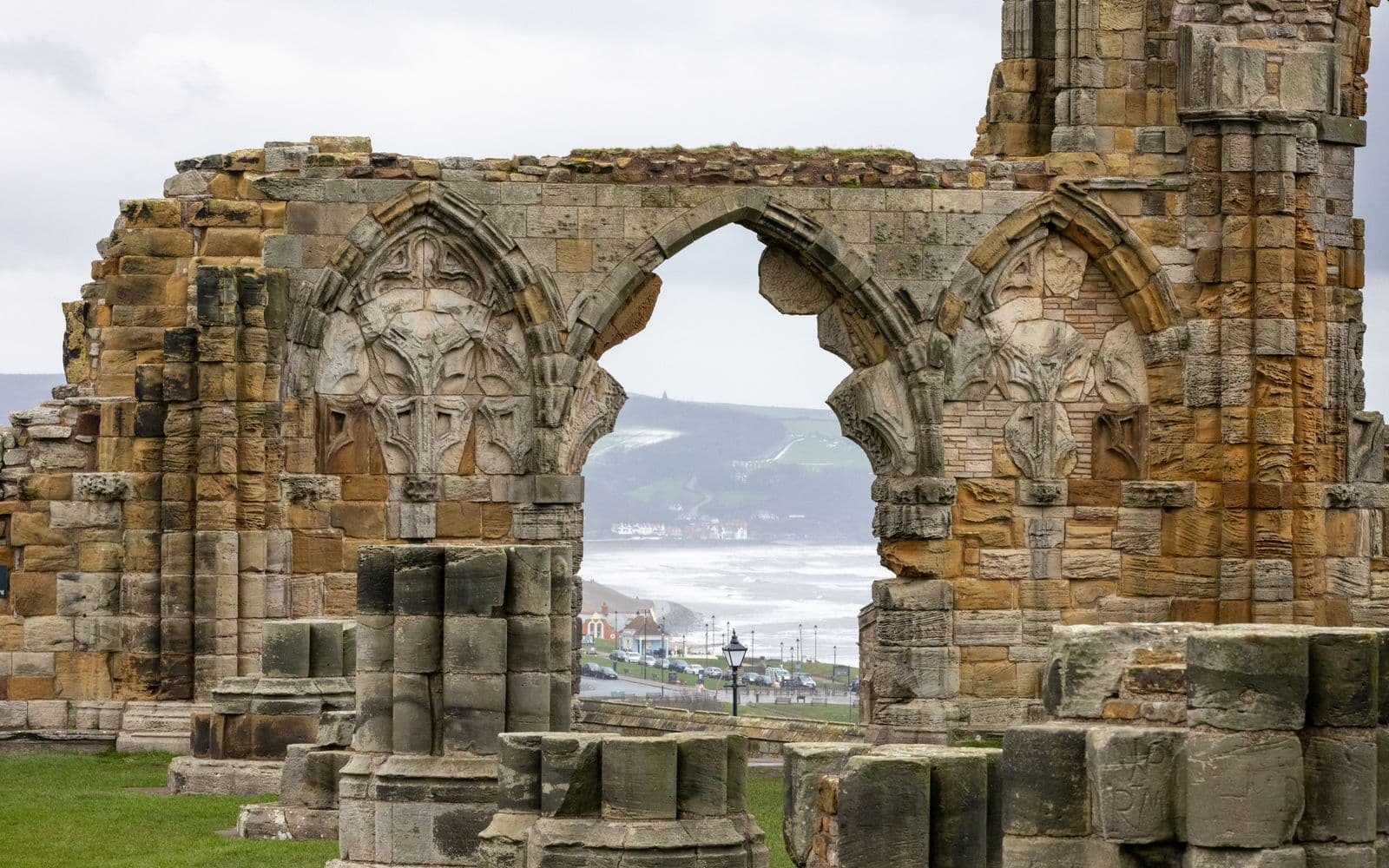
Yorkshire is unusually well suited to a one-week campervan loop: limestone valleys in the Yorkshire Dales, heather moorland in the North York Moors and fishing villages along the Heritage Coast. The landscapes are close, but the most scenic minor roads are not automatically the best roads for a large vehicle.
This route begins around York, gives each region two nights and returns without adding the Lake District or Peak District.
- 1
York
- 2
Harrogate
Drive from previous stop: 45 min
- 3
Malham / Wharfedale
Drive from previous stop: 1 hr 15
- 4
Hawes / Wensleydale
Drive from previous stop: 1 hr 15
- 5
Helmsley
Drive from previous stop: 2 hr
- 6
North York Moors
Drive from previous stop: 45 min
- 7
Whitby
Drive from previous stop: 45 min
- 8
York
Drive from previous stop: 1 hr 15
Schematic route by Roam Wired. Drive times are planning estimates; traffic, weather and vehicle restrictions can change them.
Route at a glance
| Day | Overnight base | Main plan | Approximate drive |
|---|---|---|---|
| 1 | Southern Dales | Collect near York/Leeds and reach camp | 45–80 miles / 1.5–2.5 hours |
| 2 | Southern Dales | Malham, Wharfedale or Nidderdale | Local driving/walking |
| 3 | Wensleydale area | Dales transfer and waterfall stop | 35–60 miles / 1.5–3 hours |
| 4 | Helmsley or Pickering | Cross to the North York Moors | 70–100 miles / 2.5–4 hours |
| 5 | Moors base | Moorland railway, walk or village day | Local driving |
| 6 | Whitby/coast | Goathland, Robin Hood’s Bay or Whitby | 30–55 miles / 1–2 hours |
| 7 | York/Leeds | Coast morning and return | 50–90 miles / 1.5–3 hours |
Book in this order
- Two Dales campsite nights.
- Two Moors nights in one base.
- A coast campsite or authorized motorhome site.
- A compact campervan.
- Any attraction or railway journey with fixed capacity.
Compare York campervan hire, Leeds pickups and Harrogate campervans. A cheaper listing can be less useful if collection sends you across a city in rush hour.
The seven-day itinerary
Day 1: York or Leeds to the southern Dales
Collect early, inspect the vehicle and learn the heating, gas, water, toilet and electrical setup before leaving. Buy groceries near the pickup and record the van’s height and width.
Use a reserved site around Wharfedale, Malham or Nidderdale. Do not aim for a famous narrow village after dark. The first night should test the systems and place you near the next day’s walk.
Day 2: One southern-Dales area
Choose Malham, Wharfedale or Nidderdale—not all three. Park once and spend the day on foot. Arrive early at popular villages and use overflow or transit options where directed.
Stone walls, livestock and oncoming traffic leave little recovery space. Follow signed main approaches rather than the smallest satnav route.
Day 3: Wensleydale or Swaledale
Move north through the Dales and keep the transfer modest. Aysgarth, Hawes or another Wensleydale base gives waterfalls, market-town services and access to high country without a long drive.
Use a second legal campsite night. The Yorkshire Dales National Park car-park guidance states that overnight occupation of vehicles and motorhomes is prohibited in authority-owned car parks.
Day 4: Dales to Helmsley or Pickering
Cross toward the North York Moors through the Vale of York using roads suited to the van. This is a resupply day: fuel, food, water and waste services are easier before the remote moorland sections.
Set up for two nights around Helmsley, Pickering, Rosedale or another confirmed base. Keeping the pitch removes pressure to find parking at the end of a full day.
Day 5: North York Moors
Choose one theme: a moorland walk, the heritage railway, abbey and village stops, or cycling from camp. Avoid a continuous “best villages” driving circuit.
The national park’s motorhome parking advice allows daytime parking where space exists but says overnight parking is not allowed. Large vehicles may have designated areas at individual car parks; follow on-site directions.
Day 6: Moors to Whitby and the coast
Travel toward Whitby, Goathland or Robin Hood’s Bay. Use signed parking and park-and-ride where available rather than entering historic streets in search of a normal bay.
Spend the final night at a reserved coastal campsite or another explicitly authorized motorhome stop. Sea-view parking does not automatically permit cooking, levelling or sleeping.
Day 7: Coast to York or Leeds
Keep the morning local and leave a generous return buffer. Coastal traffic, market days and city congestion can expand the drive. Refuel and empty waste only where authorized before inspection.
If the handback is before midday, spend night six farther inland instead of near the coast.
Legal overnight strategy
Yorkshire has plenty of campsites, farm sites and certified locations. Use them instead of interpreting a long-stay parking tariff as accommodation permission.
| Region | Recommended base | Do not rely on |
|---|---|---|
| Southern Dales | Reserved campsite near the planned walk | Malham or trailhead car parks overnight |
| Northern Dales | Hawes/Wensleydale campsite | Dark-sky car park as sleeping permission |
| North York Moors | Two-night campsite near Helmsley/Pickering | Authority day-use car parks overnight |
| Coast | Campsite or authorized motorhome stop | Beach, abbey or park-and-ride parking |
Check each facility’s current arrival time, vehicle length and waste rules. “Motorhomes allowed” may describe daytime parking only.
Which campervan should you hire?
| Vehicle | Best for | Trade-off |
|---|---|---|
| Small pop-top | Villages and easy parking | Limited wet-weather comfort |
| Compact high-roof | Best overall for two | Higher rate but easier week |
| Long-wheelbase van | More living and storage | Harder in stone villages |
| Coachbuilt motorhome | Family campsite stays | Restricted parking and routing |
Ask about mileage, recovery on rural roads, heating, gas, bedding, toilet chemicals and return cleaning. A reversing camera is useful; it does not make a long van fit a short bay.
Seasonal trade-offs
- March–April: quieter roads, lambing season and variable cold weather.
- May–June: long daylight and generally strong touring conditions.
- July–August: busiest campsites, villages and coast.
- September–October: good walking periods with shorter days and rain.
- November–February: limited campsite opening and winter road conditions.
Keep dogs under close control around livestock and follow current access signs. Wet limestone, moorland exposure and coastal wind can change the sensible walking plan.
Seven-day budget for two
| Item | Planning range |
|---|---|
| Campervan, insurance and fees | £700–£1,400 |
| Fuel | £75–£145 |
| Six legal overnight stops | £140–£300 |
| Parking and attractions | £40–£160 |
| Food and contingency | £220–£450 |
| Indicative total | £1,175–£2,455 |
Use the UK campervan hire cost guide to compare current quotes, deposits and mileage.
Common planning failures
- Trying to visit every famous Dales village in one day.
- Following satnav down unsuitable walled lanes.
- Confusing daytime motorhome parking with overnight permission.
- Moving camp every night.
- Driving a large motorhome into Whitby’s historic centre.
- Adding the Lake District to a seven-day Yorkshire loop.
- Returning from the coast without a city-traffic buffer.
Start with Yorkshire campervans, compare York, Leeds and Harrogate, and use the Lake District guide for a separate northern trip.
Choose a collection point and overnight base
Plan the booking
Compare campervan pick-up locations for this trip
Choose the handover point that fits the route, then compare the complete checkout price, mileage allowance and first-night logistics.
Frequently Asked Questions
Keep the build moving
Make the next build decision easier.
Get practical diagrams, calculator updates and honest product comparisons in your inbox.
Jack Kennedy is a self-builder who has built two vans. He created Roam Wired to simplify conversion planning and share free tools, supported by affiliate links.
About Jack