The west Highlands deliver Scotland’s most concentrated campervan scenery without committing to the full North Coast 500: Loch Lomond, Glencoe, Ben Nevis, the Road to the Isles, Skye and Oban.
This loop begins at Glasgow, uses the Skye Bridge and keeps ferries optional. The driving total is only around 500–600 miles, but Highland roads make time more important than distance.
- 1
Glasgow
- 2
Loch Lomond
Drive from previous stop: 1 hr 15
- 3
Glencoe
Drive from previous stop: 1 hr 15
- 4
Fort William
Drive from previous stop: 35 min
- 5
Isle of Skye
Drive from previous stop: 2 hr 45
- 6
Eilean Donan
Drive from previous stop: 1 hr
- 7
Oban
Drive from previous stop: 2 hr 45
- 8
Glasgow
Drive from previous stop: 2 hr 30
Schematic route by Roam Wired. Drive times are planning estimates; traffic, weather and vehicle restrictions can change them.
Route at a glance
| Day | Overnight base | Main plan | Approximate drive |
|---|---|---|---|
| 1 | Loch Lomond or Glencoe | Collect, shop and travel north | 45–100 miles / 1.5–3 hours |
| 2 | Fort William area | Glencoe walks and viewpoints | 20–45 miles / 1–2 hours |
| 3 | Skye | Glenfinnan or direct Road to the Isles | 110–140 miles / 3–4.5 hours |
| 4 | Skye | Trotternish or west-Skye day | Local single-track driving |
| 5 | Skye | Second island day without moving camp | Local driving |
| 6 | Oban | Bridge, Eilean Donan and south | 150–180 miles / 4–5.5 hours |
| 7 | Glasgow | Oban morning and return | 95 miles / 2.5–3 hours |
Book in this order
- Two consecutive Skye nights.
- A Glencoe or Fort William pitch.
- Oban or Argyll for the final night.
- The campervan, after confirming exact collection and return times.
- Any optional ferry only after measuring the vehicle correctly.
Compare Glasgow campervan hire. Peer-to-peer handovers may be outside the city or airport; a “Glasgow” listing can still require a train or taxi transfer.
The seven-day itinerary
Day 1: Glasgow to Loch Lomond or Glencoe
Collect early, learn the heating, gas, water, toilet and electrical systems, and buy groceries before joining the A82. Record the vehicle height and width. Scotland’s weather makes reliable heating and a place to dry clothing more valuable than fashionable off-road accessories.
For a late collection, stop legally near Loch Lomond rather than driving Glencoe after dark. Between March and September, selected Loch Lomond Camping Management Zones require a campsite or permit. The national park’s campervan guidance explains where designated motorhome permits apply.
Day 2: Glencoe and Fort William
Use a full day instead of photographing Glencoe through the windscreen. Park only in a bay that fits the whole van, choose a walk appropriate to weather and keep waterproof layers accessible.
Continue to Fort William for fuel, supplies and a reserved pitch. Ben Nevis is not a casual afternoon addition; allow a separate day, suitable conditions and proper hill preparation.
Day 3: Fort William to Skye
Choose between two routes:
- Bridge route: A82/A87 via Invergarry and Eilean Donan. Simpler because it needs no sailing.
- Mallaig ferry route: scenic Road to the Isles, but requires an appropriate vehicle booking and check-in buffer.
If using CalMac, book rather than relying on standby. The operator notes that campervans and motorhomes need confirmed space on several constrained routes, including Mallaig–Armadale.
Do not attempt Glenfinnan, a ferry and north Skye after a late start. Remove a stop before creating an unsafe rush.
Day 4: North Skye
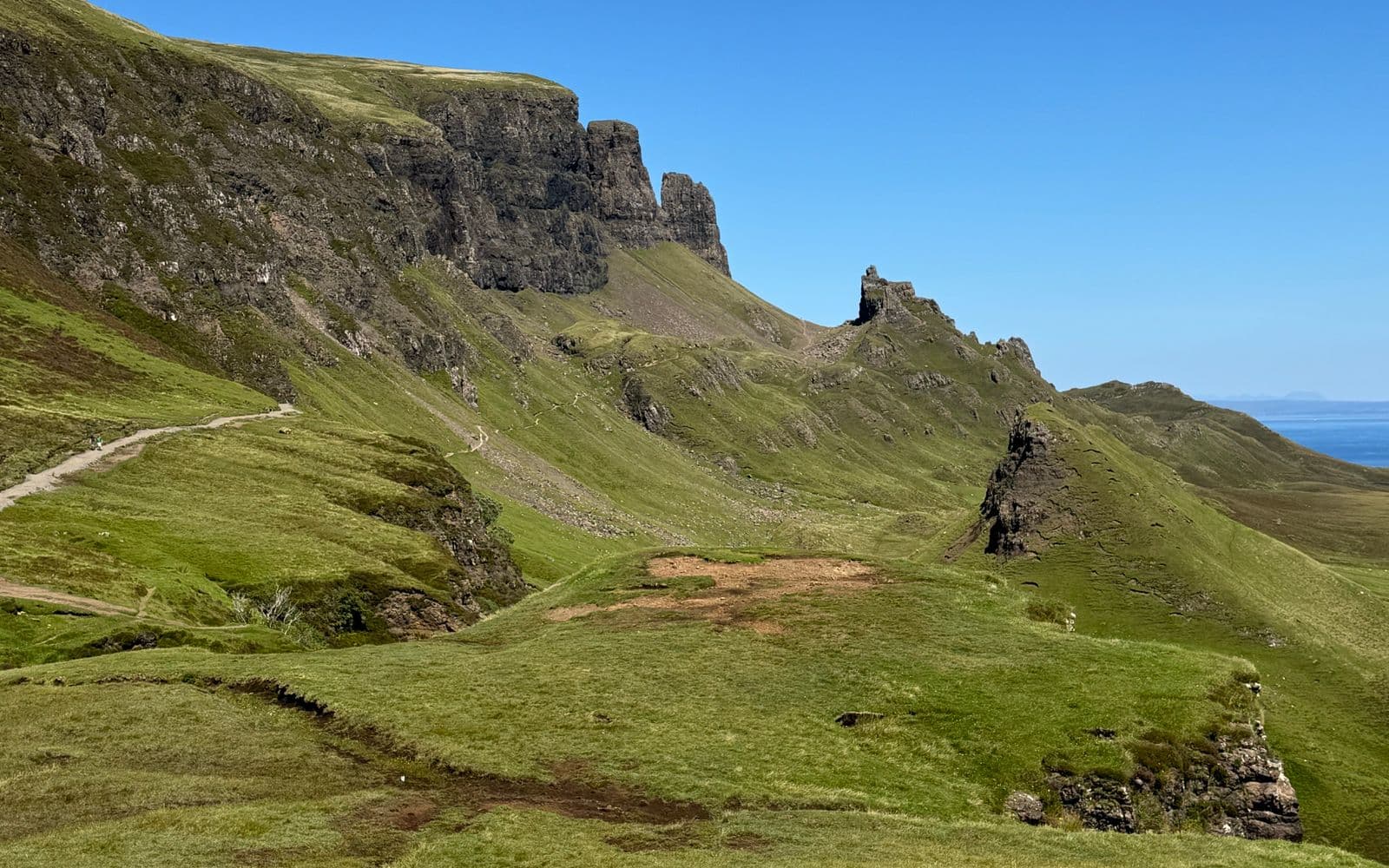
Use one region: Portree, the Trotternish peninsula and the Quiraing area. Single-track roads depend on passing places. Pull in for vehicles behind you, never park in a passing place and avoid convoys of rental vans.
Popular roadside sights have limited parking and toilets. A compact van helps, but it does not authorize verge parking. Begin early and keep a less-famous walk as a fallback.
Day 5: West or south Skye
Keep the same campsite. Choose the Fairy Pools and Glen Brittle area, Dunvegan, Elgol or a quieter coastal day—not all of them. Travel times on Skye are routinely longer than the mileage suggests.
Book restaurants and activities when they matter, and carry enough food for closures. Empty toilet waste and grey water only at approved service points.
Day 6: Skye to Oban
Cross the bridge and travel south via Eilean Donan and Fort William. This is the longest day, so avoid adding remote peninsulas. A confirmed Oban pitch gives access to food, showers and a relaxed final evening.
If weather or traffic delays the route, stay around Fort William and shorten day seven. Oban is worthwhile but not worth a late, fatigued drive.
Day 7: Oban to Glasgow
Leave enough time for the A82, fuel, waste disposal and rental inspection. Bank-holiday traffic around Loch Lomond can be slow. Do not book a flight immediately after the scheduled handback.
Legal overnight strategy
The essential rule is simple: access rights do not create a universal right to sleep in a campervan anywhere in Scotland. VisitScotland’s official guidance distinguishes lightweight wild camping from caravans and motorhomes, which should use campsites or designated stops.
| Night | Best approach | Avoid |
|---|---|---|
| Loch Lomond | Campsite or bookable permit place | Assuming every loch lay-by permits camping |
| Glencoe/Fort William | Reserved campsite or designated stop | Visitor-centre and walk car parks overnight |
| Skye | Two-night campsite base | Passing places, verges and residential lanes |
| Oban | Campsite or authorized motorhome facility | Ferry-terminal parking as accommodation |
Some NatureScot reserves operate a defined “Stay the Night” scheme for self-contained vehicles under specific hours and size limits. That permission applies only to participating sites and current terms; it is not a Scotland-wide rule.
Which campervan should you hire?
| Vehicle | Best for | Trade-off |
|---|---|---|
| VW-style pop-top | Easy driving and parking | Limited wet-weather living space |
| Compact high-roof under 6m | Best overall Highlands choice | Higher hire price |
| Large panel van | Longer trips and indoor comfort | Harder on villages and passing places |
| Coachbuilt motorhome | Families staying on full sites | Poor fit for this quick, mobile loop |
Ask about mileage, breakdown recovery, ferry use, pets, bedding, gas, toilet chemicals and return cleaning. A compact van with a strong heater and good tyres is the practical winner.
Seasonal trade-offs
- April–May: long days, fewer midges and variable cold nights.
- June: very long daylight, rising demand and midge activity.
- July–August: busiest roads and campsites; ferries need advance planning.
- September: quieter with shorter days and unsettled weather.
- October–March: limited campsites, winter roads and storms require flexibility.
Seven-day budget for two
| Item | Planning range |
|---|---|
| Campervan, insurance and fees | £850–£1,650 |
| Fuel | £120–£220 |
| Six legal overnight stops | £150–£330 |
| Ferry or booked attractions | £0–£140 |
| Food and contingency | £250–£500 |
| Indicative total | £1,370–£2,840 |
Use the UK campervan hire cost guide to compare real quotes and deposits.
Common planning failures
- Treating Scotland’s access rights as permission for vehicle camping.
- Using passing places as photo stops or overnight bays.
- Driving Glasgow to north Skye after a late handover.
- Booking a ferry before confirming the vehicle category and length.
- Moving campsite every night on Skye.
- Attempting major mountain walks on transfer days.
- Returning through Loch Lomond without a traffic buffer.
Start with Glasgow campervans, compare Inverness hire for a northern route, and use the detailed North Coast 500 guide if the far north is the actual priority.
Choose a collection point and overnight base
Plan the booking
Compare campervan pick-up locations for this trip
Choose the handover point that fits the route, then compare the complete checkout price, mileage allowance and first-night logistics.
Frequently Asked Questions
Keep the build moving
Make the next build decision easier.
Get practical diagrams, calculator updates and honest product comparisons in your inbox.
Jack Kennedy is a self-builder who has built two vans. He created Roam Wired to simplify conversion planning and share free tools, supported by affiliate links.
About Jack