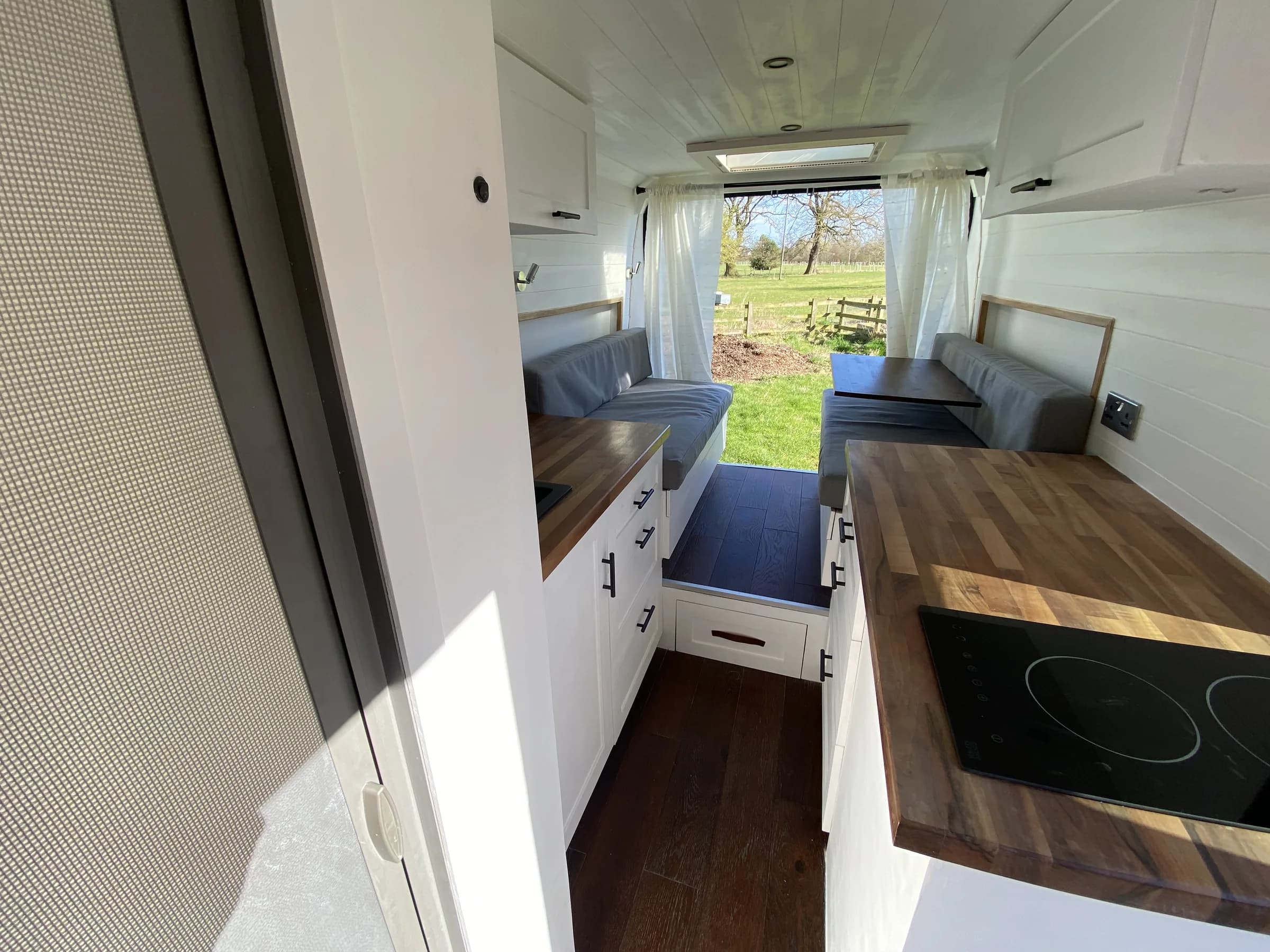
List five meals you will cook weekly. Record burner time, pan size, water needed and whether the meal remains practical in rain. That evidence is a better equipment brief than copying a showroom galley.
Compare the systems
| System | Strength | Constraint |
|---|---|---|
| Fixed gas hob | Dense stored energy, instant control | Fuel system, combustion and ventilation |
| Induction | No flame, easy cleaning | High current, inverter and charging |
| Low-power electric | Efficient task-specific cooking | Slower or limited meal range |
| Outdoor stove | Keeps heat and moisture outside | Weather, site rules and setup |
| No-cook backup | Works during system failure | Limited comfort and menu |
Induction needs both adequate peak power and daily energy. A 1,500W hob used briefly may have moderate watt-hours but still needs an inverter and battery able to supply the instantaneous current. Model the exact use in the electrical calculator.
Gas can support long trips without large electrical upgrades, but combustion needs correct equipment, ventilation and competent installation. UKHSA says inadequate ventilation and faulty or inappropriate fuel-burning appliances can produce dangerous carbon monoxide; read the official CO guidance.
Never bring a lit or smouldering barbecue into a van or awning, and never use cooking equipment for heating. Follow alarm manufacturer instructions and test smoke and CO alarms regularly.
Account for secondary loads
Cooking also consumes water, ventilation, food storage and washing-up capacity. Induction may reduce combustion products but boiling still adds vapour. Outdoor cooking may require a sheltered legal pitch and secure fuel storage.
Use the kitchen-layout guide to place the heat, preparation and wash zones. Keep combustibles away, preserve an exit path and locate fire response equipment where it can be reached safely.
Run a meal test
Mock up the counter and cook the hardest normal meal using the proposed equipment. Measure:
- energy or fuel used;
- time and peak simultaneous load;
- water used and grey water created;
- ventilation and window condensation;
- counter space occupied;
- cleanup time and waste;
- whether a second person can move safely.
Repeat outdoors in poor weather. Keep one meal that needs no cooking for delays or equipment failure.
Make a decision rule
Choose induction when the wider electrical system and charging pattern comfortably support it. Choose properly installed gas when long cooking autonomy matters and its installation/maintenance burden is acceptable. Use outdoor equipment outdoors only. A hybrid can be sensible, but two systems add storage and maintenance.
Rent a van with the preferred option through UK campervan rentals, then calculate the measured routine. The right cooking system is the smallest one that safely prepares the meals you will actually eat.
Plan storage, shutdown and failure
Assign a restrained place to every pan, fuel component and appliance. Heavy cookware belongs low; liquids need upright containment; anything left on a worktop needs to be stored before driving. Preserve the ventilation and service clearances in each appliance manual rather than packing the surrounding void later.
Write a departure check that covers appliance shutdown, fuel isolation where required, cool surfaces, latched cupboards and secured portable equipment. Keep manufacturer instructions and competent-person certificates with the van records.
Also plan a failed-system day. If the battery is low, the gas appliance is isolated or outdoor flames are prohibited, can everyone eat and make a hot drink safely? Shelf-stable food, a legal alternative stop and sensible reserves provide more resilience than a second improvised stove. Never bypass a protective trip, alarm or ventilation requirement to finish a meal.
Plan everyday life in the van
Connect cooking to water, power, ventilation, storage and maintenance.
Frequently Asked Questions
Keep the build moving
Make the next build decision easier.
Get practical diagrams, calculator updates and honest product comparisons in your inbox.
Jack Kennedy is a self-builder who has built two vans. He created Roam Wired to simplify conversion planning and share free tools, supported by affiliate links.
About Jack