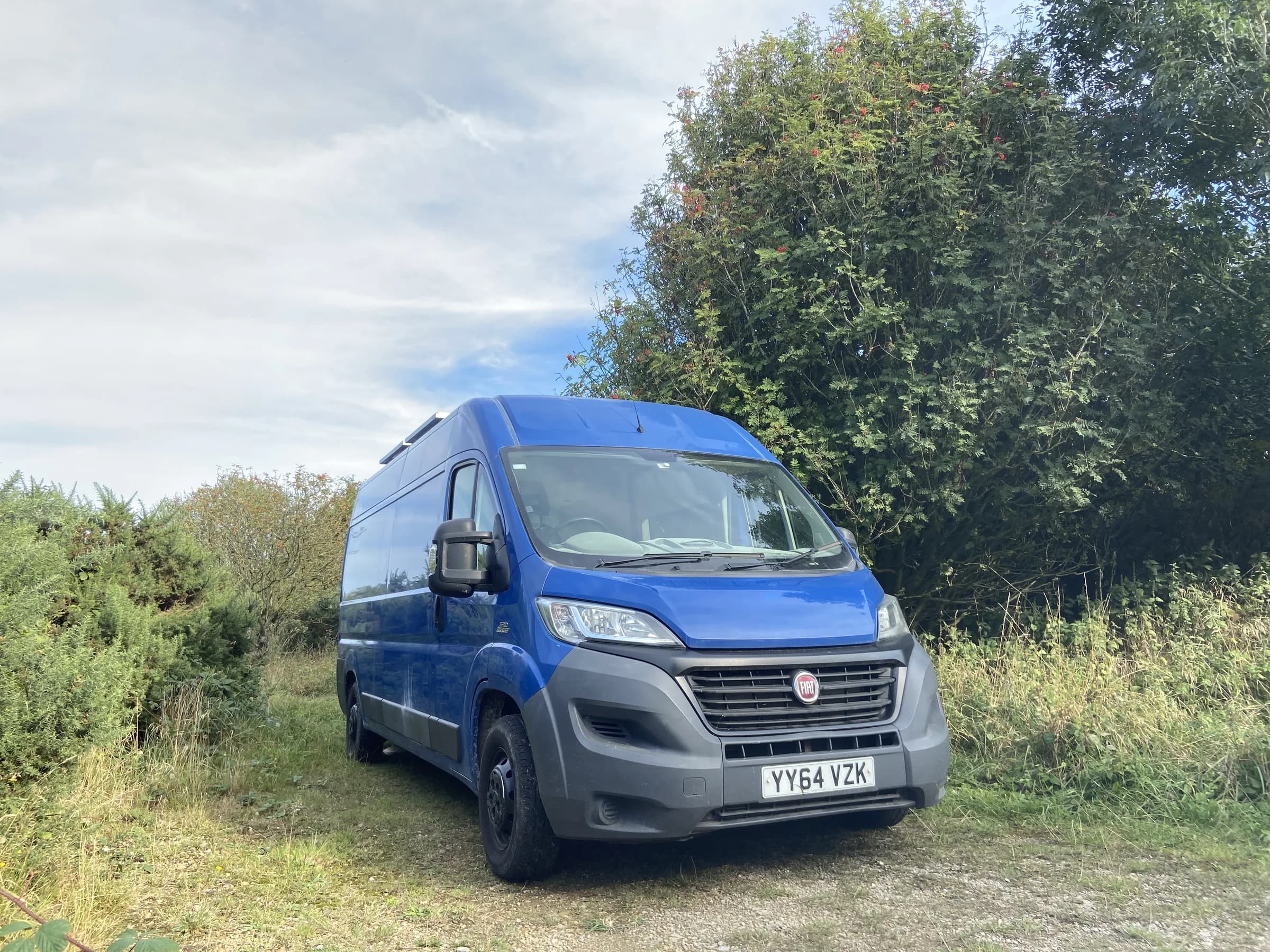
Choose a conversion van by condition, usable dimensions and remaining payload before comparing trim or brand reputation.
The best conversion van is not the one with the most inspirational interiors online. It is the one that meets a written use case after the conversion is fitted and loaded, without consuming the repair contingency or making every normal journey inconvenient.
Start with requirements, not a badge: number of legal travel seats, berths, bed length, standing height, internal bikes, toilet or shower, trip duration, urban parking and finished payload. If those are not settled, rent a comparable campervan first.
Quick UK base-van comparison
| Van family | Why converters choose it | Best fit | Watch carefully |
|---|---|---|---|
| Ford Transit | Broad UK familiarity, many lengths/heights, large used supply | Most medium/large layouts | Exact generation, roof/wheelbase, rust, service and payload |
| Fiat Ducato / Peugeot Boxer / Citroën Relay | Boxy, useful interior width; shared platform | Transverse beds and space-efficient builds | Condition, gearbox/clutch behavior, payload variant, water ingress |
| Mercedes-Benz Sprinter | Many configurations, strong long-distance platform ecosystem | Premium, long-wheelbase and specialist builds | Purchase/parts cost, rust on older vans, complex repairs |
| Volkswagen Crafter / MAN TGE | Modern driving environment and useful size range | Refined medium/large conversions | Acquisition cost and exact payload |
| Renault Master / Vauxhall Movano / Nissan Interstar | Often good value and practical body shape | Budget-conscious full-height builds | Generation/platform differences and service evidence |
| Iveco Daily | Robust chassis and high-capacity variants | Heavy or specialist conversions | Size, ride, running cost and overbuilding temptation |
| Transit Custom / VW Transporter / similar | Easier daily driving and parking | Weekend, pop-top and minimalist builds | Limited indoor volume and payload once heavily equipped |
Platform relationships and specifications change by model year. Compare the exact VIN, plate and manufacturer data, not merely the familiar model name. Ford publishes current Transit dimensions and payload data, while Mercedes-Benz lists the current Sprinter panel-van configurations. A used van may differ materially from the latest range.
Choose size from a measured floor plan
Compact vans
Transit Custom, Transporter and similarly sized vans can remain everyday vehicles, fit more car parks and use less space on a drive. They work for solo travellers, couples who live outdoors, removable modules and pop-top builds. The trade is obvious in rain: beds often replace seating, storage competes with living space and an internal shower is difficult to justify.
Medium and large panel vans
Full-height Transits, Ducatos, Boxers, Relays, Masters, Crafters and Sprinters create permanent standing space and more layout choices. A medium wheelbase often gives two people a strong balance. Long and extra-long versions can carry fixed beds, garages, washrooms or family berths, but add turning circle, ferry length, parking difficulty, body weight and material cost.
Before choosing, tape the interior footprint on a floor. Mark wheel arches, door openings and the real bed, not just a mattress outline. Add panel thickness, insulation, furniture faces and working clearance. Then rehearse cooking while another person walks from cab to rear door.
Width can decide the bed orientation
Some broad-bodied vans are popular because a transverse bed may fit more easily. But published maximum body width is not your finished sleeping length. Insulation, battens, lining, structure and curved walls consume space; people also need clearance. Measure the exact van at the bed height and mock up the finished wall thickness before assuming the bed can run across the vehicle.
If you need a long north–south bed, budget the extra floor length. Flare panels can help on some platforms but add cost, openings and approval/insurance questions.
Payload is a design constraint, not paperwork
The finished vehicle must carry:
- every fixed component and fixing;
- passengers and pets;
- fresh and waste water;
- gas, food, clothes and outdoor equipment;
- bikes, awnings, roof racks and tow equipment;
- fuel and all optional accessories.
Use a weighbridge for the empty purchased van with its real options and fuel level. Subtract that figure from the applicable plated maximum, then keep a spreadsheet of every component added. Place axle loads as carefully as the total. A large nominal payload can disappear under four travel seats, a large water tank, batteries, solar, a shower and heavy cabinetry.
Never plan to the final kilogram. Retain an operating margin for real-life packing and measurement differences. If the desired specification does not fit, simplify it or buy the correct capacity variant before building.
Used-van inspection: the evidence hierarchy
An attractive price and clean load bay are weak evidence. Prefer:
- verified identity, ownership and finance/history checks;
- coherent MOT and mileage history;
- invoices showing scheduled service and major repairs;
- a genuinely cold start with no pre-warming;
- diagnostic scan and independent inspection;
- a long test drive from urban speed to motorway load;
- underbody, roof, seals and structural inspection in good light.
Check the windscreen VIN, V5C details and manufacturer plate agree. Look for uneven tyre wear, mixed budget tyres, fluid leaks, corrosion at seams and mounting points, water tracks around roof penetrations, damaged sills, poor previous racking holes and signs the load area carried chemicals. Watch every warning light illuminate and then extinguish correctly.
Modern diesel use pattern matters. A van that only made short urban trips can have different exhaust-aftertreatment risk from a documented motorway vehicle. Ask about duty cycle, not just mileage. On the test drive, assess clutch take-up, gear selection, automatic shifts, steering under braking, suspension knocks, temperature stability and smoke. If you cannot distinguish normal commercial-van behavior from a fault, pay a specialist who can.
Check the exact variant before paying
Confirm:
- wheelbase and roof code;
- plated gross and axle weights;
- number and legality of passenger seats;
- air conditioning, cruise control and driver-assistance equipment you require;
- door configuration and usable opening;
- Euro emissions standard and likely clean-air-zone use;
- spare key, security features and insurance acceptability;
- whether prior windows, roof openings, seats or electrical changes are documented.
The government's V5C change guidance explains which registered details need updating. Structural changes and weight changes can require supporting evidence; do not assume a seller's description proves compliance.
Set the purchase ceiling backwards
Start with the maximum whole-project spend, then subtract:
| Reserve | Why it exists |
|---|---|
| Conversion materials and specialist work | The actual specification, not an optimistic social-media build |
| Immediate mechanical baseline | Service, fluids, tyres, brakes or timing work identified by inspection |
| Repair contingency | Unknowns remain even after a good inspection |
| Insurance, tax, security and storage | Required before the first finished trip |
| Certification and professional checks | Seats, gas, mains, weight or specialist work where applicable |
The result is your base-van purchase ceiling. If every suitable example exceeds it, reduce the conversion, delay the purchase or change the project—not the contingency.
Use the UK conversion cost guide and planning sequence before viewing. Bring the specification and inspection list to every van. Walk away when evidence is missing, the payload is wrong or the seller prevents an independent inspection.
Compare the van, not just the advert
Use your measured layout, payload target and purchase ceiling to shortlist real vehicles—then inspect the exact variant independently.
Worked planning check
An illustrative 3,500kg maximum vehicle weighing 2,650kg with its current fittings has 850kg remaining. Two people at 160kg combined, 80kg of water and 100kg of luggage leave 510kg for the rest of the build and equipment. Obtain actual weights and axle limits before purchase.
The figures or dimensions in this example are explicit planning assumptions, not a product test or an installation specification. Replace them with your equipment data and actual measurements.
Planning questions
Should I choose the van or the layout first?
Develop a minimum usable layout before buying, then confirm it against the actual vehicle’s dimensions, condition and weight allowance. Adapt the plan using measurements rather than brochure assumptions.
How can I test a layout before building furniture?
Use tape and cardboard at full size. Simulate sleeping, cooking, dressing and accessing storage with the bed made, doors closed and a second person present.
Does more floor space mean more payload?
No. Interior size and legal weight allowance are different. Use the specific vehicle’s ratings and measured weight, including axle loads and planned passengers and luggage.
Use the free electrical planner to organise your daily loads and charging assumptions.
Frequently Asked Questions
Keep the build moving
Make the next build decision easier.
Get practical diagrams, calculator updates and honest product comparisons in your inbox.
Jack Kennedy is a self-builder who has built two vans. He created Roam Wired to simplify conversion planning and share free tools, supported by affiliate links.
About Jack