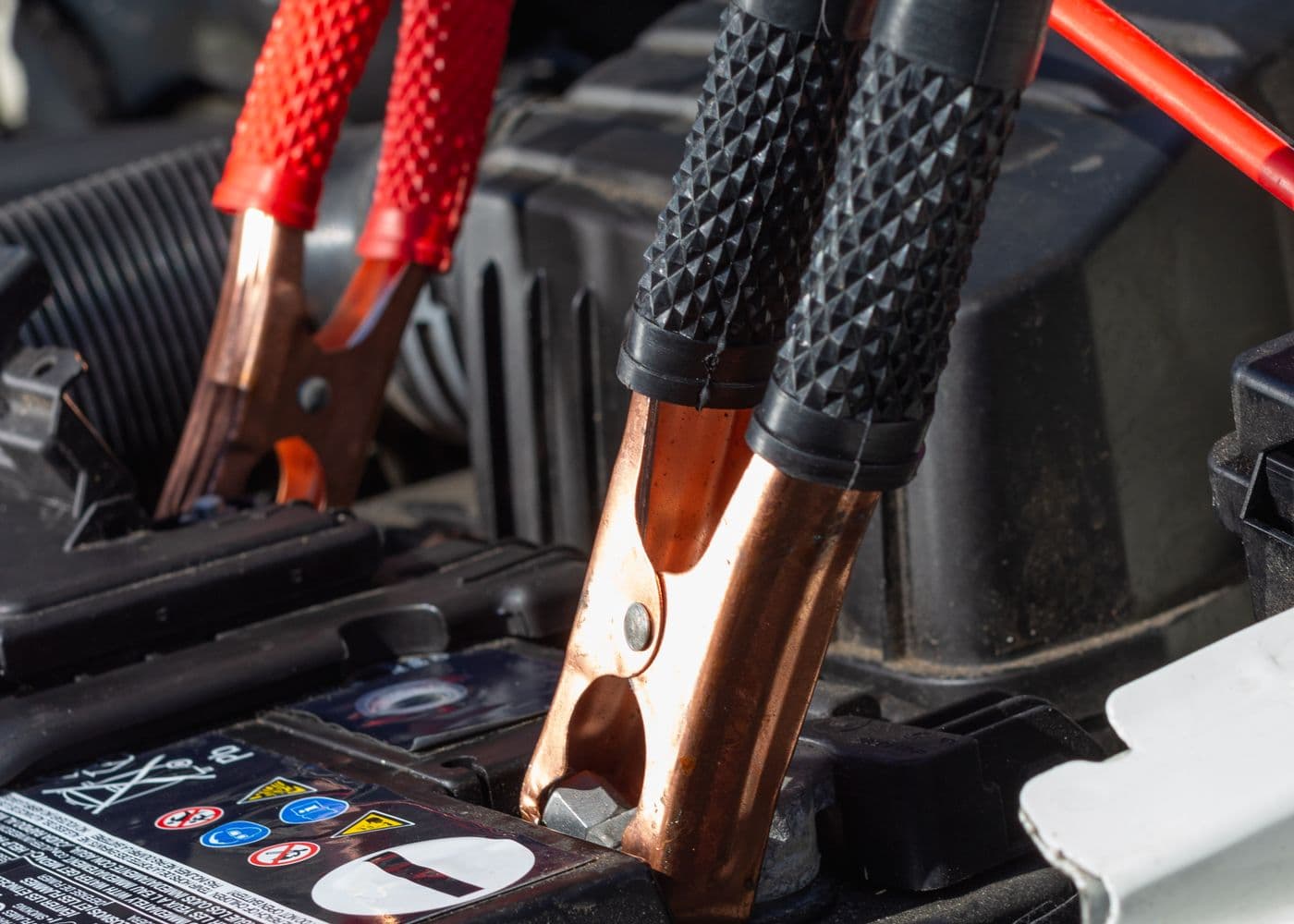
A campervan charging system is the infrastructure that keeps your batteries full. Unlike a house connected to the grid, your battery can only hold so much energy — and what you use each day must be replaced through one of three routes: solar, alternator (via a DC-DC charger), or mains hook-up.
Most UK van builds use all three, though the weighting matters. This guide covers each source in technical depth: how they work, how to size them, how to wire them correctly, and how to manage them when all three are active simultaneously.
For the batteries these sources charge, see our campervan battery guide. For the complete system overview, see our campervan electrical system guide.
Size your charging system automatically
Our free calculator recommends the right charger sizes based on your battery and daily usage. No sign-up required.
Why You Need More Than One Charging Source
No single charging source is reliable year-round in the UK:
Solar alone: In June in Scotland, 4–5 peak sun hours per day might fully charge a 200Ah LiFePO4 from a 400W array. In December, the same system might produce 1–2 peak sun hours — enough to offset self-discharge and fridge consumption but not much else. You'd be dependent on bright weather to maintain charge.
DC-DC charger alone: Charges whenever the engine runs. Reliable, but requires driving. If you're parked at a remote location for four days without moving, you're draining your battery with nothing to replenish it.
Shore power alone: Unlimited power from campsite hook-ups, but only at campsites with EHU (electric hook-up). Wild camping, aires, and many informal stops have no EHU.
The combination: Solar provides passive, free charging during daylight. DC-DC tops up during driving. Shore power fills the gap for winter or extended stationary periods. Together, they cover all scenarios.
The UK formula for year-round reliability:
Minimum: Solar (200W+) + DC-DC charger (30A) Full independence: Solar (300–400W) + DC-DC (30A) + mains charger (20–30A)
Source 1: DC-DC Charger (Alternator Charging)
How It Works
A DC-DC charger is a step-up/step-down converter that takes power from the vehicle's starter battery (which is charged by the alternator while driving) and uses it to charge the leisure battery at the correct voltage profile for the battery chemistry.
The process: alternator charges starter battery → DC-DC charger draws from starter battery → applies correct charging algorithm to leisure battery.
The DC-DC charger runs only when the engine is running (it senses the elevated starter battery voltage of 14.0–14.4V to determine this) or when connected to an ignition-sense wire that tells it the engine is on. When the engine stops, the DC-DC charger disconnects — your starter battery is protected even if the leisure battery is completely flat.
Why Not Just Use a Split Charge Relay?
This question comes up constantly. Split charge relays (VSR — Voltage Sensing Relays) connect the starter and leisure batteries directly when the starter battery reaches a threshold voltage (typically 13.3V). When the alternator is charging, this threshold is reached and the relay closes, allowing the alternator to charge both batteries simultaneously.
This works on older vehicles with conventional alternators that maintain a steady 14.4V output. It does not work reliably on Euro 5/6 vehicles (roughly 2011 onwards) for two reasons:
-
Smart alternators: Modern vehicles use "smart" alternators that vary output voltage to improve fuel economy. The alternator might run at 14.4V when the battery is low, then drop to 12.8V (or even lower, using regenerative braking) once the starter battery is charged. At 12.8V, the VSR opens — disconnecting the leisure battery — even though the engine is still running.
-
EFB/AGM starter batteries: Many modern vans come with EFB (Enhanced Flooded Battery) or AGM starter batteries that the engine management system controls carefully. Connecting a leisure battery directly through a relay unbalances this management system and can cause issues with start-stop functions.
A DC-DC charger works with smart alternators because it doesn't depend on a particular input voltage — it converts whatever voltage it receives (within a range, typically 7–30V) into the correct output voltage for the leisure battery. It isolates the two batteries completely; the alternator sees only the starter battery's load, as normal.
Exception: If your van is a simple Euro 3 or Euro 4 vehicle with a conventional alternator and no smart alternator, a VSR is still functional. Check your alternator type before specifying the solution.
Choosing DC-DC Charger Current (Amps)
DC-DC charger current is the rate of charge delivered to the leisure battery. More amps = faster charging = more energy restored per hour of driving.
Sizing guidelines:
| Daily Energy Use | Recommended DC-DC Size | Daily Energy from 1hr Driving |
|---|---|---|
| Under 500Wh | 20A | ~240Wh |
| 500–1,200Wh | 30A | ~360Wh |
| 1,200–2,000Wh | 40A | ~480Wh |
| 2,000Wh+ | 2× 30A or 50A | ~600–720Wh |
A 30A DC-DC charger at 12V delivers approximately 360W of charging power. If you drive for 2 hours, that's 720Wh added — roughly one-third of the daily consumption in the 1,900Wh example in our battery guide. Combined with solar, this is enough to maintain charge for most UK van lifers.
Alternator capacity check:
Your alternator has a maximum output. A standard Transit or Sprinter alternator is 180–200A. At 12V, that's 2,160–2,400W of maximum output. The engine management, air conditioning compressor, headlights, heated seats, and other loads take priority. In practice, around 60–80A is available for charging from a typical alternator — a 30A DC-DC charger is well within headroom.
Running a 50A DC-DC charger plus a 30A DC-DC charger simultaneously (60A combined input draw) could stress a smaller alternator in a heavily loaded van. Check before installing.
Note on cable temperature:
DC-DC charger input cables carry current from the starter battery. They're in the engine bay — a hot, dirty environment. Use appropriate wire rated for high temperature (105°C rated rather than standard 70°C cable).
Victron Orion-Tr Smart (The Standard Choice)
The Victron Orion-Tr Smart range is the dominant choice for campervan DC-DC charging in the UK. The "Smart" suffix means it has Bluetooth configuration and can communicate with the Victron VE.Smart network.
| Model | Output Current | Input Range | Efficiency | UK Price (2026) |
|---|---|---|---|---|
| Orion-Tr Smart 12/12-18A | 18A | 8–17V | 94% | ~£110 |
| Orion-Tr Smart 12/12-30A | 30A | 8–17V | 95% | ~£160 |
| Orion XS 12/12-50A | 50A | 7–30V | 96% | ~£240 |
The 30A unit is the sweet spot for most builds. The newer Orion XS range has improved efficiency and the XS 50A is a genuine improvement over the old Orion-Tr Smart in terms of build quality and feature set.
Configuration via the Victron Connect app:
- Set output voltage (should match your battery's absorption voltage — 14.2V for LiFePO4)
- Select charge algorithm (LiFePO4 or custom)
- Set engine detection threshold (the input voltage above which the unit starts charging)
- Set ignition sense if using a dedicated ignition wire
Alternative: Sterling B2B Chargers
Sterling Power make quality DC-DC chargers that are popular with installers. The BB1230 (30A) is a direct competitor to the Orion-Tr Smart. Less ecosystem integration but proven reliability.
Wiring a DC-DC Charger
Four connections: input positive (from starter battery), input negative, output positive (to leisure battery/bus bar), output negative.
Cable sizing:
| Charger Rating | Input Cable Length | Minimum Cable Size |
|---|---|---|
| 18A | Up to 5m | 6mm² |
| 30A | Up to 3m | 10mm² |
| 30A | 3–5m | 16mm² |
| 50A | Up to 3m | 16mm² |
Fusing: the input cable (from starter battery) must be fused within 300mm of the starter battery positive terminal. The output cable must be fused within 300mm of the positive bus bar. Use blade fuses or MIDI fuses for these circuits — ANL fuses are for the main battery feed.
Ignition sense wire:
The engine-detection method (sensing high starter battery voltage) is slightly unreliable on smart alternator vehicles — the alternator might drop voltage when the starter battery is full, causing the Orion to think the engine has stopped. Adding a dedicated ignition sense wire to a switched 12V live (active only when ignition is on) eliminates this problem.
See how to wire a DC-DC charger in a campervan for the step-by-step installation guide.
Source 2: Solar
Solar is covered in depth in our campervan solar setup guide. Key points relevant to charging system design:
How Solar Integrates with Other Sources
The MPPT charge controller's output connects to the same positive bus bar as all other charge sources. Multiple charge sources can be connected simultaneously — they all regulate their output voltage; they don't fight each other.
When the battery is nearly full, the MPPT controller reduces its output current to avoid overcharging. If the mains charger is simultaneously at absorption phase, they both gently taper — the battery ends up slightly more full, slightly faster. There's no conflict.
Exception: Some lower-quality PWM controllers can interact poorly with other charging sources. MPPT controllers are well-behaved; always use MPPT (see MPPT vs PWM charge controllers).
UK Solar Reality Check
| Month | Average Peak Sun Hours (UK South) | Average Peak Sun Hours (UK North) |
|---|---|---|
| January | 0.8 | 0.5 |
| February | 1.4 | 0.9 |
| March | 2.5 | 1.8 |
| April | 3.8 | 2.9 |
| May | 4.5 | 3.7 |
| June | 4.8 | 4.0 |
| July | 4.5 | 3.8 |
| August | 4.0 | 3.2 |
| September | 3.0 | 2.2 |
| October | 1.8 | 1.2 |
| November | 0.9 | 0.6 |
| December | 0.6 | 0.4 |
Source: PVGIS data for approximate UK locations. "Peak sun hours" is equivalent full-sun hours — a proxy for daily energy production per rated watt.
A 300W solar array in January (south UK) producing 0.8 peak sun hours delivers: 300 × 0.8 = 240Wh. That barely covers the fridge's daily consumption in mild weather. In winter, DC-DC charging and shore power are essential.
In July, the same 300W array produces 300 × 4.5 = 1,350Wh — more than enough for a 1,000Wh daily consumption budget.
Source 3: Shore Power (Mains Hook-Up Charging)
What Shore Power Is
Shore power in the UK means connecting to a campsite's EHU (Electric Hook-Up) point via a blue CEE 17 16A connector. This gives you access to 230V AC mains — typically at 16A (3,680W maximum), sometimes at 10A (2,300W) on older sites.
The mains charger (a 230V-to-12V charger, also called an inverter-charger or just a mains charger) converts this mains power to the correct DC voltage and current to charge your leisure battery.
Mains Charger Sizing
The mains charger's output current (in amps DC) determines charging speed.
| Charger Output | Charging Power | Time to Charge 200Ah LiFePO4 (from 20%) |
|---|---|---|
| 10A | 120W | ~16 hours |
| 20A | 240W | ~8 hours |
| 30A | 360W | ~5.5 hours |
| 40A | 480W | ~4 hours |
For a van that hooks up overnight (8 hours), a 20–30A charger is ideal — it charges the battery fully overnight without wasting hook-up fees. A 10A charger is too slow for a full charge overnight; a 40A+ charger is overkill unless you need a rapid top-up in a short hook-up window.
LiFePO4 charger requirement:
LiFePO4 batteries require a charger that:
- Supports a configurable absorption voltage (14.2–14.4V for LiFePO4)
- Has no mandatory equalisation phase (equalization at 15V+ damages LiFePO4 cells)
- Ideally has a dedicated LiFePO4 mode or a custom charging profile
Many older mains chargers and cheaper "leisure battery chargers" are optimised for AGM/gel and apply an equalisation charge by default. These are incompatible with LiFePO4. Always check the charger spec before buying.
Victron Blue Smart IP22 and IP67
The most popular mains chargers for campervans in the UK:
| Model | Output | Input | Form Factor | UK Price (2026) |
|---|---|---|---|---|
| Blue Smart IP22 12/15 | 15A | 230V single phase | Wall mount | ~£95 |
| Blue Smart IP22 12/20 | 20A | 230V single phase | Wall mount | ~£120 |
| Blue Smart IP22 12/30 | 30A | 230V single phase | Wall mount | ~£140 |
| Blue Smart IP67 12/25 | 25A | 230V single phase | Watertight | ~£165 |
The IP22 range is designed for fixed installation inside the van, connected to a shore power inlet. The IP67 is sealed — suitable for mounting in engine bays or damp locations, though the IP22 is more common for campervan builds.
All models have a LiFePO4 charging mode and Bluetooth configuration via the Victron Connect app.
Alternative: CTEK Pro25S
CTEK make excellent mains chargers. The Pro25S (25A output) is used by professional workshop installers and is fully LiFePO4 compatible. £120–£140. Less integration with a monitoring ecosystem but excellent standalone performance.
Shore Power Inlet Installation
The inlet:
A CEE17 16A socket is the standard shore power inlet for UK campervans. Mount it in a weatherproof location on the exterior — the lower rear quarter of the van is most common. Use a proper marine-grade or caravan-grade socket with a spring-loaded cover; a cheap version that allows rain ingress is a fire risk.
The wiring:
Shore power wiring is 230V AC mains — treat it with the same seriousness as house wiring. All conductors must be 2.5mm² three-core (brown live, blue neutral, green/yellow earth). Total cable run should be under 10m for a 16A circuit.
The RCD:
Immediately after the shore power inlet, install a Type A 30mA RCD (Residual Current Device). This protects against electric shock from any fault in the 230V wiring. The RCD disconnects the circuit within 30 milliseconds if it detects a leakage current of 30mA — fast enough to prevent a fatal shock.
A double-pole RCD disconnects both live and neutral simultaneously. Single-pole RCDs are not acceptable for mobile installations.
See mains charger for a campervan: installation guide for the complete wiring diagram.
Shore Power in Europe
If you take your van to Europe, you'll encounter different hook-up standards. All use the same CEE17 form factor, but amperage and earthing conventions vary.
| Country/Region | Typical Max Amperage | Notes |
|---|---|---|
| UK campsites | 16A | Standard |
| France (FFCC sites) | 10A or 16A | 10A common on older sites |
| Germany | 16A | Generally reliable 16A |
| Spain (ACSI sites) | 6A or 10A | 6A common; don't run kettle + charger simultaneously |
| Italy | 6A or 10A | Similar to Spain |
| Netherlands | 16A | Good infrastructure |
| Scandinavia | 16A | Good infrastructure |
At 6A (1,380W total), your 30A mains charger draws 360W — well within headroom. But if you also run an induction hob (1,200W minimum), you've exceeded 6A and the site breaker will trip. Always check the available amperage before running high-draw appliances simultaneously with the charger.
See shore power adapters for Europe for adapter requirements and earthing considerations by country.
How All Three Sources Work Together
Charging Priority and Current Sharing
When all three sources are active simultaneously — solar producing power, engine running with DC-DC charger, and hooked up to shore power — they all share the charging load. Each source independently regulates its output voltage and current; none of them "argue" with the others.
In practice:
Battery in bulk phase (below 80% SoC): All sources deliver maximum current simultaneously. If your MPPT is delivering 20A, your DC-DC charger is delivering 30A, and your mains charger is delivering 30A, the battery receives 80A total. It charges much faster.
Battery approaching full (above 95% SoC, absorption phase): All sources automatically reduce their current as the battery voltage rises toward the absorption voltage. They collectively share the tapering current.
Battery full: All sources drop to minimal float current (or zero, for LiFePO4 with disabled float). No overcharging occurs.
Victron VE.Smart Networking
Victron's chargers and MPPT controllers can communicate with each other via Bluetooth in a "VE.Smart Network." This allows:
- Battery voltage sensing at the battery terminal (not at the charger output — eliminates the voltage error caused by cable resistance)
- Temperature-compensated charging — if the battery has a temperature sensor connected to one device, all devices in the network adjust their charging voltage accordingly
- Synchronised absorption — when one device reaches absorption threshold, it broadcasts this; all devices transition to absorption simultaneously rather than at different times
VE.Smart networking is enabled through the Victron Connect app. All Victron "Smart" products support it. Set one device as the master (typically the MPPT controller) and add the others.
Managing a Generator as a Fourth Source
If you carry a portable generator, it connects through the same path as shore power — the generator output feeds the shore power inlet, through the RCD, to the mains charger. See generator for a campervan for generator selection.
The interaction with solar is the same as shore power: both can charge simultaneously. The DC-DC charger would not be active (engine off while generator runs).
Practical generator management: run the generator for 2–3 hours to bulk charge the battery rapidly, then switch it off and let solar continue the absorption phase. This minimises generator run time (and fuel cost) while achieving a full charge.
Troubleshooting Your Charging System
Battery Not Charging from Solar
Systematic diagnosis:
-
Check panel output: Measure the voltage at the MPPT input terminals on a bright day. Should be above battery voltage — typically 18–21V for a standard 12V panel. If reading battery voltage, the panel isn't producing (check connections, check for shade).
-
Check MPPT output: The MPPT output voltage should equal the current battery voltage when in bulk phase, and the absorption voltage (~14.2V for LiFePO4) when in absorption. If output voltage is correct but battery isn't accepting current, the BMS may be disconnected.
-
Check MPPT settings: Must be set for correct battery chemistry. AGM setting on a LiFePO4 battery causes absorption voltage mismatch.
-
BMS disconnected? If the LiFePO4 BMS has tripped on over-discharge (battery below ~10% SoC), the output is disconnected and the MPPT cannot push current into the battery. Connect shore power or the DC-DC charger first to wake the BMS, then solar can continue.
Battery Not Charging from DC-DC Charger
-
Engine running? The Orion-Tr Smart monitors input voltage. With engine off, starter battery voltage drops to ~12.8V and the Orion won't start. Start the engine.
-
Ignition sense wire: If using an ignition sense wire, verify it's reading 12V when the ignition is on. A broken ignition sense wire means the Orion waits for a voltage it never gets.
-
Check input fuse: The fuse between the starter battery and the Orion input. If blown, no power reaches the charger.
-
Check the Victron Connect app: The Orion-Tr Smart logs its state. It will tell you if it's in "standby" (waiting for sufficient input voltage) or "fault."
-
Battery too cold? The Orion-Tr Smart can be configured to stop charging below a set temperature if a battery temperature sensor is connected. If the battery is below 0°C, charging is correctly stopped.
Battery Not Charging from Shore Power
-
RCD tripping immediately: A GFI/RCD that trips as soon as you plug in indicates a fault to earth somewhere in the 230V wiring. Don't bypass the RCD. Find the fault.
-
Mains charger not starting: Check the charger's indicator lights. Most Victron chargers display a fault code. Common issues: charger set for a different chemistry than the battery (e.g., set for AGM but battery is LiFePO4), battery temperature too low, battery voltage too low for charger to recognise it.
-
Site breaker tripping: You're drawing too much current simultaneously. Add up all 230V loads; ensure total is under the site's amperage limit. Disconnect the kettle or induction hob before the charger.
-
Lead from site to van damaged: Test the EHU cable for continuity. A damaged cable may show 230V at one end but nothing at the other.
Battery Charge Level Dropping Despite Charging
This indicates your consumption exceeds your charging input. Calculate your actual daily Wh consumption (battery monitor logs can help) and compare to the energy your charging sources are providing. If solar is genuinely producing less than expected, check for shade, panel orientation, or MPPT misconfiguration.
Alternatively, there's a parasitic drain — something drawing power even when you think everything is off. Measure the quiescent current with a clamp meter on the main negative cable; anything above 100mA with everything switched off is worth investigating.
Calculating Your Required Charging Capacity
The test: can your charging system replace what you use each day?
Example: full-time van lifer with 1,925Wh/day consumption (from our battery guide example)
Available charging:
| Source | Peak Output | Hours Available/Day | Daily Wh |
|---|---|---|---|
| Solar 300W (UK April) | 300W | 3.8 peak hours | 1,140Wh |
| DC-DC 30A | 360W | 1.5 hours driving | 540Wh |
| Shore power 25A mains charger | 300W | Occasionally | Variable |
Solar + DC-DC total: 1,680Wh/day in April — less than the 1,925Wh consumption. The battery will slowly drain over several days without shore power or longer drives.
Add solar to 400W:
- 400W × 3.8 hours = 1,520Wh solar
- 1,520 + 540 = 2,060Wh — now exceeds consumption by ~135Wh/day
This is sustainable without shore power in spring/summer/autumn. In December with 0.6 peak sun hours, the 400W array produces only 240Wh solar. The DC-DC charger becomes critical — drive or hook up.
Conclusion for this usage level: 400W solar, 30A DC-DC charger, and a 25A mains charger for winter. A 300Ah LiFePO4 battery provides a 3-day buffer.
Related Guides
- Campervan battery guide — what you're charging, and how to size it
- Campervan solar setup guide — your primary charging source
- Campervan wiring & safety guide — safe wiring of charging circuits
- Campervan inverters guide — using your stored energy for mains appliances
- Campervan electrical system guide — the complete overview
FAQ
Do I need both solar and a DC-DC charger?
For UK use, strongly yes. Solar alone won't sustain a van in winter — UK solar output in November–January is minimal. DC-DC alone means you must drive every day. Together they provide robust year-round charging. For weekend-only use in summer, solar alone might be sufficient.
Can I charge my leisure battery while driving?
Yes — that's exactly what the DC-DC charger does. It monitors the starter battery voltage, detects when the engine is running, and charges your leisure battery at the correct profile. A 30A DC-DC charger adds approximately 360Wh per hour of driving.
Do I need a mains charger, or can I use shore power with just an inverter/charger?
A mains charger is the simpler standalone solution. An inverter-charger (like the Victron MultiPlus) combines an inverter and mains charger in one unit — useful if you want transfer switching (automatic switchover from inverter to mains power). For most builds, a separate inverter and separate mains charger is cleaner and more flexible.
How long does it take to fully charge a campervan battery?
From a 30A DC-DC charger from 20% SoC: approximately 5–6 hours of continuous driving for a 200Ah LiFePO4. From a 30A mains charger: approximately 6 hours. From 300W solar in summer (4 peak sun hours): approximately 4 hours. From 300W solar in winter (0.8 peak sun hours): not going to fully charge — supplement with DC-DC or mains.
Is a split charge relay good enough?
For vans with a conventional (non-smart) alternator — roughly pre-2011 Euro 4 vehicles — a VSR works. For anything newer with a smart alternator (which includes virtually all Transits, Sprinters, Ducatos, and Crafters from 2015 onwards), use a DC-DC charger. The VSR will behave erratically with smart alternator voltage fluctuations.
Can all three charging sources run simultaneously?
Yes. A properly designed system allows all three to charge simultaneously without conflict. Each source regulates its output independently and they share the current demand from the battery. The total charge current is the sum of all three. This is normal and desirable — you charge faster.
What size shore power connection do I need?
For a mains charger up to 30A output (360W), a standard 16A CEE17 inlet connection is fine — 16A at 230V is 3,680W available, more than enough for the charger plus other 230V loads. If you want to run induction hobs or electric heating simultaneously with charging, you need to stay within the site's amperage limit.
Keep the build moving
Make the next build decision easier.
Get practical diagrams, calculator updates and honest product comparisons in your inbox.
Roam Wired
Roam Wired turns campervan research into practical plans. We publish transparent guidance, a free electrical design tool and marketplace resources for UK and US van builders.
About our approach