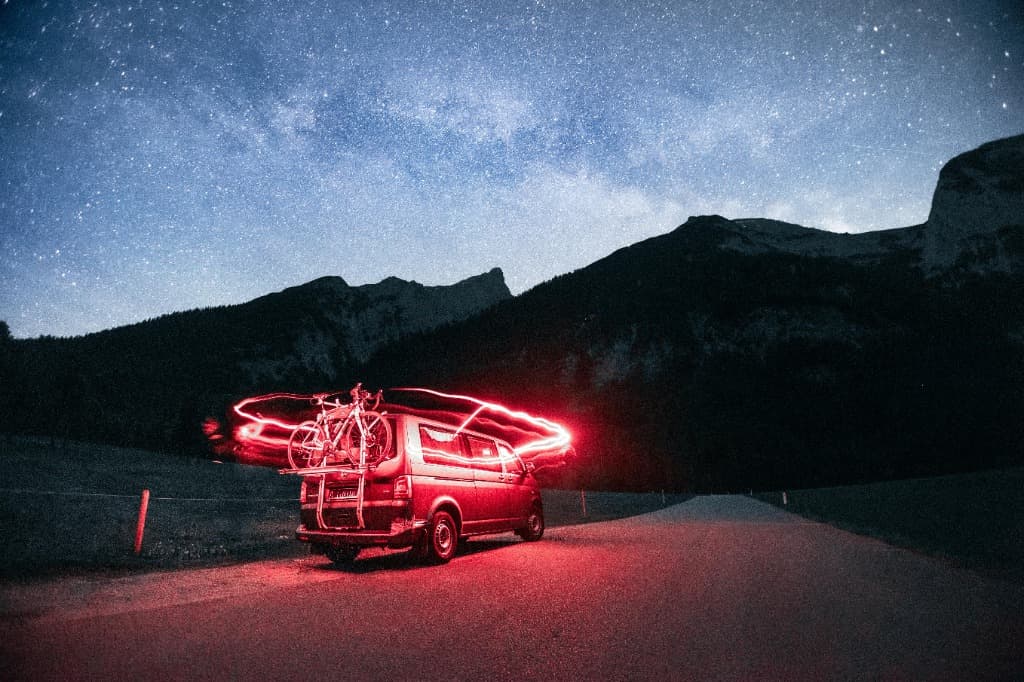
Class B RVs built on van chassis (usually a Mercedes-Benz Sprinter, Ford Transit, or Ram ProMaster) come with a manufacturer-designed electrical system. Here's what you typically get and what's worth upgrading.
What a Class B factory electrical system includes
Standard equipment across most Class B models:
- Shore power: 30A inlet (NEMA TT-30) with an automatic transfer switch
- Converter/charger: 30–50A shore power charger built into the 12V distribution center
- House battery: 100–200Ah AGM standard on most models (some premium models now include LiFePO4)
- 12V loads: Fridge, lighting, water pump, fans all wired from the house battery
- 120V loads: Outlets, microwave (if equipped) powered via shore or inverter
- Solar: Some models include 100–200W solar; others offer it as an option; some have no solar
- Generator: Some Class B models (Airstream Interstate, Winnebago Travato 59GL) have a built-in generator
Popular Class B models and their electrical specs
Winnebago Travato 59K: 200Ah AGM standard, 30A shore, 175W solar, 1,000W inverter. Upgrade path: add lithium batteries (drop-in AGM replacement), upgrade solar to 300W.
Winnebago Travato 59GL: Comes with LiFePO4 and a larger solar array from the factory. Electrical already well-optimized.
Airstream Interstate 24GT: 200Ah AGM, 30A shore, 100W solar. Common upgrade: add 200W solar, upgrade to LiFePO4.
Coachmen Beyond 22C: 100Ah AGM, 30A shore, 190W solar, 2,000W inverter. Upgrade: lithium upgrade for more usable capacity.
Thor Sequence: Built-in generator, 200Ah lithium on some trims, 30A shore.
Common Class B electrical upgrades
1. Lithium battery upgrade
Drop-in LiFePO4 replacements (same group size as factory AGM) are the most common upgrade. Benefits:
- 2× usable capacity at same or lower weight
- Faster charging (accepts full charger current vs AGM which tapers)
- No maintenance
What to change: Update the battery charger profile on the converter to LiFePO4, or replace the converter with a Victron IP22 or Blue Smart charger that has a proper LiFePO4 profile.
2. Solar expansion
Most factory Class B solar is undersized for serious boondocking. Adding 100–200W of additional panels (if roof space allows) and upgrading to an MPPT controller if the factory unit is PWM makes a meaningful difference.
3. Battery monitoring
Factory Class B RVs often have basic voltage-based gauges that are inaccurate for lithium chemistry. Adding a Victron SmartShunt + BMV-712 display gives accurate state-of-charge data.
Class B vs custom van build
| Class B RV | Custom van build | |
|---|---|---|
| Factory electrical | Included | Build it yourself |
| Upgrade cost | Moderate | Depends on starting point |
| Customization | Limited by chassis layout | Fully custom |
| Warranty | Factory warranty on electrical | None |
| Resale value | Strong | Varies |
Related
Frequently Asked Questions
Keep the build moving
Make the next build decision easier.
Get practical diagrams, calculator updates and honest product comparisons in your inbox.
Roam Wired
Roam Wired turns campervan research into practical plans. We publish transparent guidance, a free electrical design tool and marketplace resources for UK and US van builders.
About our approach