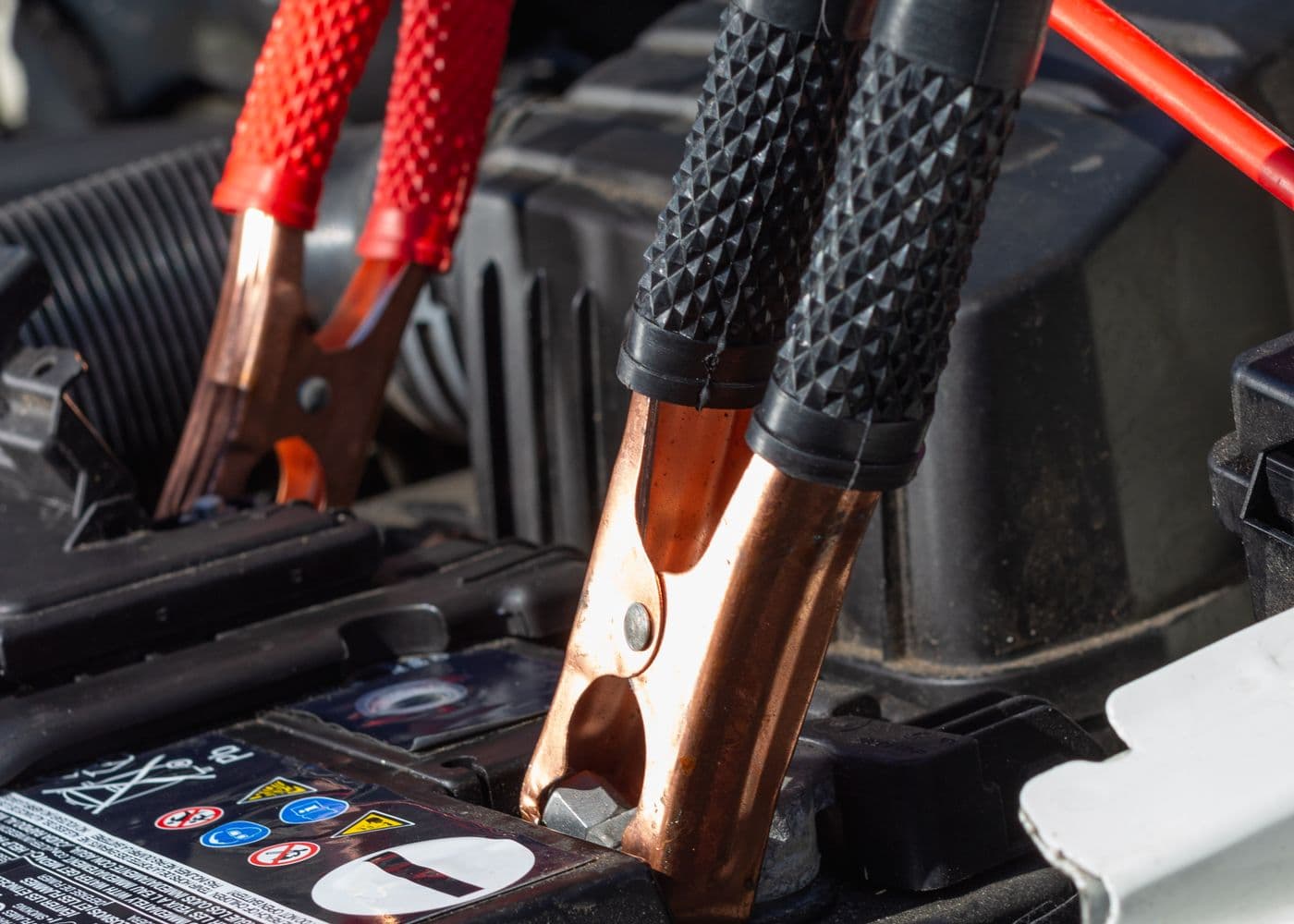
A DC-DC charger gives a leisure battery a controlled charging profile from the vehicle alternator. It is normally the right approach for modern smart-alternator vehicles and lithium battery banks, but the “best” charger depends on more than maximum amps.
Quick picks for 2026
Calculate the charger current first
Roam Wired's free electrical design tool uses your battery capacity and driving pattern to recommend a charging-system size before you compare products.
Comparison table
| Charger | Best for | Maximum class | Isolation | Solar input | Configuration |
|---|---|---|---|---|---|
| Victron Orion XS 12/12-50A | Most new 12V premium builds | 50A / 700W | No | No | Bluetooth, VE.Direct, 1–50A adjustment |
| Victron Orion XS 12/12-70A | Large banks with strong alternator capacity | 70A / 1,000W | No | No | Bluetooth, VE.Direct, 1–70A adjustment |
| Victron Orion-Tr Smart 12/12-30A Isolated | Designs that genuinely require isolated negatives | 30A / 360W class | Yes | No | Bluetooth; check exact variant |
| Renogy 12V 40A DC-DC with MPPT | One device for alternator and solar charging | 40A class | Common negative | Yes | Model-specific app/controls |
Specifications and model availability change. Check the current manufacturer manual, not just a retailer title, before designing the circuit.
1. Victron Orion XS 12/12-50A — best all-rounder
The Orion XS 50A is our default premium recommendation because its output can be adjusted from 1A to 50A rather than forcing every installation to use the maximum. Victron specifies up to 700W continuous output at 14V, maximum efficiency of 98.5%, Bluetooth, VE.Direct and IP65 protection for the power electronics.
Why it wins
- Adjustable current lets the installer protect alternator margin.
- Compact dimensions simplify placement.
- Bluetooth configuration and charge history aid commissioning.
- VE.Direct supports deeper integration with compatible Victron monitoring.
- Engine-shutdown detection is configurable for smart alternators.
Important limitation
The Orion XS 12/12-50A is non-isolated. Online descriptions that call it isolated are wrong. Review the negative-return and chassis-bonding plan before installation.
Read the official 50A technical data and our detailed Orion XS installation guide.
Best for: 12V lithium or lead-acid builds needing configurable alternator charging up to 50A.
2. Victron Orion XS 12/12-70A — best high-output option
Released in 2026, the 70A version raises the configurable range to 1–70A and the nominal maximum continuous output to 1,000W at 14.3V under the stated cooling conditions. It retains Bluetooth and VE.Direct in the same compact overall dimensions.
That makes it attractive for a large lithium bank and short driving windows, but it increases the demands on:
- alternator thermal capacity at idle and low road speed;
- starter-side and leisure-side cabling;
- fuse and disconnect ratings;
- the leisure battery BMS;
- installation airflow and terminal quality.
The 70A model's manual lists IP20 as the product protection category while noting that the power electronics are enclosed in an IP65 housing. Do not assume exposed connections can be installed in a wet location.
Read the official Orion XS 70A manual.
Best for: engineered high-output systems where the alternator and battery can genuinely accept the chosen setting.
3. Victron Orion-Tr Smart 12/12-30A Isolated — best when isolation is required
The older Orion-Tr Smart family remains relevant because it includes explicitly isolated input/output variants. The 12/12-30A isolated charger is a 360W-class option with Bluetooth configuration and engine-shutdown detection.
It is larger and less efficient than the newer XS platform, and “Orion-Tr Smart” alone is not a complete model name: isolated and non-isolated units coexist. Confirm the label and datasheet before ordering.
Read the official isolated Orion-Tr Smart manual.
Best for: builds whose vehicle, specialist body or electrical architecture requires galvanic isolation between the two DC sides.
4. Renogy 12V 40A DC-DC with MPPT — best combined charger
Renogy's UK 40A dual-input unit combines alternator charging and an MPPT solar controller. It can simplify a compact system by replacing two separate boxes and can coordinate two charging inputs within one product.
Why choose it
- fewer separate devices and interconnections;
- useful when wall space is limited;
- one purchase covers both solar and alternator charging;
- strong value when the planned solar array fits the unit's voltage and power limits.
Trade-offs
- solar and alternator design become tied to one device;
- a single failure affects both charging sources;
- panel voltage options may be more limited than with a separate MPPT;
- the exact behavior when both sources are active must be taken from the current manual.
Check the official Renogy UK 40A DC-DC with MPPT page for current input limits and compatibility.
Best for: straightforward 12V builds prioritising compactness and value over modularity.
How to size a DC-DC charger
1. Estimate the energy needed between drives
If the battery is normally 60Ah below target and you drive for two hours, the idealised average is:
60Ah ÷ 2h = 30A
Allow for loads operating while driving, conversion loss and charge taper. This calculation describes the desired charge rate, not what the alternator can safely supply.
2. Check the leisure battery limit
The battery manufacturer specifies permitted continuous and sometimes recommended charge current. For batteries in parallel, follow its rules on maximum bank size, matching and cable layout.
3. Check alternator spare capacity
The alternator already supports the engine, vehicle electronics, lights, heated screens, fans and starter-battery recovery. Its printed maximum is not necessarily a safe continuous surplus at idle. Obtain vehicle-specific guidance where possible and reduce the charger setting when the available margin is uncertain.
4. Account for input current
A charger delivering 50A at leisure-battery charging voltage may draw more than 50A from the alternator side because of voltage difference and conversion loss. Size the input circuit from the manufacturer's maximum input specification, not the output number alone.
5. Design the whole circuit
Cable length, voltage drop, insulation, bundling, temperature, fuse interrupt rating, terminal capacity and routing all matter. Protection is normally required close to each source of fault current; follow the exact manual and applicable installation requirements.
30A, 50A or 70A?
| Charger setting | Approximate charge delivered in two hours* | Typical use case |
|---|---|---|
| 20A | Up to 40Ah | Small bank, modest alternator margin |
| 30A | Up to 60Ah | General touring with regular drives |
| 50A | Up to 100Ah | Larger bank or shorter driving windows |
| 70A | Up to 140Ah | High-output engineered system |
*Idealised maximum before taper, thermal derating and other loads. Real energy delivered will be lower.
An adjustable 50A or 70A charger can be commissioned at a lower current. Buying adjustability can be sensible; installing it at maximum without validation is not.
Isolated vs non-isolated
A non-isolated charger shares a negative reference between input and output and suits many standard metal-bodied campervans. An isolated charger separates both DC sides and may be appropriate for specialist vehicles, boats or deliberately isolated electrical architectures.
Isolation is not a quality ranking. Choose it because the system design requires it.
DC-DC charger or split-charge relay?
A voltage-sensitive or split-charge relay directly joins the starter and leisure sides when triggered. It does not provide the same controlled multi-stage charge profile and may behave poorly with smart alternators or lithium batteries. A correctly configured DC-DC charger is the more predictable choice for most modern conversions.
See DC-DC charger vs split-charge relay for the full comparison.
Final recommendation
For most new 12V campervan systems, choose the Victron Orion XS 12/12-50A and set it to the current the complete design supports. Choose the 70A XS only when the vehicle and battery justify it, an isolated Orion-Tr Smart when separation is a real requirement, or the Renogy 40A MPPT combination when compact dual-input charging matters most.
Get a complete electrical recommendation
Enter your appliances, battery and driving pattern into the free Roam Wired electrical design tool to size solar, alternator charging and the rest of the system together.
Disclosure: This comparison is based on current manufacturer specifications and system-design suitability, not a claim that every product was laboratory-tested by Roam Wired. Some links may be affiliate links, which can earn us a commission at no extra cost to you.
Frequently Asked Questions
Keep the build moving
Make the next build decision easier.
Get practical diagrams, calculator updates and honest product comparisons in your inbox.
Roam Wired
Roam Wired turns campervan research into practical plans. We publish transparent guidance, a free electrical design tool and marketplace resources for UK and US van builders.
About our approach