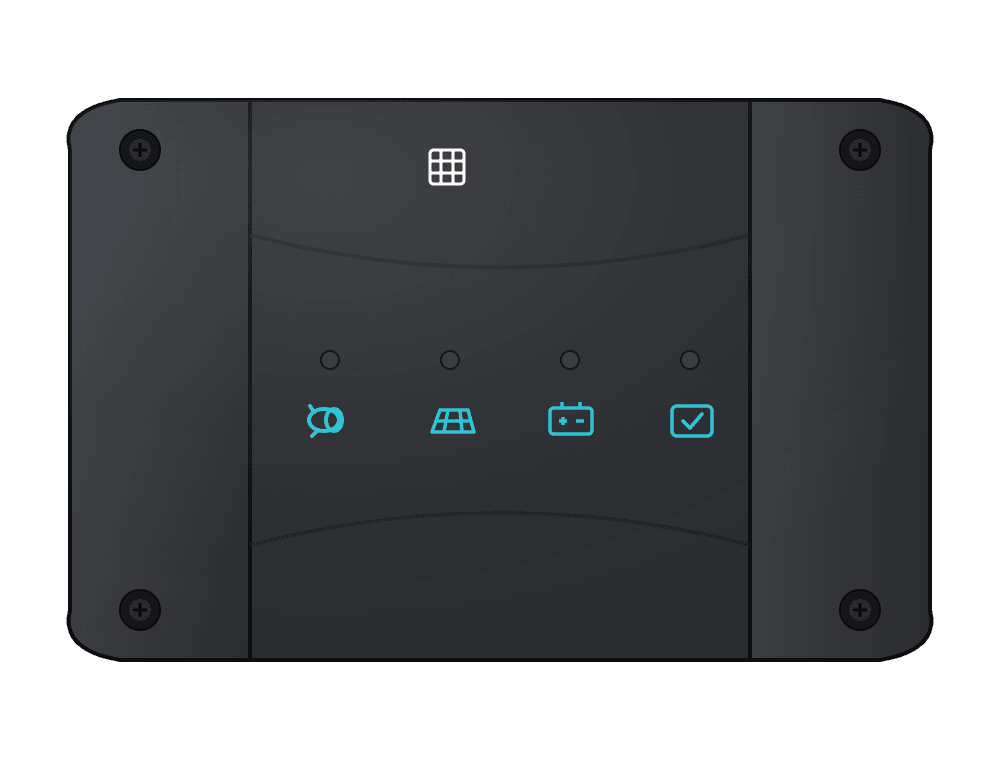
Choosing the right DC-DC charger size is one of the most consequential decisions in your campervan electrical build. Too small and you spend hours driving before your battery recovers. Too large and you waste money, run heavier cables, and potentially strain your alternator. This guide compares the three most common sizes — 20A, 30A, and 50A — and helps you pick the right one for your campervan charging system.
Every van build is different, so the "right" size depends on your battery capacity, daily power consumption, driving habits, and budget. If you want a personalised recommendation, the VanPower calculator analyses your specific setup and tells you exactly which charger size you need.
Understanding DC-DC Charger Ratings
The amp rating tells you the maximum continuous current the charger delivers to your leisure battery. A 30A charger pushes up to 30 amps into the battery during the bulk charge phase. In real-world terms:
- 20A: Up to 20Ah per hour of driving (realistically 16-18Ah accounting for tapering and losses)
- 30A: Up to 30Ah per hour of driving (realistically 24-27Ah)
- 50A: Up to 50Ah per hour of driving (realistically 40-45Ah)
These are maximums. The charger reduces output during the absorption and float phases as the battery approaches full charge.
20A DC-DC Charger
Best For
- Weekend vans with small battery banks (under 120Ah)
- Vans with strong solar supplementing the charger
- Budget builds where cost matters most
- Vans with small alternators (90A or less)
- Panel vans used occasionally rather than full-time
Popular UK Models
| Model | Price | Notes |
|---|---|---|
| Victron Orion XS 12/12-20 | ~£120 | Bluetooth, smart alternator compatible, compact |
| Renogy DCC30S (20A DC-DC mode) | ~£160 | Combined solar + DC-DC controller |
| Sterling B2B 1220 | ~£140 | Long-standing UK brand, robust |
Charging Times
| Battery Size | Time from 20% to 90% (Realistic) |
|---|---|
| 100Ah LiFePO4 | 4-5 hours |
| 150Ah LiFePO4 | 6-7 hours |
| 200Ah LiFePO4 | 9-10 hours |
Cable Requirements
A 20A charger requires relatively modest cables:
- Cable run under 4m: 6mm² is adequate
- Cable run 4-6m: 10mm² recommended
- Fuse size: 30A at both starter and leisure battery ends
Thinner cables cost less and are easier to route through the van's bulkhead and floor.
Pros and Cons
Pros:
- Cheapest option (£120-£150 installed)
- Lightest cables and simplest installation
- Minimal alternator load
- Low heat output, easy to mount anywhere
Cons:
- Very slow on larger battery banks
- May not keep up with high daily consumption
- A weekend trip with 3 hours of driving only recovers ~50Ah
30A DC-DC Charger
Best For
- The majority of UK van conversions
- Battery banks of 100-280Ah
- Daily driving of 1-3 hours
- Builds with moderate solar (100-300W) alongside
- Full-time van life with standard power needs
Popular UK Models
| Model | Price | Notes |
|---|---|---|
| Victron Orion XS 12/12-30 | ~£175 | Most popular choice in UK builds |
| Renogy DCC50S (30A DC-DC mode) | ~£190 | Combined solar/DC-DC, flexible |
| Sterling B2B 1230 | ~£200 | Robust, designed for marine and vehicle use |
Charging Times
| Battery Size | Time from 20% to 90% (Realistic) |
|---|---|
| 100Ah LiFePO4 | 2.5-3.5 hours |
| 150Ah LiFePO4 | 4-5 hours |
| 200Ah LiFePO4 | 5.5-7 hours |
Cable Requirements
A 30A charger needs heavier cables than a 20A:
- Cable run under 4m: 10mm² minimum
- Cable run 4-6m: 16mm² recommended
- Fuse size: 40A at both ends
The jump from 6mm² to 10mm² cable adds about £15-£25 to your total cable cost and is slightly harder to route, but still manageable for a DIY installer.
Pros and Cons
Pros:
- The "Goldilocks" size for most builds — fast enough without being excessive
- Recovers 50-80Ah in 2-3 hours of driving
- Reasonable cable and fuse costs
- Huge range of models at competitive prices
- Most alternators handle 30A draw comfortably
Cons:
- Not enough for very large battery banks (300Ah+) if you drive infrequently
- Still takes most of a day to fully charge a 200Ah bank from flat
The 30A Charger Is Right for 80% of Builds
If you are uncertain which size to choose, the 30A charger is almost certainly the answer. It matches the most common battery sizes (100-200Ah), the most common driving patterns (1-3 hours daily when touring), and the most common budgets. Only deviate if you have a specific reason to go smaller or larger.
50A DC-DC Charger
Best For
- Large battery banks (200Ah+)
- Vans with high daily consumption (80Ah+ per day)
- Infrequent drivers who need rapid charging when they do drive
- Full-time liveaboards working from the van (laptops, monitors, routers)
- Builds without solar where the charger is the primary source
Popular UK Models
| Model | Price | Notes |
|---|---|---|
| Renogy DCC50S | ~£190 | Combined solar/DC-DC, good value |
| Sterling B2B 1250 | ~£280 | Premium build quality, proven track record |
| Victron Orion-Tr Smart 12/12-30 (x2) | ~£350 | Two 30A units in parallel for 60A total |
Note: Victron does not make a single 50A unit in the Orion XS range (as of 2025). To get 50A+ from Victron, you run two 30A units in parallel.
Charging Times
| Battery Size | Time from 20% to 90% (Realistic) |
|---|---|
| 100Ah LiFePO4 | 1.5-2 hours |
| 200Ah LiFePO4 | 3-4 hours |
| 300Ah LiFePO4 | 5-6 hours |
Cable Requirements
A 50A charger demands the heaviest cables:
- Cable run under 4m: 16mm² minimum
- Cable run 4-6m: 25mm² recommended
- Fuse size: 60A at both ends
25mm² cable is expensive (£5-£8 per metre), stiff, and difficult to route through tight spaces. Budget an extra £40-£80 for cables and £10-£20 for larger fuses and fuse holders.
Check Your Alternator Capacity
A 50A DC-DC charger draws approximately 55-60A from the starter battery (accounting for conversion efficiency). On a 120A alternator, this is 50% of the alternator's total output — before the vehicle's own electronics, lights, and air conditioning. If your van has a small alternator, a 50A charger can cause it to overheat and fail prematurely, especially in slow traffic. Confirm your alternator rating and ensure the charger draw stays below 40% of its capacity.
Pros and Cons
Pros:
- Fastest single-unit charging available
- Can recover a full day's consumption in one hour of driving
- Future-proof for battery upgrades
- Essential for high-consumption builds
Cons:
- Most expensive option (£200-£350)
- Requires heavy, costly cables
- High alternator draw — not suitable for all vans
- Overkill for small or moderate battery banks
- Generates more heat, needs careful mounting and ventilation
Side-by-Side Comparison
| Factor | 20A | 30A | 50A |
|---|---|---|---|
| Price (charger only) | £120-£150 | £150-£200 | £200-£350 |
| Total installed cost | £180-£250 | £230-£350 | £350-£550 |
| Cable size (4m run) | 6-10mm² | 10-16mm² | 16-25mm² |
| Ah per hour (realistic) | 16-18 | 24-27 | 40-45 |
| Hours to charge 200Ah (20-90%) | 9-10 | 5.5-7 | 3-4 |
| Alternator draw | ~24A | ~36A | ~58A |
| Minimum alternator size | 90A | 120A | 150A |
| Heat output | Low | Moderate | High |
| Best battery bank size | 50-120Ah | 100-280Ah | 200-400Ah |
How to Choose: A Decision Framework
Step 1: Know Your Battery Size
Your battery capacity is the starting point. A 20A charger on a 300Ah battery bank is impractical — you would need 15+ hours of driving to charge from flat. Conversely, a 50A charger on a 75Ah battery is wasteful and may deliver more current than the battery can safely accept.
As a rule of thumb, aim for a charger that is at least 10% of your battery's amp-hour rating and no more than 50% (for lithium):
- 100Ah battery: 10-50A charger (20A or 30A ideal)
- 200Ah battery: 20-100A charger (30A or 50A ideal)
- 300Ah battery: 30-150A charger (50A or dual 30A ideal)
Step 2: Consider Your Driving Habits
How much do you drive on a typical trip day?
- Under 1 hour: You need the biggest charger you can justify, because every minute counts
- 1-2 hours: A 30A charger works well for banks up to 200Ah
- 2-4 hours: A 20A or 30A charger is fine for most setups
- 4+ hours: Even a 20A charger recovers substantial energy; size becomes less critical
Step 3: Account for Other Charging Sources
If you have 300W of solar producing 30Ah per day in summer, your DC-DC charger only needs to make up the difference between your consumption and the solar contribution. This might let you downsize from 50A to 30A.
If you have no solar and rely entirely on the DC-DC charger and occasional hook-up, size up.
Step 4: Check Your Alternator
Look up your van's alternator rating (usually in the owner's manual or on a sticker on the alternator itself). Common ratings:
- VW Transporter T5/T6: 140A or 180A
- Mercedes Sprinter: 150A or 200A (220A on some models)
- Ford Transit: 150A
- Fiat Ducato/Peugeot Boxer: 150A or 180A
- Renault Trafic: 110A or 150A
Subtract 50-60A for the vehicle's own electrical systems, and the remainder is what is available for your DC-DC charger.
Step 5: Budget Reality
If budget is tight, a 20A charger is better than no charger. You can always upgrade later — the wiring change is the main cost, and if you install 16mm² cable from the start (future-proofing for 30A or 50A), upgrading the charger itself is a simple swap.
Future-Proof Your Cables
Cable is cheap relative to labour. Even if you buy a 20A charger today, install the cables rated for a 30A charger (10-16mm²). If you upgrade later, you will not need to pull new wires — just swap the charger unit.
Get a Personalised Charger Recommendation
Enter your battery size, van model, and driving habits into our free calculator — it recommends the exact charger size and model for your build.
Can I Run Two Chargers in Parallel?
Yes. Two 30A chargers wired independently to the same battery bank deliver a combined 60A. This approach has advantages:
- Redundancy (one fails, you still have 30A)
- 30A cables are easier to route than 50A cables
- More flexible mounting — the two units do not need to be adjacent
- Victron Orion XS units work perfectly in parallel without additional configuration
The downside is cost (two units at £175 each versus one 50A unit at £200-£280) and space.
Frequently Asked Questions
Can I use a charger that is too big for my battery?
Most quality DC-DC chargers self-limit their output based on what the battery can accept. However, very high charge rates can stress lithium cells and trigger the BMS to disconnect. As a guideline, do not exceed 0.5C (half the battery's Ah rating) — so a 100Ah battery should not receive more than 50A.
Does the charger size affect my vehicle's fuel consumption?
Marginally. A 50A charger draws more from the alternator, which puts more mechanical load on the engine. The difference is roughly 0.1-0.3L per 100km compared to a 20A charger — barely noticeable in practice.
Should I match charger size to my solar controller size?
No, they are independent. A 30A DC-DC charger and a 20A solar controller is a perfectly normal combination. Each device manages its own output to the battery.
What if I plan to upgrade my battery later?
Buy the charger for the battery you will have, not the battery you have now. If you plan to go from 100Ah to 200Ah within a year, buy the 30A charger now. The 20A will feel frustratingly slow once you double your capacity.
Is a Renogy DCC50S really 50A?
The Renogy DCC50S delivers up to 50A as a DC-DC charger, but only when the solar input is not active. When solar is also connected, the unit splits its capacity between the two inputs. Read the specifications carefully and test in your specific configuration.
Do I need a DC-DC charger if I have a very large solar array?
In a UK climate, yes. Even 400W of solar produces under 10Ah on a dark December day. The DC-DC charger is your reliable winter charging source. Solar handles summer; the charger handles winter and grey days.
Related
Keep the build moving
Make the next build decision easier.
Get practical diagrams, calculator updates and honest product comparisons in your inbox.
Roam Wired
Roam Wired turns campervan research into practical plans. We publish transparent guidance, a free electrical design tool and marketplace resources for UK and US van builders.
About our approach