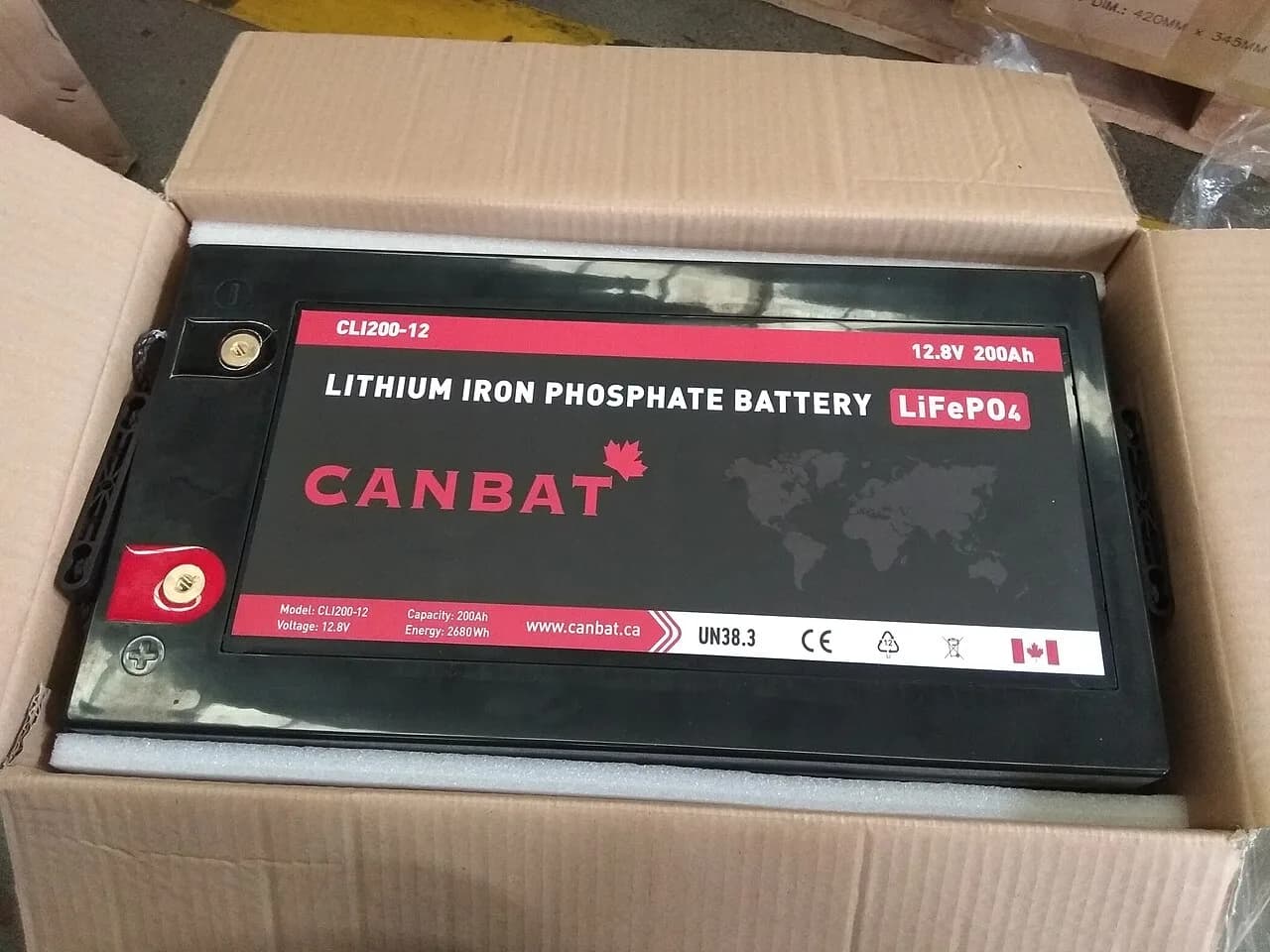
The best LiFePO4 battery for your RV is the exact model that meets your load, charging and installation requirements. A low price per amp-hour is useful only after those requirements are satisfied.
This is a specifications-and-selection guide, not a claim that we have tested every battery or experienced every manufacturer's warranty service. Our US shop includes affiliate options; other brands remain worth comparing when they meet the design better.
Start with the job, not the brand
| Your decision | What to compare | Why it changes the purchase |
|---|---|---|
| Energy between charges | Daily Wh, reserve, permitted usable capacity | More Ah does not establish how long the whole van will run |
| Inverter and other loads | Continuous and permitted short-duration discharge current | A large-energy battery can still have an inadequate current limit |
| Charging | Charge-current ceiling, settings and temperature limits | Solar, alternator and shore chargers can operate together |
| Installation | Actual dimensions, terminal clearance and mounting rules | A nominal battery-group name does not guarantee cabinet fit |
| Cold-weather use | Low-temperature charge protection and documented heating behaviour | Protection and self-heating are different features |
| Ownership | Written warranty, support route and replacement logistics | Warranty length alone does not describe the complete cover |
Use the US electrical calculator for the energy budget, then check the exact battery manual. Keep the house-battery guide beside the product comparison.
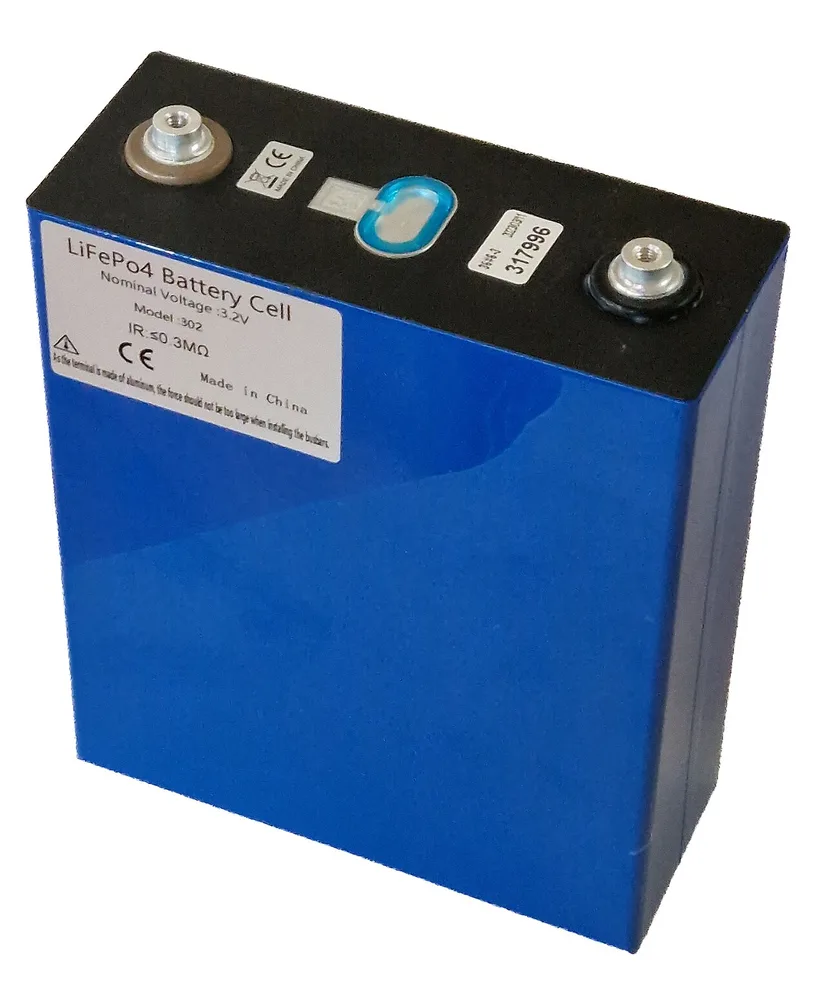
Compare these exact US battery options
The Epoch 105Ah Essential, 314Ah Eco and 300Ah Essential listings provide different capacity and feature combinations. Compare each model independently: a feature on one series should not be assumed on another.
| Exact listing | Capacity named by the manufacturer | A reason to compare it |
|---|---|---|
| Epoch 12V 105Ah Essential | 105Ah / 1.34kWh nominal | A smaller calculated reserve or a tighter installation space |
| Epoch 12V 314Ah Eco | 314Ah / 4.02kWh nominal | A larger reserve where the exact dimensions and current limits fit |
| Epoch 12V 300Ah Essential | 300Ah / 3.84kWh nominal | A larger-bank comparison with a different feature package |
Nominal energy is not guaranteed usable energy at your appliance. Allow for the chosen reserve, discharge conditions and conversion losses. Check current prices on the exact listing rather than comparing older promotional prices.
US equipment options
Compare the capacity your design needs
These are two different-capacity options, not a universal budget and premium ranking. Check the exact model features, installation dimensions and current limits before choosing.
House battery
Epoch 12V 105Ah Essential Series LiFePO4 Battery (1.34kWh)
A compact-capacity option to compare for a modest daily energy budget.
Check before choosing: Physical fit, usable energy, discharge current and the exact cold-charge/heating specification.
House battery
Epoch 12V 314Ah Eco Series LiFePO4 Battery (4.02kWh)
A larger single-battery option when the calculated energy reserve calls for more capacity.
Check before choosing: Mounting, current limits and charging requirements; do not assume the Eco model shares every Essential-series feature.
These links open our US shop. Check the exact configuration, current price and availability there; affiliate products are purchased from the named supplier. We may earn a commission from qualifying purchases.
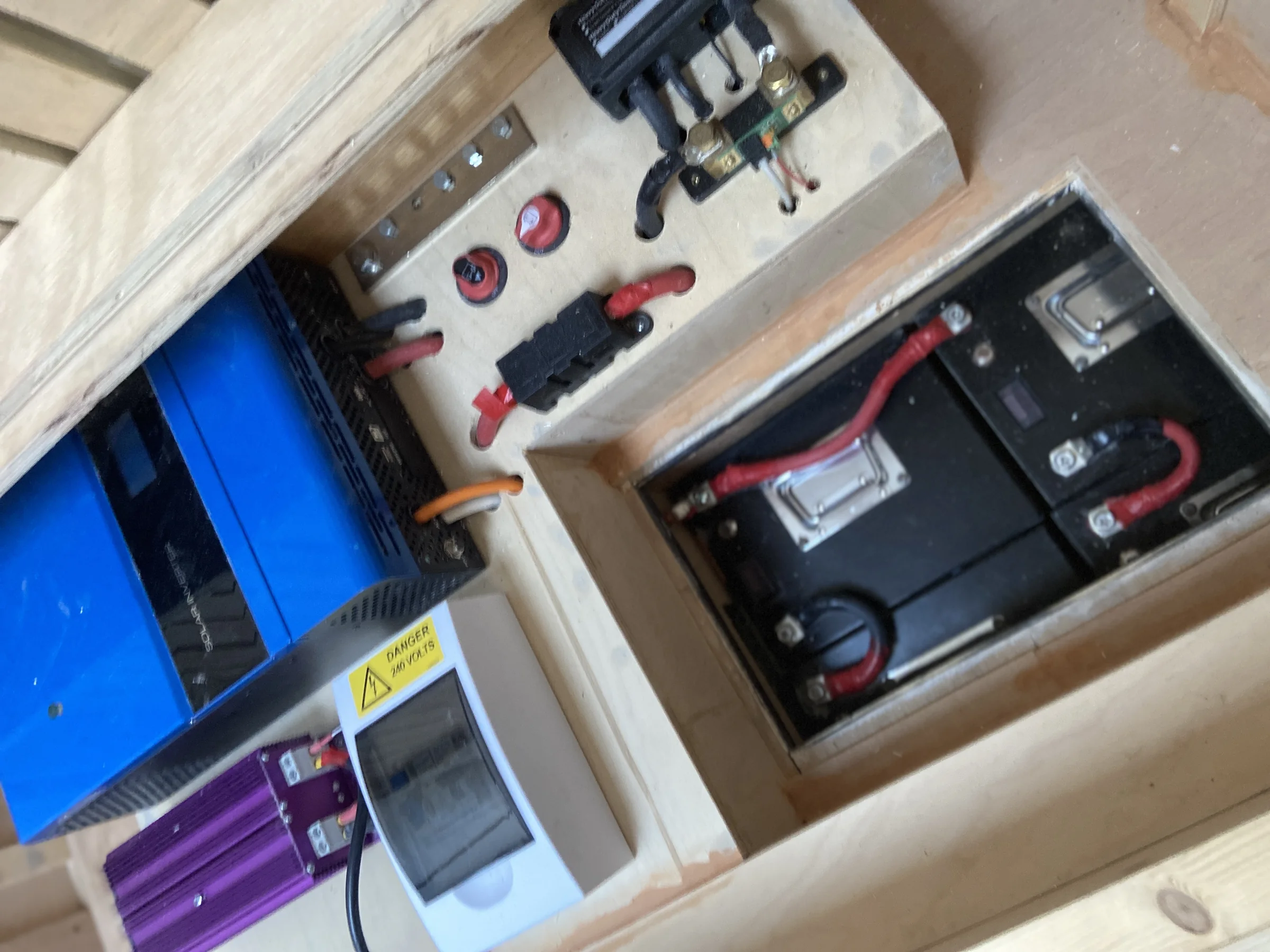
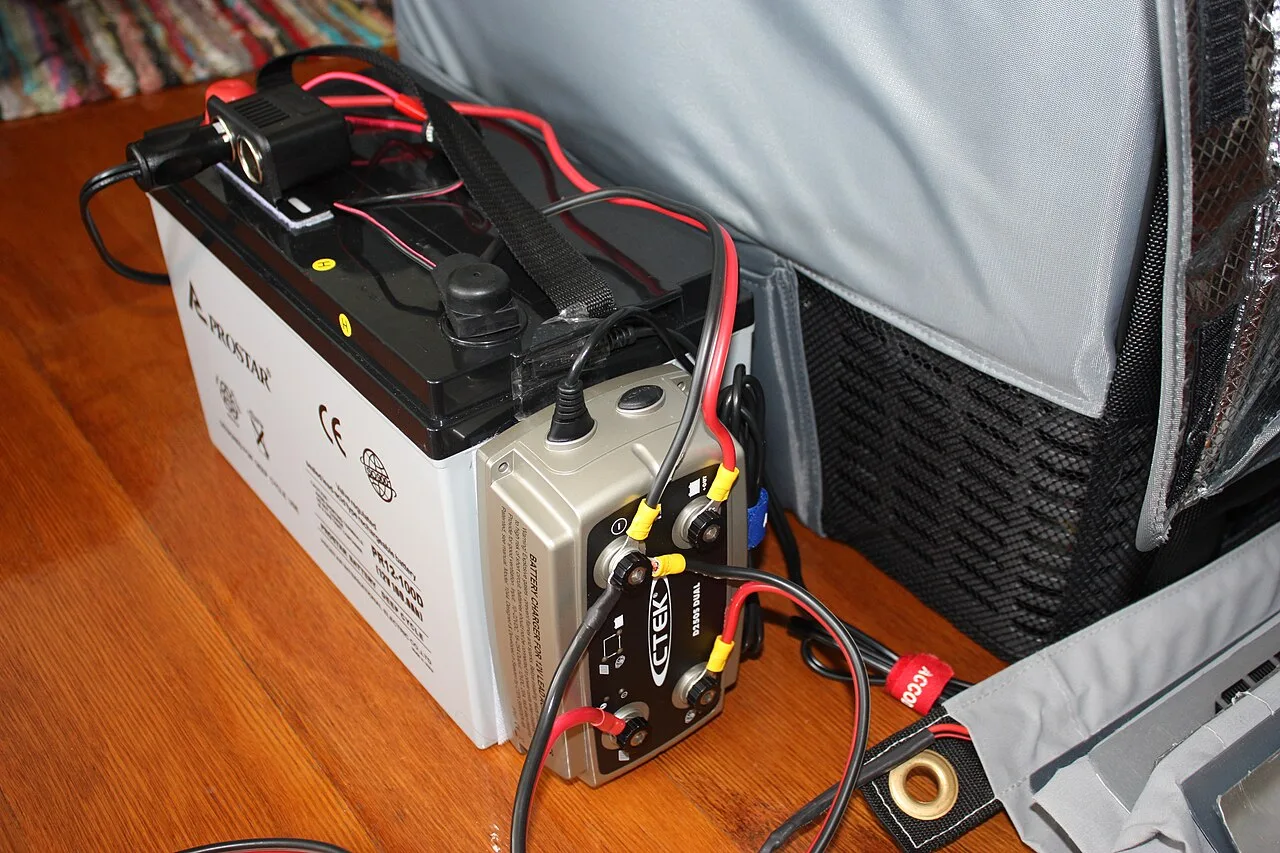
Keep other brands in the comparison
Battle Born, LiTime, SOK and Renogy sell multiple products with different current limits, temperature features and case sizes. Compare the exact SKU and the written warranty, not a broad reputation claim or a review of a different model.
For a fair price comparison, include the battery, required monitoring, mounting, delivery and any changes to the existing chargers. An inexpensive battery is not cheaper overall if it cannot support the inverter or requires a different installation.
Use the budget battery comparison for the selection checklist and the 100Ah, 200Ah and 300Ah guide to establish the energy requirement. We do not treat an unverified offer as a live buying link.
Check current as well as capacity
As an explicit example, a 1,500W AC load with a 12V battery-side voltage and 90% assumed inverter efficiency needs about 139A before other DC loads. This is a calculation, not a recommendation for a particular battery or cable. Check the inverter's own input requirements and the battery's documented continuous and transient limits.
Do not assume that two batteries can be paralleled, or their current limits simply added, without the manufacturer's configuration and protection instructions.
Cold charging and physical fit can decide the winner
A battery with charge protection may refuse charging when cold; a self-heating battery has additional operating requirements. Check where the heating energy comes from, when it operates and what happens before charging is permitted. The self-heating battery guide explains the questions to ask.
Make a full-size template of the exact case and leave room for cable bends, terminal covers, a hold-down and service access. Weigh the complete installation as well as the bare battery.
Before ordering
- Save the exact model number and current manual.
- Record energy, continuous current, charging and temperature requirements.
- Check the permitted installation orientation and any series/parallel limits.
- Compare the complete cost and written warranty conditions.
- Verify the selected US supplier, configuration and current availability.
Manufacturer references: Epoch 105Ah Essential specifications, Epoch 314Ah Eco and Epoch 300Ah Essential. Check the current documents before buying; specifications and terms can change.
Narrow the US shortlist
Compare the exact equipment.
Frequently Asked Questions
Keep the build moving
Make the next build decision easier.
Get practical diagrams, calculator updates and honest product comparisons in your inbox.
Jack Kennedy is a self-builder who has built two vans. He created Roam Wired to simplify conversion planning and share free tools, supported by affiliate links.
About Jack