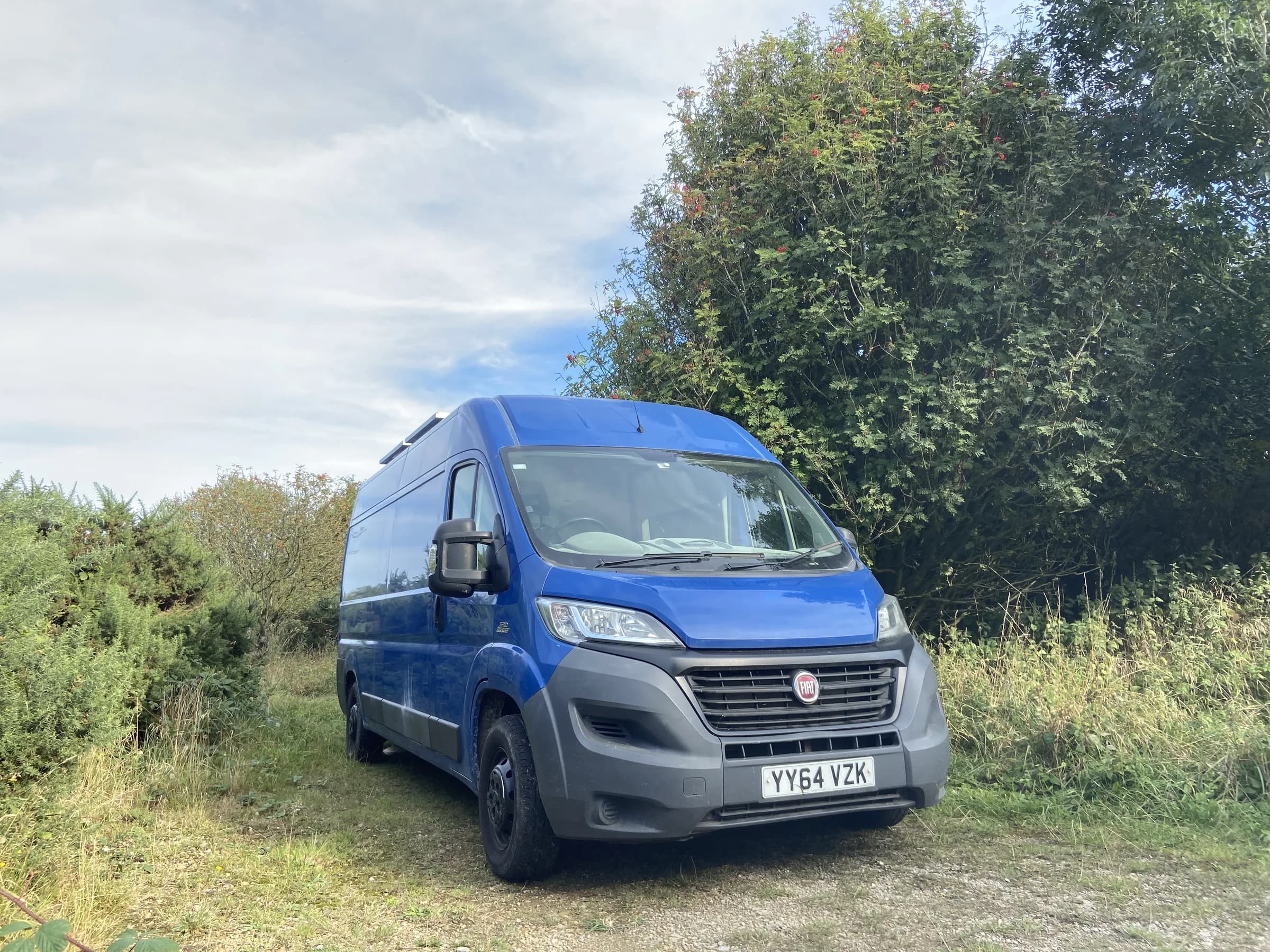
The Fiat Ducato (and its siblings the Peugeot Boxer and Citroën Relay) is one of the most popular base vehicles for campervan conversions in the UK and Europe. If you're planning your campervan electrical system, the Ducato has some specific characteristics worth understanding.
This guide covers the alternator, battery, wiring routes, and solar capacity specific to the Ducato/Boxer/Relay platform. For the full system overview, see our complete electrical system guide.
Design your Ducato electrical system
Our free calculator sizes everything automatically — batteries, solar, wiring, and fuses. Takes 5 minutes.
Ducato Alternator Specifications
The Fiat Ducato comes with different alternators depending on the year and engine:
Euro 5 Models (Pre-September 2015)
Euro 5 Ducatos typically have a conventional alternator outputting 150A-180A at 14.4V. These work well with traditional split charge relays, although a DC-DC charger is still recommended for LiFePO4 batteries.
Euro 6 Models (Post-September 2015)
Euro 6 Ducatos use a smart alternator that varies voltage between 12.4V and 14.8V to improve fuel economy. This means:
- Split charge relays won't work reliably — the voltage drops too low
- You must use a DC-DC charger like the Victron Orion XS
- The alternator output is typically 180A-200A
Check your build year
If your Ducato was registered after September 2015, assume it has a smart alternator. Always verify with a multimeter — check the voltage at the starter battery with the engine running. If it drops below 13V periodically, it's a smart alternator.
Starter Battery Location
The Ducato's starter battery is located in the engine bay, driver's side. You'll need to run cables from the engine bay through the bulkhead to your leisure battery area.
Cable Route Options
- Through the factory bulkhead grommet — look for existing grommets near the pedal box on the driver's side
- Through the floor — drill through the chassis rail (less common, requires good sealing)
- Through an existing cable route — follow the OEM wiring loom path
The cable run from engine bay to a typical rear leisure battery location is approximately 4-6 metres. Use our wire gauge calculator to size the cables correctly for this length.
Solar Panel Roof Space
The Ducato offers excellent roof space for solar:
| Model | Roof Length | Usable Width | Max Solar |
|---|---|---|---|
| L2H2 (MWB) | ~3.1m | ~1.5m | 400-600W |
| L3H2 (LWB) | ~3.8m | ~1.5m | 600-800W |
| L4H3 (XLWB) | ~4.3m | ~1.5m | 800-1000W |
For most Ducato builds, 200-400W of solar is the sweet spot. See our guide on how many solar panels you need for sizing based on your usage, and check campervan roof space by van model for more detail.
Roof fan placement
Remember to account for your Maxxair fan or Fiamma vent when planning solar panel placement. Most converters place the vent above the kitchen or bed area, which takes up space on the roof.
Wiring Considerations for the Ducato
OBD and CAN Bus
The Ducato uses a CAN bus system. Be careful not to tap into CAN bus wires when routing your leisure electrical system. Keep leisure wiring completely separate from the vehicle's OEM wiring.
Ignition Signal for DC-DC
Most DC-DC chargers need an ignition signal to know when the engine is running. On the Ducato, you can tap the D+ signal from the alternator or use a voltage-sensing DC-DC charger (like the Victron Orion XS) which detects engine running automatically.
Earthing Points
Use the vehicle's existing chassis earth points where possible. The Ducato has good earthing points in the rear near the spare wheel area. See our earth bonding guide for proper grounding technique.
Recommended System for a Ducato
For a typical Ducato weekender/part-time build:
- Battery: 200Ah LiFePO4 (Fogstar Drift 230Ah or similar)
- Solar: 200-300W rigid panels
- DC-DC: Victron Orion XS 30A
- Inverter: 1000-1200W pure sine wave
- Shore power: Optional — Victron Blue Smart IP22
For full-time living, scale up to 300-400Ah of lithium and 400W+ solar.
Use our free calculator to get exact specifications based on your appliance list.
FAQ
Is the Fiat Ducato a good base for a campervan conversion?
Yes — the Ducato is arguably the most popular conversion base in Europe. It has a wide body, good roof height (especially H2 and H3), excellent parts availability, and a strong aftermarket support network.
Does the Ducato have a smart alternator?
Euro 6 models (post-September 2015) typically have smart alternators. Euro 5 models usually have conventional alternators. Always verify with a multimeter test.
How much solar can I fit on a Ducato roof?
A standard L3H2 (LWB) Ducato can fit 600-800W of rigid solar panels, though most builds use 200-400W which is plenty for typical usage.
Can I use a split charge relay on a Ducato?
Only on older Euro 5 models with conventional alternators. Euro 6 Ducatos require a DC-DC charger. We recommend DC-DC chargers for all builds regardless — they're more efficient and safer for LiFePO4 batteries.
Related
Keep the build moving
Make the next build decision easier.
Get practical diagrams, calculator updates and honest product comparisons in your inbox.
Roam Wired
Roam Wired turns campervan research into practical plans. We publish transparent guidance, a free electrical design tool and marketplace resources for UK and US van builders.
About our approach