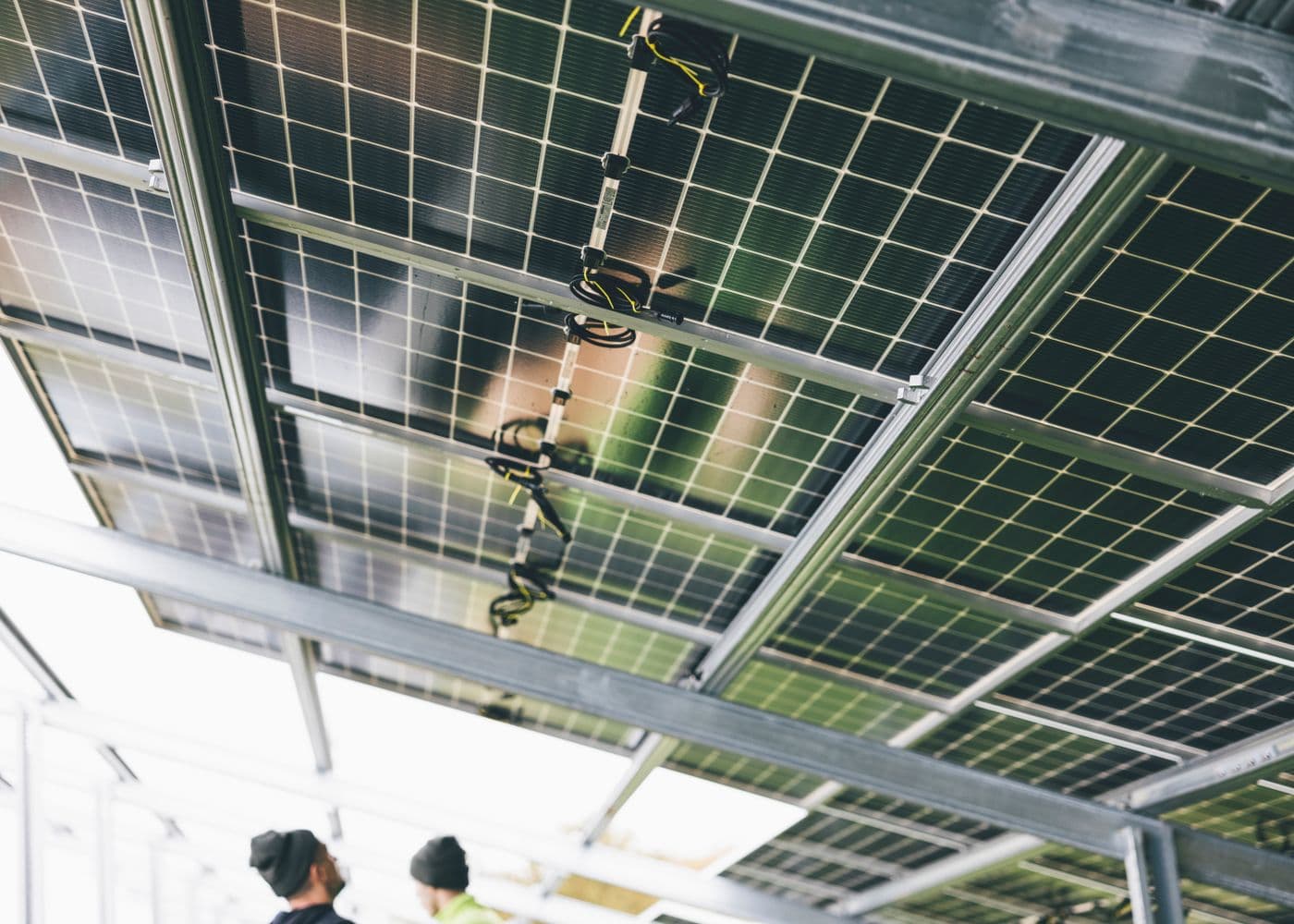
One of the first questions in any campervan solar build is: how many panels will actually fit on my roof? The answer depends on your van model, what else is on the roof, and the panel sizes you choose. This guide gives you the real numbers for the most popular UK campervan base vehicles so you can plan your layout before buying anything.
Treat model dimensions as a shortlist
This guide is part of our complete campervan solar setup guide. Knowing your roof capacity is the starting point for sizing your solar system — there is no point designing a 600W system if only 400W fits on your roof. Use our free calculator to match your solar capacity to your actual power needs.
Size your solar system to your roof
Enter your van model and appliances into our free calculator. It recommends the right solar wattage for your available roof space and actual daily usage.
How to Measure Your Roof Space
Before we get into specific van models, here is how to measure the usable area on your own roof:
- Measure total external dimensions — length and width of the flat (or flattest) section of the roof
- Subtract obstructions — roof fan, aerial, skylight, rack crossbars, overcab step-down
- Subtract edge clearance — leave at least 50mm from any edge for mounting hardware and water runoff
- Subtract gaps between panels — allow 20–30mm between panels for mounting brackets and airflow
- Account for the curve — many van roofs are slightly crowned (higher in the centre). Rigid panels need a flat or near-flat surface
Cardboard template trick
Cut cardboard to the dimensions of your chosen panels and lay them on the roof. This is far more reliable than measurements alone, especially on curved or ribbed roofs. Take photos from above (a drone or upper-floor window helps) to confirm the layout works.
Solar Panel Dimensions Reference
Before matching panels to vans, here are the common panel sizes:
| Panel | Dimensions (mm) | Area (m²) |
|---|---|---|
| 100W (compact) | 1020 x 510 x 35 | 0.52 |
| 100W (standard) | 1200 x 540 x 35 | 0.65 |
| 175W | 1485 x 668 x 35 | 0.99 |
| 200W | 1580 x 808 x 35 | 1.28 |
| 300W | 1640 x 992 x 35 | 1.63 |
| 400W | 1722 x 1134 x 35 | 1.95 |
Note: Dimensions vary between brands. Always check the specification sheet for your chosen panel.
Fiat Ducato / Peugeot Boxer / Citroen Relay
The most popular campervan base vehicle in the UK. Available in L2H2 (MWB medium roof), L3H2 (LWB medium roof), L3H3 (LWB high roof), and L4H3 (XLWB high roof).
Roof Dimensions
| Model | External Roof Length | External Roof Width | Usable Area (approx.) |
|---|---|---|---|
| L2H2 | 3,200 mm | 1,800 mm | 4.8 m² |
| L3H2/H3 | 4,000 mm | 1,800 mm | 6.2 m² |
| L4H3 | 4,800 mm | 1,800 mm | 7.5 m² |
Maximum Solar Capacity
| Model | With MaxxFan | Without MaxxFan | Recommended Layout |
|---|---|---|---|
| L2H2 | 400W (2x 200W) | 500W (2x 200W + 1x 100W) | 2x 200W portrait |
| L3H2/H3 | 600W (3x 200W) | 800W (4x 200W) | 3x 200W portrait |
| L4H3 | 800W (4x 200W) | 1,000W (5x 200W) | 4x 200W portrait |
The Ducato roof is slightly crowned but acceptably flat for rigid panels. The ribbed roof surface on pre-2006 models requires extra care with mounting — use longer bracket stems to clear the ribs.
Layout Tips
- Mount the MaxxFan towards the front of the roof (over the cab or living area)
- Place panels behind the fan, starting from the front and working back
- The roof tapers slightly at the rear on some models — check width at the rear panel position
- Leave the rearmost 300mm clear for a roof light if you plan to add one later
Mercedes Sprinter
Available as 3,500 kg (standard) and 5,000 kg (heavy) variants, in MWB, LWB, and XLWB.
Roof Dimensions
| Model | External Roof Length | External Roof Width | Usable Area (approx.) |
|---|---|---|---|
| MWB (W906/W907) | 3,000 mm | 1,780 mm | 4.5 m² |
| LWB | 4,300 mm | 1,780 mm | 6.6 m² |
| XLWB | 5,000 mm | 1,780 mm | 7.7 m² |
Maximum Solar Capacity
| Model | With MaxxFan | Without MaxxFan |
|---|---|---|
| MWB | 400W | 500W |
| LWB | 600–800W | 800–1,000W |
| XLWB | 800–1,000W | 1,000–1,200W |
The Sprinter has a relatively flat roof with minimal crown, making it one of the easiest vans for solar panel mounting. The W907 (2018+) Sprinter has a slightly different roof profile — check panel clearance before committing.
Sprinter roof rails
Many Sprinters come with factory roof rail mounting points. These are useful for roof racks but are not necessarily in the right positions for solar panel mounting. Do not rely on them for panel placement — measure and plan independently.
Ford Transit
The Transit is available in multiple configurations. The most popular for campervan conversions are the L3H3 (LWB high roof) and L4H3 (XLWB high roof, also called Jumbo).
Roof Dimensions
| Model | External Roof Length | External Roof Width | Usable Area (approx.) |
|---|---|---|---|
| L2H2 (Custom) | 2,600 mm | 1,780 mm | 3.8 m² |
| L3H2 | 3,300 mm | 1,780 mm | 4.9 m² |
| L3H3 | 3,700 mm | 1,780 mm | 5.6 m² |
| L4H3 (Jumbo) | 4,500 mm | 1,780 mm | 6.9 m² |
Maximum Solar Capacity
| Model | With MaxxFan | Without MaxxFan |
|---|---|---|
| L2H2 Custom | 200–300W | 400W |
| L3H2 | 400W | 500W |
| L3H3 | 400–600W | 600W |
| L4H3 Jumbo | 600–800W | 800–1,000W |
The Transit roof has a noticeable crown on some models. Test with a straight edge across the width — if the crown is more than 15mm across the panel width, consider using taller mounting brackets to level the panels.
VW Crafter / MAN TGE
The Crafter and MAN TGE share the same body. Popular in MWB and LWB high-roof variants.
Roof Dimensions
| Model | External Roof Length | External Roof Width | Usable Area (approx.) |
|---|---|---|---|
| MWB High Roof | 3,200 mm | 1,830 mm | 4.9 m² |
| LWB High Roof | 4,300 mm | 1,830 mm | 6.8 m² |
Maximum Solar Capacity
| Model | With MaxxFan | Without MaxxFan |
|---|---|---|
| MWB | 400W | 500–600W |
| LWB | 600–800W | 800–1,000W |
The Crafter roof is slightly wider than the Ducato and Sprinter, which can allow a 300W panel to fit across the width where it would not on narrower vans.
VW Transporter (T5/T6/T6.1)
The Transporter is the most popular smaller campervan base in the UK. Roof space is limited, especially on SWB models and those with pop-top roofs.
Roof Dimensions
| Model | External Roof Length | External Roof Width | Usable Area (approx.) |
|---|---|---|---|
| SWB | 2,100 mm | 1,620 mm | 2.8 m² |
| LWB | 2,700 mm | 1,620 mm | 3.6 m² |
Maximum Solar Capacity
| Model | With Pop-Top | Without Pop-Top |
|---|---|---|
| SWB | 0–100W* | 200–300W |
| LWB | 100–200W* | 300–400W |
*Pop-top models: Panels can only go on the fixed front section of the roof (above the cab), which limits space to roughly 0.8 m².
Pop-top solar options
For VW Transporters with pop-top roofs, consider a portable panel instead of (or in addition to) a small roof-mounted panel. A 100W foldable panel deployed on the ground can supplement the limited roof-mounted system and be angled towards the sun. See our guide on portable solar panels for campervans.
Renault Master / Nissan NV400 / Vauxhall Movano
These three vans share the same body (Renault platform). Popular for conversions in the UK.
Roof Dimensions
| Model | External Roof Length | External Roof Width | Usable Area (approx.) |
|---|---|---|---|
| MWB High Roof | 3,200 mm | 1,780 mm | 4.8 m² |
| LWB High Roof | 4,000 mm | 1,780 mm | 6.1 m² |
Maximum Solar Capacity
| Model | With MaxxFan | Without MaxxFan |
|---|---|---|
| MWB | 400W | 500W |
| LWB | 600W | 800W |
Similar to the Ducato in both dimensions and layout potential.
Smaller Vans
| Van | Roof Length | Roof Width | Max Solar |
|---|---|---|---|
| VW Caddy (LWB) | 1,600 mm | 1,400 mm | 100–200W |
| Citroen Berlingo (LWB) | 1,700 mm | 1,400 mm | 100–200W |
| Ford Transit Connect (LWB) | 1,800 mm | 1,500 mm | 100–200W |
| Peugeot Expert / Citroen Dispatch | 2,400 mm | 1,620 mm | 200–300W |
| Toyota Proace | 2,400 mm | 1,620 mm | 200–300W |
| Mercedes Vito (LWB) | 2,700 mm | 1,620 mm | 300–400W |
For these smaller vans, consider 100W compact panels (1020 x 510mm) which offer more flexible layout options than standard 200W panels.
Panel Layout Planning
Portrait vs Landscape Orientation
| Orientation | Pros | Cons |
|---|---|---|
| Portrait (long side front-to-back) | Fits more panels on narrow roofs | Longer front-to-back footprint |
| Landscape (long side across the roof) | Shorter footprint, leaves space for fan | May not fit across the width on narrower vans |
For most large vans (Ducato, Sprinter, Transit, Crafter), 200W panels fit in portrait orientation with room to spare across the width. Landscape orientation works on wider vans but wastes width on narrower ones.
Standard Layouts
Two-panel layout (400W): Two 200W panels side by side in portrait, behind a MaxxFan. Fits Ducato L2, Sprinter MWB, Transit L3.
Three-panel layout (600W): Three 200W panels in a row in portrait. Fits Ducato L3, Sprinter LWB, Crafter LWB. Requires most of the roof length.
Mixed layout (300–500W): One or two 200W panels plus one or two 100W panels to fill gaps around the MaxxFan or other obstructions.
Use our calculator to confirm that your planned wattage matches your daily energy needs before committing to a layout.
Plan your complete solar system
Our free calculator recommends the exact solar wattage, battery size, and charge controller for your van model and daily usage. Start planning today.
Frequently Asked Questions
Can I fit solar panels around a MaxxFan?
Yes. A MaxxFan (or similar roof fan) takes up roughly 400 x 400mm of roof space. On larger vans, this still leaves plenty of room for panels. Position the fan at the front of the living area and panels behind it. On smaller vans, you may lose one panel's worth of space.
Should I use smaller panels to fill gaps?
Sometimes. If you have a 500mm gap that a standard 200W panel cannot fill, a compact 100W panel (1020 x 510mm) might fit. The extra wattage is useful but adds another set of cables and slightly more complexity. Weigh the benefit against the cost and wiring effort.
Do I need to account for panel overhang?
Panels should not overhang the edges of the roof. Wind at motorway speeds creates significant uplift force on overhanging edges, which can rip panels off or damage the mounting hardware. Keep all panels within the roof boundary with at least 50mm clearance from edges.
What about curved van roofs?
Rigid panels need a reasonably flat surface. A slight crown (up to 15mm across the panel width) is fine — the mounting brackets accommodate this. A more pronounced curve requires taller brackets on the edges. For heavily curved roofs (like the VW Transporter), consider flexible panels or smaller rigid panels that span a shorter width.
Can I mount panels on a pop-top roof?
Not on the pop-top section itself — the canvas and hinge mechanism cannot support panels. You can mount on the fixed front section of the roof (above the cab), but space is very limited. A portable panel is usually a better solution for pop-top vans.
How much weight can a van roof take?
Most panel vans are rated for 200–300 kg of roof load (check your specific model). A typical solar panel weighs 10–12 kg, so even four panels add only 40–50 kg — well within limits. The roof fan, mounting hardware, and any roof rack add further weight. Keep a running total to stay within the manufacturer's limit.
Does roof colour affect solar performance?
A white roof reflects heat away from the van interior, which is desirable for comfort but has minimal impact on solar panel performance. Panel temperature is affected more by the air gap under the panel (created by mounting brackets) than by roof colour. Dark roofs may increase panel temperature by 2–3°C, reducing output by roughly 1% — negligible in practice.
Related
Keep the build moving
Make the next build decision easier.
Get practical diagrams, calculator updates and honest product comparisons in your inbox.
Roam Wired
Roam Wired turns campervan research into practical plans. We publish transparent guidance, a free electrical design tool and marketplace resources for UK and US van builders.
About our approach