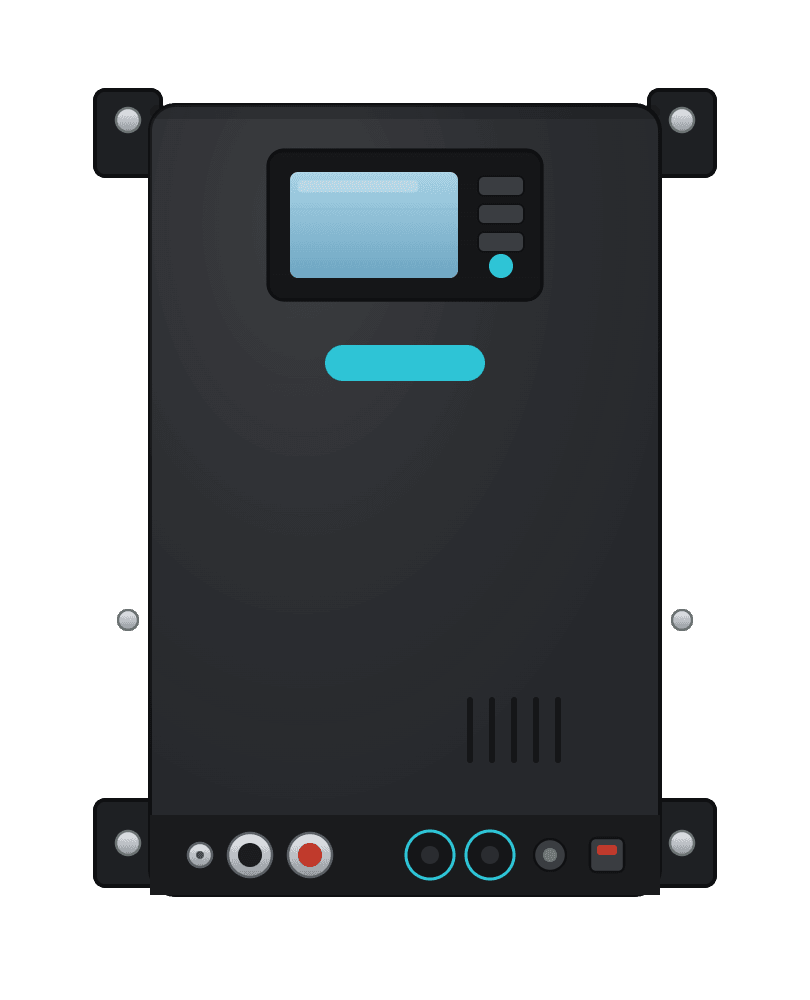
An inverter transfer switch allows your campervan to automatically switch its 230V circuits between hook-up mains power and your inverter (battery power) when you connect or disconnect from a campsite supply. Here is how it works and whether you need one.
Our free electrical calculator turns your appliance list into a wiring diagram with cable sizes and fuse ratings for each circuit.
The problem it solves
When you arrive at a campsite with electric hook-up (EHU), you want your van's 230V sockets and appliances to use mains power rather than drain your battery through the inverter. When you leave and disconnect, you want your 230V circuits to switch back to the inverter automatically.
Without a transfer switch, this either requires manual intervention (switching between two power sources) or a separate wiring layout where hook-up and inverter feed different sockets.
A transfer switch (also called an automatic changeover switch) detects which supply is available and routes power accordingly — automatically.
How it works
The transfer switch sits between your mains hook-up inlet, your inverter output, and your 230V distribution (sockets, consumer unit). It has three modes:
- Hook-up present: Mains power feeds the distribution. Inverter is bypassed or off. (Battery may be charged simultaneously if you have an inverter-charger.)
- No hook-up: Inverter output feeds the distribution. Appliances run from battery.
- Switchover: When hook-up connects or disconnects, the switch transfers within milliseconds — transparent to most appliances.
The Victron MultiPlus: built-in transfer switching
The simplest way to add automatic transfer switching to a campervan is to use a Victron MultiPlus inverter-charger instead of a separate inverter. The MultiPlus has the transfer switch built in:
- Connect hook-up to the MultiPlus AC input
- Connect all 230V loads to the MultiPlus AC output
- When hook-up connects: loads switch to mains, battery charges simultaneously
- When hook-up disconnects: loads switch to inverter within 20 milliseconds
The MultiPlus also adds PowerAssist — if you connect a 10A hook-up (2,300W) and run a 3,000W load, the MultiPlus supplements from battery to make up the difference, preventing the hook-up circuit breaker from tripping.
See our Victron MultiPlus for Campervans: Design and Sizing and inverter vs inverter-charger guide for full details.
Standalone transfer switches
If you have a separate inverter and want to add automatic transfer switching, you can install a standalone automatic changeover relay:
Victron Transfer Switch 100A (for use with Phoenix inverters): Detects hook-up presence and switches between mains and inverter output. Works alongside a separate battery charger. This combination approximates MultiPlus functionality at slightly lower cost but more complex wiring.
DIY changeover switch: A simple manual changeover switch (double-pole, double-throw rated for your current) can switch between hook-up and inverter manually. Not automatic — you switch it when connecting/disconnecting EHU. Budget option for builds where you always know when you are on hook-up.
Do you need a transfer switch?
You need one if:
- You have a single set of 230V sockets that you want to work from both hook-up and inverter
- You want seamless automatic switching between the two
- You use hook-up regularly
You may not need one if:
- You have separate 230V sockets wired to hook-up and others wired to your inverter — you just plug into the right socket
- You only occasionally use hook-up and are happy to manually switch your inverter off and connect hook-up instead
- You are off-grid only and never use hook-up
Wiring note
Regardless of which transfer switch solution you choose, always ensure the hook-up mains supply and your inverter output are never connected in parallel — this can damage the inverter and create a dangerous mains backfeed situation. A proper changeover switch or the MultiPlus design prevents this by ensuring only one source feeds the distribution at any time.
FAQ
Can I wire my inverter and hook-up to the same socket without a transfer switch?
No — this creates a dangerous parallel connection. Always use a changeover switch, a MultiPlus, or separate sockets for each source.
How fast does the MultiPlus transfer between hook-up and battery?
The MultiPlus switches in under 20 milliseconds — fast enough that most electronic equipment does not notice the change. Older CRT screens would flicker; modern electronics typically see no interruption.
Does a transfer switch drain the battery?
A transfer switch itself draws negligible power — typically under 1W in standby. The battery drain when on inverter power depends on your loads, not the switch itself.
Related
Keep the build moving
Make the next build decision easier.
Get practical diagrams, calculator updates and honest product comparisons in your inbox.
Jack Kennedy is a self-builder who has built two vans. He created Roam Wired to simplify conversion planning and share free tools, supported by affiliate links.
About Jack